


While headline employment numbers continue to suggest that the U.S. labor market remains relatively stable, a closer look reveals a growing challenge affecting millions of Americans: long-term unemployment.
Recent labor market data shows that more workers are spending six months or longer searching for employment, highlighting a weakness that isn’t always visible in traditional unemployment reports. For many households, the consequences extend far beyond a temporary loss of income and are beginning to affect savings, spending habits, family planning, and long-term financial security.
As economic uncertainty continues and hiring activity slows, long-term unemployment has emerged as one of the most important labor market trends to watch in 2026.
Long-Term Unemployment Continues to Rise
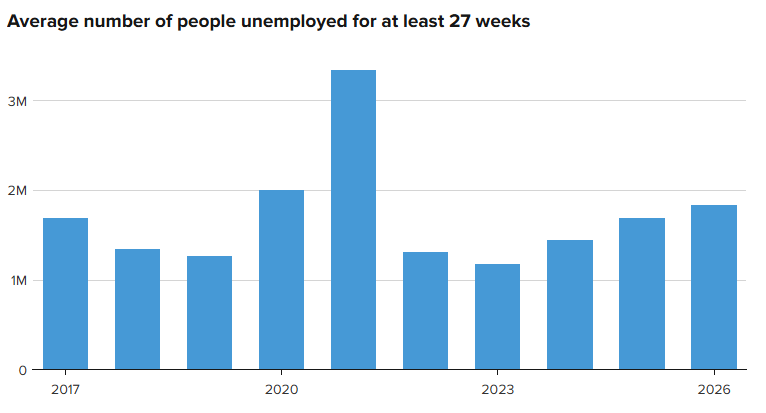
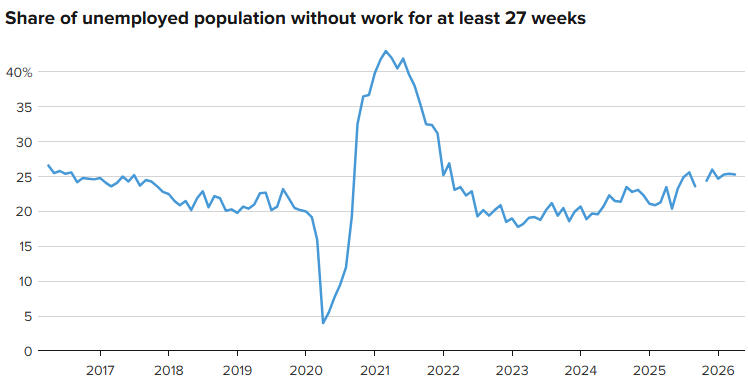
Long-term unemployment refers to individuals who have been out of work for at least 27 weeks while actively searching for a job.
This group has grown significantly over the past few years.
The number of Americans experiencing long-term unemployment now exceeds 1.8 million people on average, representing a substantial increase compared with both pre-pandemic levels and recent years.
The increase suggests that while layoffs remain relatively low, finding a new job has become increasingly difficult once a worker leaves the labor force.
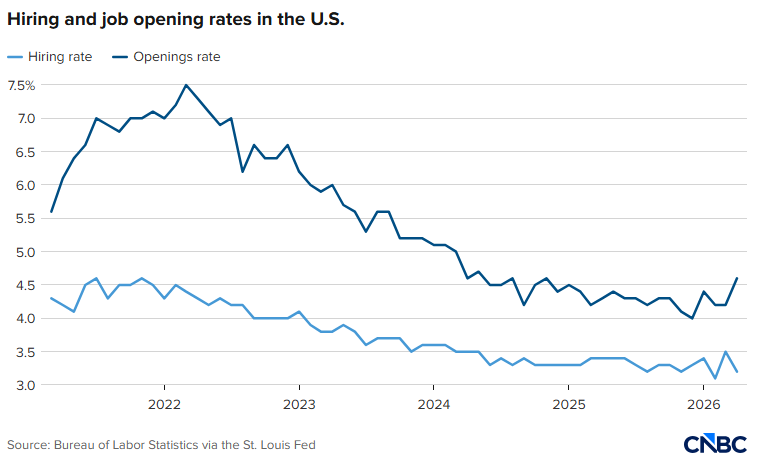
This reflects a labor market that many economists describe as “low-hire, low-fire.”
Employers are not conducting large-scale layoffs, but they are also hiring more cautiously than they were during the post-pandemic recovery.

A Different Type of Labor Market Problem
The current labor market looks very different from previous economic downturns.
During recessions, unemployment often rises because companies eliminate jobs.
Today, many businesses are keeping existing workers but slowing the pace of hiring. As a result, job seekers face longer search periods and increased competition for available positions.
Recent data has shown:
- Job openings remain elevated in some industries.
- Hiring activity has slowed.
- Worker mobility has declined.
- Employees are less likely to quit voluntarily.
- Employers are taking longer to fill open positions.
For job seekers, this means landing a new position may require months of applications, interviews, and networking efforts.
Financial Pressure Builds Quickly
One of the biggest challenges facing long-term unemployed workers is the financial strain that develops over time.
Many households initially rely on savings, severance packages, or unemployment benefits. However, most unemployment programs are limited in duration, leaving many workers without ongoing financial support after six months.
As unemployment stretches longer, families often begin making difficult financial decisions, including:
- Reducing discretionary spending.
- Delaying retirement contributions.
- Using emergency savings.
- Increasing credit card balances.
- Postponing major purchases.
- Withdrawing funds from retirement accounts.
These decisions can create financial setbacks that take years to recover from, even after employment is restored.

The Long-Term Impact on Earnings
Research has consistently shown that extended periods of unemployment can affect future earnings.
Workers who remain unemployed for long periods often accept positions with lower compensation than they previously earned.
Career interruptions can reduce future wage growth, delay promotions, and limit advancement opportunities.
Some studies have found that the earnings impact of long-term unemployment can remain visible for many years after an individual returns to work.
This makes prolonged joblessness more than a temporary challenge—it can alter long-term financial outcomes.
Mental Health Effects Are Often Overlooked
The economic impact of unemployment is widely discussed, but the emotional toll can be equally significant.
Job loss frequently affects confidence, personal identity, and overall well-being.
Many individuals report increased stress as unemployment continues, particularly when repeated applications and interviews fail to result in job offers.
Common challenges include:
- Anxiety about finances.
- Reduced confidence.
- Social isolation.
- Increased stress within households.
- Concerns about future career prospects.
The longer a job search lasts, the more difficult it often becomes to maintain optimism and motivation.
For many workers, unemployment affects nearly every aspect of daily life.
Family Decisions Are Being Delayed
The effects of long-term unemployment often spread beyond the individual worker.
Families frequently postpone important life decisions due to financial uncertainty.
Some households delay:
- Purchasing a home.
- Starting a family.
- Relocating.
- Paying off debt.
- Saving for college.
- Investing for retirement.
Younger workers are particularly vulnerable because they may be trying to establish financial stability while facing rising housing costs and higher living expenses.
The combination of unemployment and affordability challenges can significantly delay wealth-building opportunities.

Consumer Spending Could Slow
Long-term unemployment also has broader implications for the U.S. economy.
Consumer spending represents the largest component of economic growth.
When millions of workers reduce spending, local businesses, service providers, and retailers often feel the impact.
Households facing unemployment typically cut back on:
- Travel.
- Dining out.
- Entertainment.
- Home improvements.
- Vehicle purchases.
- Large discretionary purchases.
If long-term unemployment continues to increase, slower consumer spending could create additional economic headwinds in the months ahead.
New Graduates Face Growing Challenges
Recent college graduates are also encountering a more difficult job market.
Many employers have become increasingly selective when filling entry-level positions, leading some graduates to remain unemployed or underemployed longer than expected.
Competition for professional positions remains intense in sectors such as technology, marketing, communications, and business services.
This creates additional pressure on younger workers who are attempting to begin their careers while managing student loan obligations and rising living costs.
What This Means for the Housing Market
Long-term unemployment can directly influence housing demand.
Individuals without stable income often postpone home purchases, refinancing decisions, and relocation plans.
Extended unemployment can also make it more difficult to qualify for mortgage financing because lenders place significant emphasis on income stability and employment history.
As a result, rising long-term unemployment may reduce housing demand in certain markets, particularly among first-time homebuyers.
This is especially important as housing affordability remains a challenge across much of the country.
What to Watch Moving Forward
While overall unemployment remains relatively low by historical standards, economists are paying close attention to the rise in long-term unemployment.
Key indicators to monitor include:
- Monthly hiring activity.
- Job openings.
- Unemployment duration.
- Labor force participation.
- Consumer spending trends.
- Wage growth.
A meaningful improvement in hiring would likely help reduce the number of workers remaining unemployed for extended periods.
However, if hiring continues to slow, long-term unemployment could become a larger issue throughout the remainder of 2026.
Bottom Line
Long-term unemployment is becoming one of the clearest signs of stress within the U.S. labor market. Although overall joblessness remains relatively contained, more Americans are spending six months or longer searching for work, creating financial, emotional, and economic consequences that can last for years.
For households, prolonged unemployment often means reduced savings, delayed life goals, and increased financial pressure. For the broader economy, it can lead to weaker consumer spending and slower growth. As hiring activity remains cautious, the rise in long-term unemployment will remain an important trend to watch throughout 2026. For direct financing consultations or mortgage options for you visit 👉 Nadlan Capital Group.
