


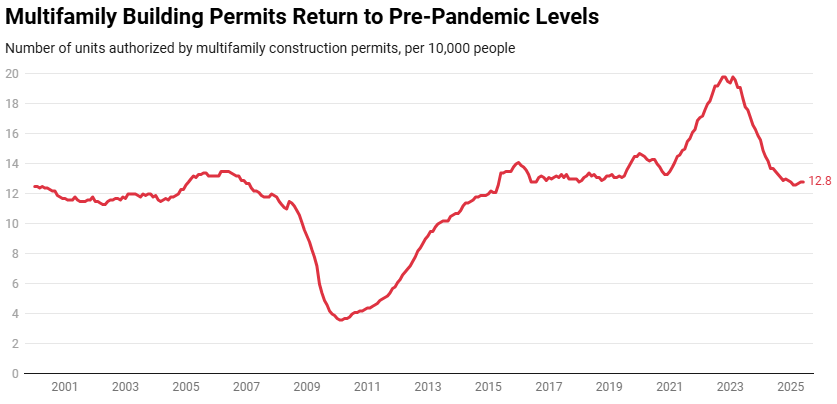
A new analysis from Redfin has shed light on the state of apartment construction in the U.S. as we move further into the post-pandemic era. According to their findings, the pace at which developers are receiving permits to build multifamily housing has significantly slowed. Over the past year, developers were granted an average of 12.8 multifamily housing units per 10,000 people, a sharp drop of 23.1% from the pandemic-era peak of 16.7 units per 10,000 people. This drop signals a shift from the pandemic-driven construction surge, which saw a boom in housing permits as demand for rentals soared in response to remote work policies and people moving to less dense areas.
To put it into perspective, the pre-pandemic construction pace averaged 13 units per 10,000 people, so we are now slightly below that baseline. This indicates that the rapid pace of construction seen during the pandemic years may indeed be winding down, and we could be heading back to more stable, but slower, growth in the multifamily housing sector.

Pandemic-Fueled Surge: The Impact of Remote Work and Relocation
During the height of the pandemic, many workers, untethered from their offices, took advantage of the flexibility of remote work by relocating, often to more affordable or desirable areas. This trend was particularly strong in the Sun Belt, with states like Texas, Florida, and Arizona seeing large population inflows. Builders responded to the surge in demand by ramping up construction efforts, especially in areas where housing was most needed.
As a result, 2024 saw the completion of the highest number of multifamily housing units in 50 years. However, this oversupply of rental units caused landlords to struggle with filling vacancies, and rents began to fall as competition increased.
Now that the pandemic-driven rush has subsided, the rental market has been feeling the effects. According to Redfin, the median asking rent for apartments in the U.S. rose by 1.7% year-over-year in July 2025, reaching $1,790. This marks the second consecutive year-over-year rent increase after more than two years of stagnant or declining rents.
Shifting Rental Dynamics: Supply Shrinking as Demand Grows
The increase in asking rents is largely attributed to the shrinking pool of available rental units. As apartment construction slows and demand continues to rise, renters may find themselves with fewer options, pushing landlords to regain more control in negotiations. In fact, incentives that renters previously enjoyed, such as free parking or a month of rent at no charge, may start to disappear as the balance of power shifts toward property owners.
While the median asking rent remains $70 below the record high of $1,860 reached in July 2022, there are signs that rents could continue rising in the coming months. Despite this, there is a silver lining: wages have been growing faster than rents, meaning rental affordability is gradually improving.

Regional Differences: Winners and Losers in Apartment Construction
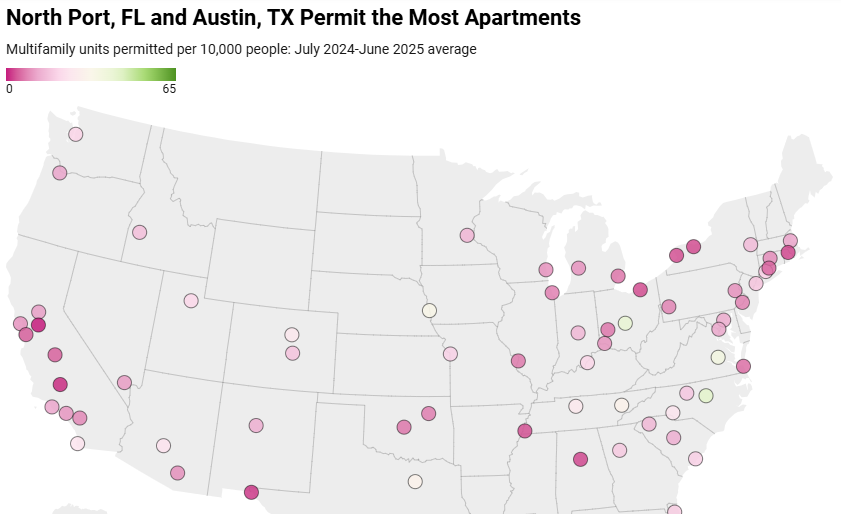
While nationwide apartment construction has slowed, the situation is far from uniform across the country. Some regions continue to see strong construction growth, while others are experiencing significant declines. For example, North Port, Florida, has seen the highest rate of multifamily housing development, with 65 units permitted for every 10,000 people in the past year. This places North Port at the top of the list for apartment construction, a stark contrast to many other U.S. cities.
In Austin, Texas, despite rents falling, developers continue to target the area, with 63.6 units being permitted per 10,000 people. Other cities, such as Cape Coral, Florida, Raleigh, North Carolina, and Columbus, Ohio, also report high levels of construction activity.
However, the West Coast is experiencing the most significant declines. Stockton, California, recorded zero multifamily housing permits in the past year, while San Jose saw a massive drop of 74.5%. Other cities in California, like Bakersfield and El Paso, Texas, are also seeing low permit activity.
Declining Construction: The Post-Pandemic Slowdown
More than half (59%) of the U.S. metros that Redfin analyzed have seen a drop in multifamily construction permits since the pandemic. Stockton, California, leads the pack with a dramatic 100% decline, followed by San Jose (-74.5%) and Colorado Springs (-68.1%). Other cities like Rochester, New York, and Philadelphia have also experienced sharp declines in construction.
At the opposite end of the spectrum, Oklahoma City, Oklahoma, has seen a massive 205% increase in multifamily permits, followed by Providence, Rhode Island, and Pittsburgh, Pennsylvania, with increases of 150% and 131%, respectively. Cape Coral, Florida, and Hartford, Connecticut, also saw notable increases.
Conclusion: A Transition to Stabilized Growth
The post-pandemic apartment construction boom is undoubtedly coming to an end, but that doesn’t mean all areas are suffering. Many Sun Belt cities are still experiencing growth in multifamily housing, while some metros are seeing construction slow to a crawl. With fewer new units coming to market, rents may continue to rise, although wage growth is helping to improve affordability for renters.
In the future, the multifamily market will likely continue to experience regional disparities, with some areas facing tight supply and increasing rents, while others may continue to see a slowdown in new developments. Policymakers and developers will need to consider these regional differences as they work toward addressing the ongoing challenges in housing affordability.
The slow pace of construction could be further impacted by rising material costs, zoning restrictions, and economic uncertainty. As a result, renters might have to adjust to fewer options and potentially higher rents, making it more important than ever for developers and local governments to ensure that housing remains accessible in key areas across the country. For direct financing consultations or mortgage options for you visit 👉 Nadlan Capital Group.
