


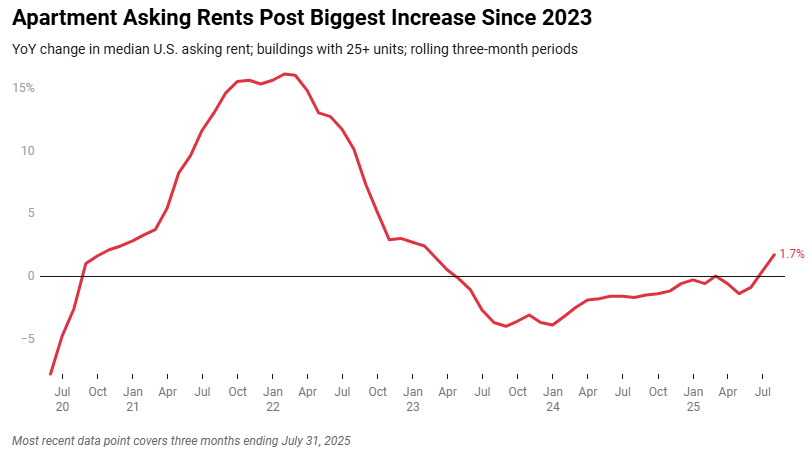
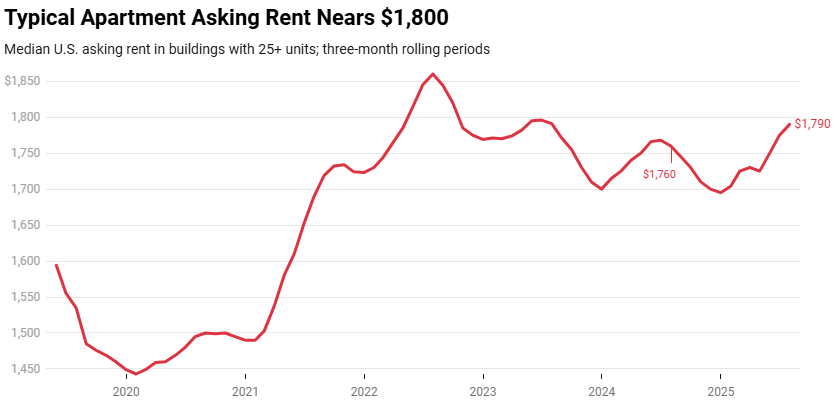
The U.S. rental market has seen notable shifts in recent months, with median asking rents climbing to their highest levels in 30 months. According to data from Redfin, the median asking rent for July 2025 reached $1,790, marking a 1.7% increase year-over-year, the largest jump since January 2023. After two years of flat or declining rent prices, the tide seems to have turned, signaling changes in both supply and demand dynamics.
Why Are Rents on the Rise?
The rise in asking rents can be attributed to a confluence of factors, primarily shrinking apartment supply and a growing demand from renters. Redfin’s Senior Economist, Sheharyar Bokhari, suggests that the high cost of homeownership is driving more renters into the market, putting pressure on apartment demand. “The pandemic building boom initially led to a surplus of rental units, leaving landlords with more vacancies to fill. However, with new construction slowing down and borrowing costs for builders climbing, the balance of power appears to be shifting back toward landlords.”
Permits for new multifamily housing have decreased significantly, down by 23.1% since the height of the pandemic construction boom. This reduction in new units being built, coupled with rising interest rates, is constraining the rental supply, which in turn is contributing to rent increases.
Landlord Tactics: Concessions and Incentives
Despite higher asking rents, landlords are increasingly turning to concessions to maintain tenant interest. Concessions such as free rent for a month, waived fees, or free amenities are becoming more common in rental agreements. In a recent study by Apartments.com, 36% of renters reported that a free first month of rent would be a decisive factor when choosing between apartments. Additionally, 88% of renters said that they would consider overlooking minor flaws in an apartment if a rent concession was offered, showing just how much leverage these incentives hold in today’s market.
However, while these incentives may help attract renters, they might become less common as the overall rental supply continues to tighten. As more renters enter the market, landlords could reduce the use of concessions to boost their profits.

Regional Variations in Rent Increases
The national average increase in asking rents doesn’t paint the full picture, as significant regional variations exist. For instance, San Jose, California, saw an 8.8% year-over-year increase in July, bringing the median asking rent to $3,569. Other metros like Chicago (8.6%), Washington, D.C. (8.5%), and Philadelphia (7.5%) also experienced large rent hikes.
A major contributing factor to these increases is the decline in new construction. In cities like San Jose, permits to build multifamily housing have plummeted by 74.5% since the pandemic’s peak, resulting in a shrinking supply that drives up rents. Meanwhile, cities like Philadelphia have also seen a substantial drop in multifamily permits, down by 62.1%, further contributing to the tight rental market.
On the other hand, some cities like Jacksonville, Florida, and Austin, Texas, saw asking rents decrease, with Jacksonville posting a 3.5% drop. These declines suggest that certain areas, particularly those with more inventory or lower demand, are seeing less upward pressure on rents.

Shifting Focus: Apartment Size and Permitting Trends
Interestingly, the increase in asking rents is not uniform across apartment sizes. One-bedroom apartments saw a larger jump (3.4% year-over-year) compared to two-bedroom units, which rose 1.7%. Meanwhile, three-bedroom apartments experienced a slight decline in rent prices, with the median falling 1.5% to $2,192.
The permit data from major metro areas also reveals the effects of higher construction costs and a slowdown in new developments. For example, Orlando, Florida, experienced a 54.9% drop in multifamily permits from Q1 to Q2 of 2025, marking the first Q2 decline since 2022. Similarly, other cities like Philadelphia and San Antonio also saw their first Q2 permitting dips in three years, further signaling the impact of rising construction costs and tightened regulations.
The Impact of External Factors: Tariffs and Construction Costs
Compounding these challenges are external factors such as rising tariffs on imported materials like steel and aluminum. In June, tariffs were doubled, which could exacerbate construction cost pressures and make building new apartments even more expensive. These higher costs could further slow down the pace of new construction, exacerbating the existing supply shortage.
Despite these obstacles, optimism still exists in the multifamily sector, especially regarding affordable housing. The National Association of Home Builders (NAHB) reported an increase in multifamily housing confidence in Q2 2025, driven by a boost in federal affordable housing resources. However, the broader picture remains complicated, as high interest rates and limited land availability continue to pose challenges for developers.
Looking Ahead: The Future of the Rental Market
As rental demand remains strong and the supply of new units continues to decrease, renters should expect prices to keep climbing in many areas. In the short term, landlords may continue offering rent concessions to attract tenants, but the overall trend points to rising costs as the balance of power shifts toward property owners.
For renters, this means that negotiating for better deals and understanding the dynamics of the market—such as the effects of supply shortages and high construction costs—will be key. As for prospective homebuyers, the high cost of homeownership may keep them in the rental market for longer, further adding to demand and contributing to rising rent prices.
In conclusion, while rental affordability is a growing concern, it’s clear that the demand for housing, coupled with limited supply and rising costs, will keep pushing rents upward. The key for renters and landlords alike will be to stay agile and adapt to the shifting dynamics of a highly unpredictable market.
For direct financing consultations or mortgage options for you visit 👉 Nadlan Capital Group.
