


In an era of high mortgage rates and rising costs, housing affordability remains one of the biggest hurdles facing American homebuyers. But there’s a silver lining: in several key U.S. metros, affordability is showing signs of improvement.
According to the latest data from Redfin, the annual income required to purchase a median-priced home in the U.S. now sits at $112,131 a marginal increase of just 0.5% compared to last year. While this figure still far outpaces the typical household income of $86,258, some markets are bucking the national trend, offering a breath of relief for home shoppers.
Where the Cost of Buying a Home Is Decreasing
Among the 50 largest metro areas, 11 markets experienced a year-over-year decline in the income needed to afford a home. Leading the pack is Oakland, California, where buyers now need to earn $244,073 to afford a median home still high, but 4.6% lower than a year ago, marking the largest drop nationwide.

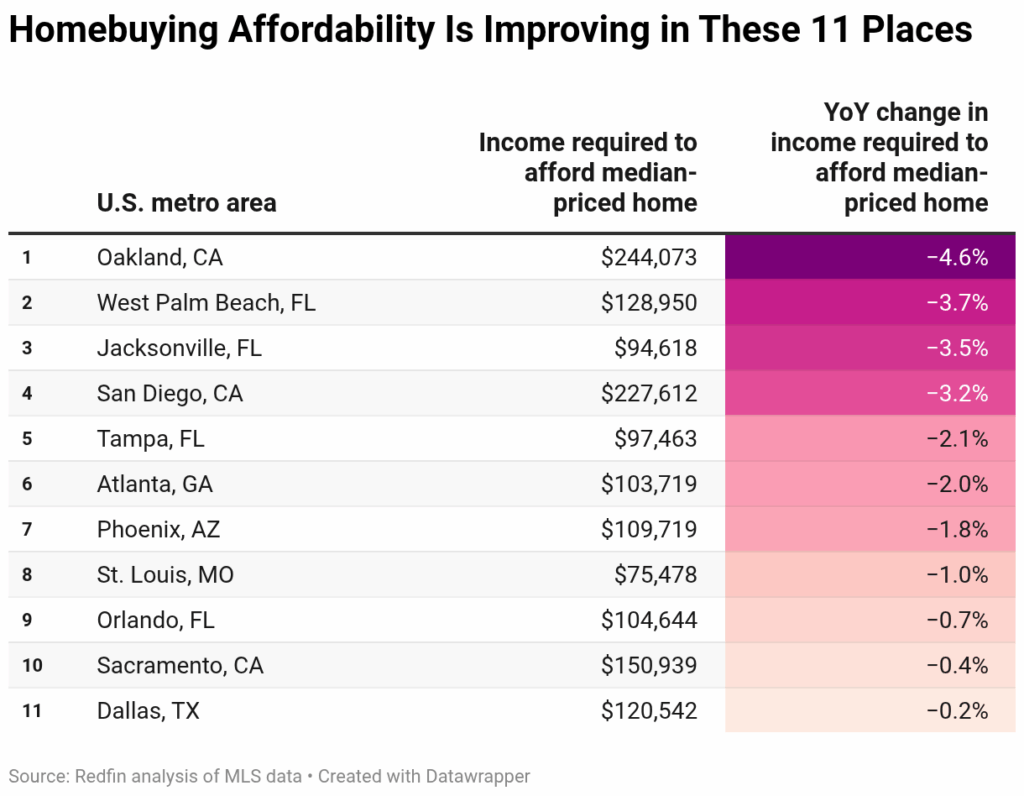
Here’s the full list of the metros where affordability is improving:
- Oakland, CA (-4.6%)
- West Palm Beach, FL (-3.7%)
- Jacksonville, FL (-3.5%)
- San Diego, CA (-3.2%)
- Tampa, FL (-2.1%)
- Atlanta, GA (-2.0%)
- Phoenix, AZ (-1.8%)
- St. Louis, MO (-1.0%)
- Orlando, FL (-0.7%)
- Sacramento, CA (-0.4%)
- Dallas, TX (-0.2%)
The common thread? Many of these areas saw explosive growth during the pandemic housing boom, with prices surging as remote workers flocked to warmer, more spacious destinations in the Sun Belt and West Coast. Now, as the post-pandemic housing frenzy cools, some of those overheated markets are stabilizing or seeing modest price corrections.
💬 What’s Driving the Shift?
According to Redfin agents, it’s a classic case of supply meeting demand. In boomtowns like Phoenix and Tampa, rapid new construction during the pandemic has led to increased inventory. As a result, sellers are now offering major concessions including covering closing costs and cutting listing prices to entice cautious buyers.
“Homes are sitting longer, and buyers are pushing back,” said Katie Shook, a Redfin Premier Agent in Phoenix. “If a home isn’t priced right or in top condition, it simply doesn’t sell. Sellers are offering incentives like $10,000 to $15,000 toward closing costs just to get a deal done.”
In Florida, additional pressures are coming from rising homeowners’ insurance costs, climate-related risks, and HOA fee increases, all of which are pushing prices downward despite ongoing demand.
🔺 Where Affordability Is Worsening
Not all metros are becoming more buyer-friendly. In fact, some of the nation’s most affordable markets are now experiencing sharp increases in required income to buy a home.
Detroit, MI, for example, saw the largest percentage increase in the income needed to purchase a home up 9.9% year-over-year. However, buyers still only need about $57,432 annually, making it the most affordable metro in the country.
Other cities seeing rapid increases include:
- Cleveland, OH (+8.2%)
- Newark, NJ (+6.8%)
- Chicago, IL (+6.7%)
- Pittsburgh, PA (+5.7%)
The takeaway? Cheaper markets are gaining attention, and that increased interest is driving up prices. With more buyers priced out of expensive metros, demand is shifting toward traditionally low-cost areas pushing those once-overlooked cities into the spotlight.

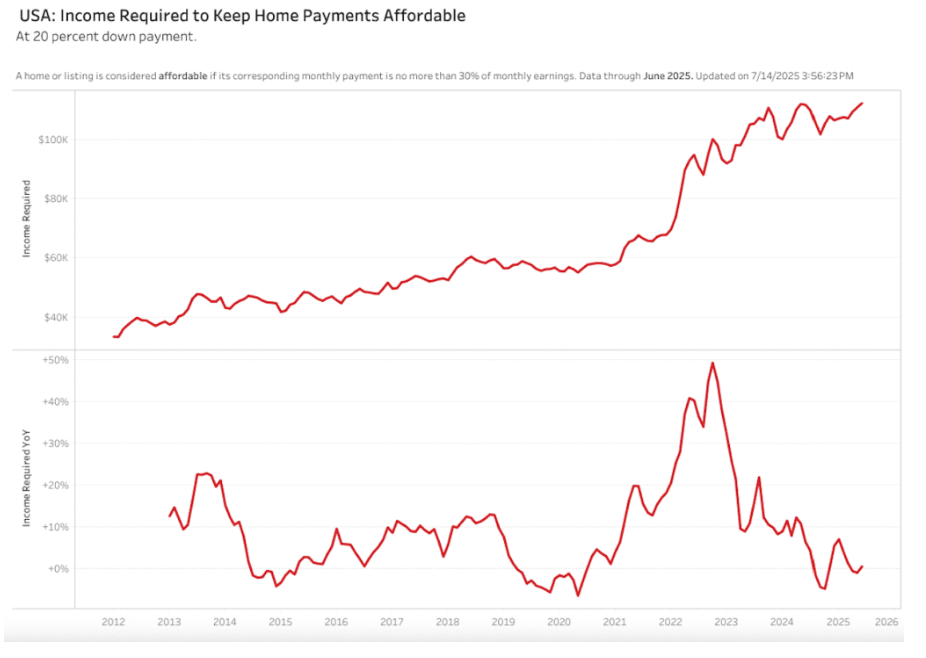
📊 Affordability Snapshot: The 30% Rule Is Outdated
Housing experts have long touted the idea that you should spend no more than 30% of your income on housing. In today’s market, that’s becoming less realistic.
A household earning the national median income would need to spend 39% of their earnings to buy a median-priced home. Still, that’s a modest improvement from last year’s 40.5%, thanks to income growth and relatively flat home prices (up just 1% year-over-year).
On the bright side, the share of homes considered “affordable” (costing no more than 30% of income) rose slightly from 33.2% to 34.6% a small but promising gain for budget-conscious buyers.
Inventory Reaches Post-Pandemic Peak, But Growth Is Slowing
Realtor.com reports that total home listings in July 2025 rose 24.8% year-over-year, marking the 21st consecutive month of inventory growth. It’s also the third month in a row with more than one million active listings an encouraging milestone for prospective buyers.
However, the pace of new listings is starting to decelerate:
- June 2025: +28.9%
- May 2025: +31.5%
- July 2025: +24.8%
Total active inventory still remains 13.4% below pre-pandemic norms, suggesting that the market is still underbuilt especially in certain regions.
Regional Breakdown: Where Listings Are Recovering (and Not)
- West: +9.3% (above pre-pandemic norms)
- South: +4.3% (also above pre-pandemic levels)
- Midwest: -40% (well below)
- Northeast: -51.1% (lagging the most)
The South and West have rebounded largely due to proactive new construction, while the Midwest and Northeast still struggle with inventory shortages. These patterns reflect not just pandemic-related shifts but also long-standing gaps in regional housing policy and construction trends.
Bottom Line: Is Homebuying Getting Easier?
While the national housing market remains challenging, there are clear signs that affordability is improving in select cities particularly those that over-heated during the pandemic or are expanding inventory quickly.
If you’re looking to buy in 2025:
- Watch Sun Belt metros for price relief.
- Focus on growing inventory markets.
- Leverage buyer-friendly conditions like seller concessions and price cuts.
- Pay attention to local insurance, taxes, and HOA fees, especially in climate-sensitive regions.
As mortgage rates stay elevated, every dollar counts and the best strategy is to shop smart, look beyond your metro bubble, and be prepared to move quickly when you find the right opportunity. For direct financing consultations or mortgage options for you visit 👉 Nadlan Capital Group.
