


Housing conditions across the U.S. are expected to move toward greater balance in 2026, according to new forecasts from Realtor.com. While challenges remain, early signs point to a calmer market with slower price growth, improving inventory, and modest gains in home sales.
Home prices are projected to rise 2.2% next year, while mortgage rates are expected to average 6.3%. Although rates will remain elevated compared to pre-pandemic norms, the slight relief should help ease affordability pressures. Existing-home sales are forecast to increase by 1.7%, reaching about 4.13 million, up from a near 30-year low in 2025. Meanwhile, the number of homes for sale is expected to grow by nearly 9% year over year.
Together, these trends suggest a housing market that is less overheated and more evenly matched between buyers and sellers.
A More Balanced Market Takes Shape
In 2026, price growth is expected to remain steady rather than sharp. Combined with stable mortgage rates and rising incomes, buyers may regain some negotiating power. For the first time since 2022, the share of income needed to cover a typical mortgage payment is expected to fall below 30%, a key threshold for affordability.
This shift does not mean housing will suddenly become cheap, but it does mark gradual progress toward healthier conditions.
National Housing Forecast Snapshot
2026 Outlook Highlights (Realtor.com):
- Mortgage Rates: 6.3% average
- Home Price Growth: +2.2% year over year
- Existing-Home Sales: +1.7% to 4.13 million
- For-Sale Inventory: +8.9%
- Single-Family Housing Starts: +3.1%
- Homeownership Rate: 64.8%
- Rent Growth: -1.0%
Compared with 2025, these changes are modest but meaningful, especially given how weak activity has been in recent years.


Home Sales Likely to Improve, But Slowly
After a nearly flat year in 2025, existing-home sales are expected to rise slightly in 2026. Even so, sales will remain well below historical averages. High prices and borrowing costs continue to limit demand, especially among first-time buyers.
If sales increase as expected, 2025 will still rank as one of the lowest years for home sales in nearly three decades. The recovery in 2026 is expected to be real, but slow and uneven across regions.
Mortgage Rate Lock-In Still Limits Movement
One major reason inventory remains tight is the mortgage rate lock-in effect. Around 80% of current homeowners hold mortgage rates below 6%, making them reluctant to sell and take on a new loan at higher rates.
As a result, most moves in 2026 are expected to be driven by life events such as job changes, family needs, or downsizing not by rate shopping. This will keep turnover low and limit how fast inventory can recover.
Prices Rising, But Real Costs Easing
While home prices are expected to increase another 2.2% in 2026, inflation is projected to remain above that level. This means real (inflation-adjusted) home prices will decline slightly for a second year in a row.
This dynamic helps affordability over time. Even though sticker prices rise, wages and overall costs are rising faster, allowing buyers to gradually catch up.

Affordability Improves as Rates and Payments Ease
Mortgage rates began easing in late 2025 and are expected to remain stable through 2026. Realtor.com projects the average 30-year fixed mortgage rate will stay near 6.3% throughout the year.
As price growth slows and rates stabilize, the average monthly payment for a median-priced home is expected to fall by 1.3% the first annual drop since 2020. Combined with wage growth that outpaces inflation, buyers should see some relief.
The average mortgage payment is forecast to equal 29.3% of median income, marking a small but meaningful improvement.
Inventory Recovery Continues, But Slows
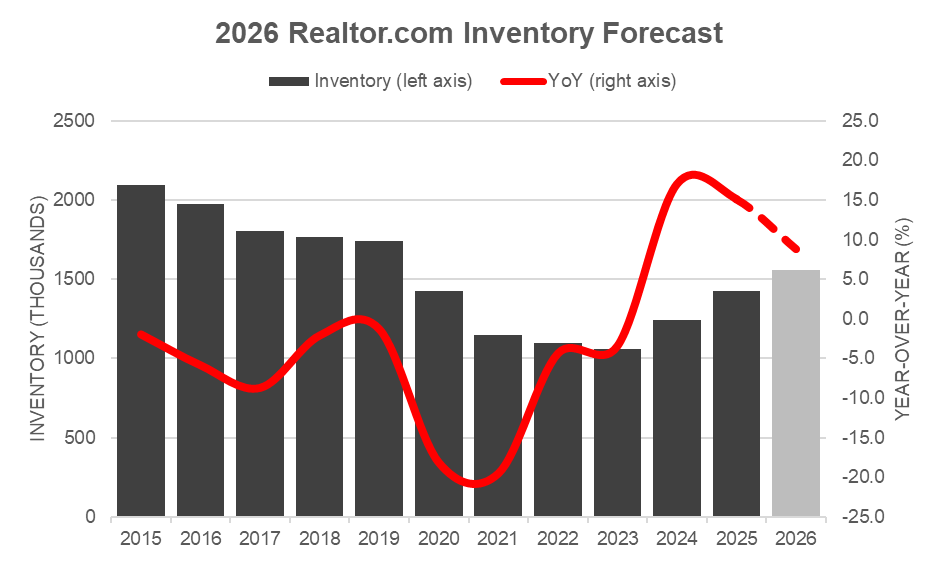
Active listings increased steadily through 2025, marking two full years of inventory growth by October. That trend is expected to continue in 2026, though at a slower pace as markets approach pre-pandemic levels.
Inventory is forecast to rise 8.9% next year, leaving supply about 12% below pre-2020 norms by year’s end. That’s an improvement from a 19% gap in 2025 and nearly 30% in 2024.
With supply rising faster than sales, buyer leverage should continue to improve.
Buyers Gain Some Ground, But Barriers Remain
The national market is expected to average 4.6 months of supply in 2026, a level considered balanced. While buyers may have more room to negotiate, affordability challenges will persist especially for younger and first-time buyers.
At least seven major metro areas entered buyer-friendly territory in 2025, and more are expected to follow in 2026. Regional differences will remain large, with some markets tilting toward buyers faster than others.
Rents Continue to Cool Nationwide
Renters are expected to see further relief in 2026 as new multifamily construction adds supply. Vacancy rates are projected to approach or exceed the long-term average of 7.2%.
Rents have been falling for more than two years, and that trend is expected to continue. Cities such as Las Vegas, Atlanta, and Austin which saw the largest rent spikes during the pandemic now offer better value.
Demand is also growing in cities like Nashville, Raleigh, and Richmond, where affordability and job access attract younger renters.
High-cost cities such as New York will remain expensive, and meaningful rent relief there is expected to take many years.
Economic Outlook Supports Gradual Stability
Economic growth slowed in 2025 as the economy adjusted to changes in immigration, trade, and taxes. Growth is expected to remain steady and close to trend in 2026.
Inflation briefly eased to 2.3% earlier in the year but rose again following new tariffs. Inflation pressure is expected to persist in 2026, limiting how far mortgage rates can fall.
What This Means for Buyers and Sellers
The 2026 housing market is not expected to boom or bust. Instead, it points to a slow normalization:
- Buyers gain slightly more power
- Sellers face more competition
- Inventory continues to rebuild
- Affordability improves gradually
While the market will remain challenging, more buyers should be able to navigate it successfully in 2026 than in recent years. For direct financing consultations or mortgage options for you visit 👉 Nadlan Capital Group.
