


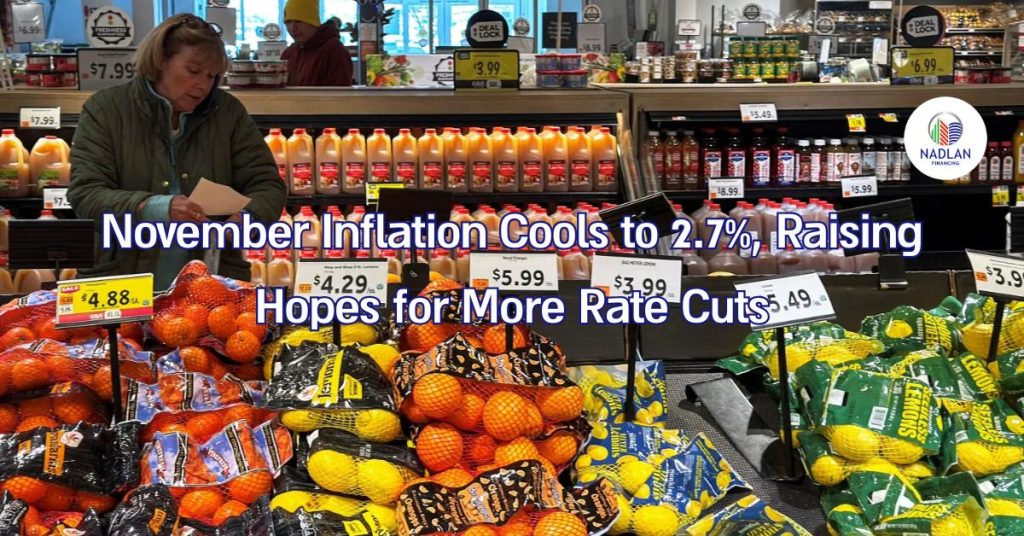
U.S. consumer prices rose less than expected in November, offering a fresh sign that inflation pressures may be easing and giving markets new optimism about future interest rate cuts.
According to a delayed report from the Bureau of Labor Statistics (BLS), the consumer price index (CPI) increased 2.7% year over year. Economists surveyed ahead of the release had expected inflation to come in higher, at 3.1%.
Core Inflation Also Came in Lower
Core inflation, which excludes food and energy prices, also surprised to the downside. The core CPI rose 2.6% over the past 12 months, below expectations of 3.0%.
On a monthly basis, both headline and core CPI increased 0.2%, compared with forecasts of 0.3%. These softer readings suggest price growth is slowing at a steadier pace than many had feared.
First Inflation Report After Government Shutdown
This CPI release is notable because it covers the first period after the U.S. government shutdown ended. The shutdown disrupted data collection and led to the cancellation of the October CPI report.
Because October data was missing, the November report lacked some of the usual comparisons. The BLS said it relied on alternative data sources to complete the index, though it was unable to fully replace the missing information.
For that reason, some economists are cautious about drawing strong conclusions from a single report.
Shelter Inflation Shows Improvement
One encouraging detail was housing-related inflation. Shelter costs, which make up roughly one-third of the CPI, rose 3% annually, continuing a cooling trend. Housing inflation has been one of the biggest drivers of elevated prices over the past few years, so slower growth here is a positive sign.
Food prices increased 2.6% over the year, while energy prices were up 4.2%, reflecting ongoing volatility in fuel and utility costs.
Markets React Quickly
Despite data limitations, investors responded positively. Stocks moved higher following the report, with futures pointing to gains that could break a recent losing streak. Treasury yields slipped, signaling increased confidence that inflation is moving in the right direction.
Interest rate expectations also shifted. While a January rate cut still appears unlikely, traders raised their bets on a March rate cut, according to futures market data.
What It Means for the Fed
Earlier this month, the Federal Reserve lowered its benchmark interest rate for the third straight meeting. The cooler inflation reading strengthens the case that the Fed may prioritize supporting the labor market if price pressures continue to ease.
Lower inflation gives policymakers more flexibility, though officials are expected to remain cautious and data-dependent in the months ahead.
The Bottom Line
November’s inflation report delivered better-than-expected news, showing price growth slowing more than forecast. While missing data from the shutdown limits how much weight economists place on the report, it adds to growing evidence that inflation is gradually cooling.
If upcoming reports confirm this trend, the path toward additional rate cuts in 2026 could become clearer something both borrowers and investors are watching closely. For direct financing consultations or mortgage options for you visit 👉 Nadlan Capital Group.
