


The Federal Reserve opened 2026 with a clear message: no rush, no panic, and no political shortcuts.
On Wednesday, the Federal Open Market Committee voted to keep the federal funds rate unchanged in a range between 3.5% and 3.75%, pausing after three consecutive quarter-point cuts in 2025. The decision came despite mounting pressure from the White House to accelerate rate reductions.
For borrowers hoping for immediate relief, the decision may feel underwhelming. For policymakers and markets, however, it signals a central bank intent on regaining balance after years of economic whiplash.
So why did the Fed hold firm and what does this mean for housing, lending, and the broader economy?
What the Fed Decided
The Fed’s January decision was widely anticipated, but the details still matter.
Here are the key takeaways:
- The Fed held rates steady at 3.5%–3.75%
- The decision ended a streak of three consecutive rate cuts
- The committee upgraded its view of economic growth
- Labor market concerns were dialed back
- Inflation remains above target but contained
- Two committee members dissented, favoring a rate cut
This was not a unanimous vote but it was a decisive one.
Powell’s Message: The Economy Is Holding Up
Fed Chair Jerome Powell announced the decision during a Wednesday afternoon press conference, striking a tone of cautious confidence.
“We see the current stance of monetary policy as appropriate to encourage progress toward both our maximum employment and 2% inflation goals,” Powell said.
He described the economy as expanding at a “solid pace,” even as hiring slows.
While job gains have softened, Powell noted that the unemployment rate is showing signs of stabilization, suggesting the labor market is cooling but not cracking.
Is the Fed signaling confidence or simply buying time?
How the Committee Voted
The voting split underscores internal debate within the Fed.
Voting to hold rates steady:
- Jerome Powell
- John C. Williams (Vice Chair)
- Michael S. Barr
- Michelle W. Bowman
- Lisa D. Cook
- Beth M. Hammack
- Philip N. Jefferson
- Neel Kashkari
- Lorie K. Logan
- Anna Paulson
Voting against the decision:
- Stephen I. Miran
- Christopher J. Waller
The dissenters favored an immediate quarter-point rate cut, arguing that easing financial conditions sooner could better support a slowing labor market.
Still, the majority opted for restraint.
Why This Pause Matters More Than It Seems
This wasn’t just a “do nothing” meeting.
The Fed’s post-meeting statement raised its assessment of economic growth and reduced emphasis on labor market risk relative to inflation. Notably, it removed language suggesting the labor market posed a greater threat than inflation.
That change matters.
It signals that policymakers now see the Fed’s dual mandate price stability and full employment as more balanced than before. In other words, the urgency to cut rates has eased.
Does this mean the Fed is done cutting for good? Not necessarily but it does mean patience is back in fashion.
The Political Backdrop: An Unusual Moment for the Fed
This meeting took place under extraordinary circumstances.
It was the Fed’s first rate decision since news emerged of a federal criminal investigation into Powell by the U.S. Department of Justice. The investigation reportedly centers on Powell’s congressional testimony regarding cost overruns tied to a multi-billion-dollar Fed office renovation project.
Powell recently issued a rare video statement calling the probe politically motivated.
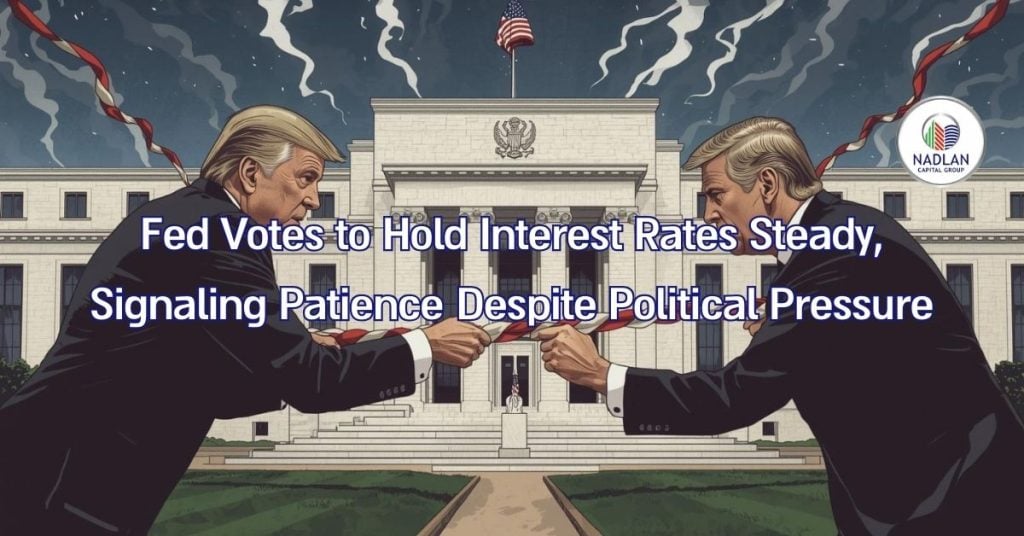
The situation has intensified tensions between the Fed and President Donald Trump, who has repeatedly urged the central bank to slash rates more aggressively.
Trump appointed Powell during his first term, though Powell was later reappointed by President Joe Biden.
Despite the pressure and the optics the Fed stayed the course.
The Fed’s Independence on Display
Central bank independence is often discussed in theory. This decision put it into practice.
The White House has argued that high rates:
- Hurt consumers
- Slow business investment
- Undermine global competitiveness
The Fed, however, is focused on avoiding premature easing that could reignite inflation.
By holding rates steady amid political noise, the Fed sent a message to markets: policy will be driven by data, not demands.
Is that reassurance or a source of friction as the year unfolds?
What Futures Markets Are Saying
While the Fed paused in January, markets still expect cuts later in the year.
According to the CME FedWatch Tool:
- Two quarter-point cuts are priced in for 2026
- The first is expected around June
- A second cut is anticipated in the fall
That expectation aligns with a “slow glide” scenario where rates ease gradually as inflation continues to cool.
But expectations can change quickly, especially if economic data surprises.
What This Means for Mortgage Borrowers
For homeowners and buyers, the Fed’s decision is more indirectbut still important.
Mortgage rates don’t track the Fed’s benchmark directly. Instead, they follow long-term Treasury yields and inflation expectations. Still, a Fed pause helps stabilize rate volatility.
For now:
- Mortgage rates remain in the low-6% range
- Sharp downward moves are unlikely without clearer inflation progress
- Stability may help buyers plan with more confidence
If you’re waiting for the Fed to cut before acting, the timeline may be longer than hoped.
Is locking in certainty more valuable than waiting for a perfect rate?
What This Means for Credit Cards and Personal Loans
Unlike mortgages, credit cards and variable-rate loans are closely tied to the Fed’s benchmark.
With rates on hold:
- Credit card APRs are unlikely to fall immediately
- Borrowers carrying balances will continue to feel pressure
- Any relief will likely come later in the year
The Fed’s pause doesn’t reverse last year’s improvements but it does slow further progress.
What This Means for Businesses and Investors
For businesses, steady rates reduce uncertainty.
Companies now have:
- Greater clarity on short-term borrowing costs
- More predictable financing conditions
- Time to adjust capital plans without sudden shocks
For investors, the message is mixed:
- No immediate stimulus boost
- But also no tightening surprise
Markets generally prefer predictability, and this decision delivered it.
Stagflation Fears Linger
One risk hovering in the background is stagflation a combination of slow growth and stubborn inflation.
Hiring has cooled significantly over the past year, while inflation remains above the Fed’s 2% target. That creates a delicate policy environment.
Cut too early, and inflation could reaccelerate. Wait too long, and growth could stall.
The Fed’s January decision reflects that tension.
Is the soft landing still achievable or just postponed?
Powell’s Future Remains Unclear
Powell’s term as Fed chair will eventually end, but his plans remain uncertain.
At Wednesday’s press conference, he declined to comment on whether he would:
- Step down entirely
- Remain as a Fed governor
- Seek another role
Given the political and legal scrutiny surrounding him, his future adds another layer of uncertainty to the Fed’s longer-term direction.
What This Means for Housing in 2026
For the housing market, the Fed’s pause supports a narrative of gradual normalization, not dramatic recovery.
Expect:
- Modest improvements in affordability
- Continued sensitivity to rates and inventory
- No sudden flood of demand
Housing momentum will depend less on Fed action and more on supply, wage growth, and consumer confidence.
The Bigger Picture: A Return to Measured Policy
After years of crisis-era policymaking, the Fed is signaling a return to measured, incremental decision-making.
No emergency cuts. No political concessions. No dramatic pivots.
Just data, patience, and balance.
Conclusion: A Quiet Decision With Loud Implications
By voting to hold interest rates steady, the Federal Reserve reinforced its commitment to independence and stability at a politically charged moment. While borrowers may need to wait longer for meaningful relief, the decision reduces uncertainty and keeps the economy on a controlled path.
At Nadlan Capital Group, we believe understanding why rates move or don’t is just as important as tracking where they are. The Fed’s pause isn’t the end of the story for 2026, but it sets the tone.
Do you think the Fed made the right call by holding rates steady or should it have cut sooner? Share your perspective with us, and stay connected with Nadlan Capital Group for clear, professional insights into monetary policy and its impact on real estate and lending.
