


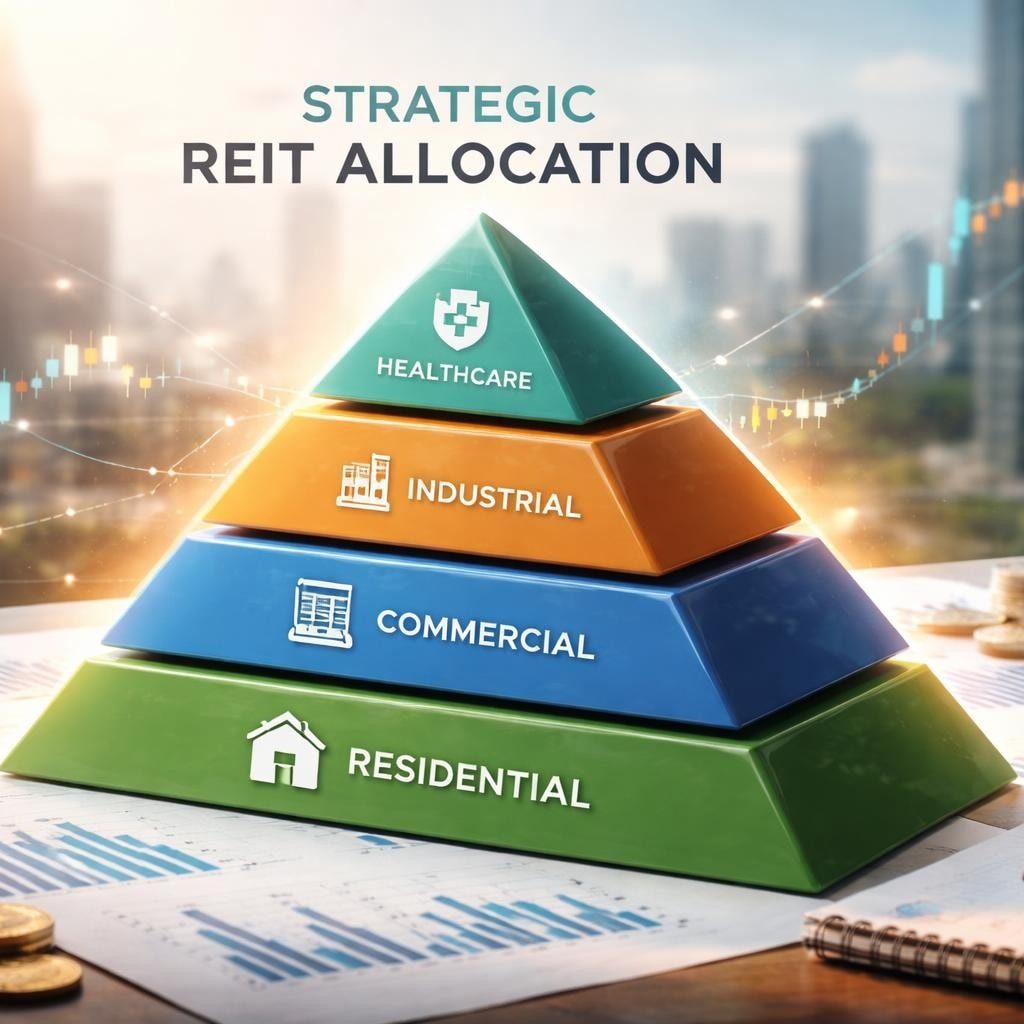
Real estate investment trusts have become a cornerstone of modern investment portfolios, offering exposure to property markets without the complexities of direct ownership. As investors seek diversification and passive income streams, the concept of assembling a REIT set has gained substantial traction. A thoughtfully constructed reit set represents a curated collection of different REIT investments designed to balance risk, maximize returns, and provide exposure to various real estate sectors. Understanding how to build and manage such a portfolio requires knowledge of REIT fundamentals, sector dynamics, and strategic allocation principles that align with your financial goals.
What Defines a REIT Set in Modern Investing
A reit set refers to a deliberately selected group of real estate investment trusts that work together to create a diversified real estate portfolio. Unlike investing in a single REIT or randomly purchasing multiple trusts, a proper set follows strategic principles based on sector allocation, geographic distribution, and risk tolerance.
The concept mirrors traditional portfolio theory, where combining assets with different characteristics can reduce overall volatility while maintaining growth potential. When you invest in REITs, you're buying shares in companies that own, operate, or finance income-producing properties. A reit set takes this further by combining multiple REITs across different categories.
Core Components of an Effective REIT Set
Building a successful reit set requires understanding the various REIT categories available to investors:
- Equity REITs: Own and operate income-generating properties
- Mortgage REITs: Provide financing for real estate and earn interest income
- Hybrid REITs: Combine ownership and financing activities
- Publicly-traded REITs: Listed on major stock exchanges with high liquidity
- Public non-traded REITs: Registered with SEC but not exchange-traded
- Private REITs: Limited to accredited investors with restricted liquidity
Each component serves a specific purpose within your overall strategy. Equity REITs provide steady dividend income and potential appreciation, while mortgage REITs may offer higher yields with different risk profiles. The right combination depends on your investment timeline, income needs, and risk appetite.


Strategic Sector Allocation Within Your REIT Set
Diversifying across real estate sectors represents one of the most critical aspects of constructing a robust reit set. Different property types perform differently based on economic cycles, demographic trends, and technological changes.
Primary REIT Sectors to Consider
The commercial real estate landscape offers numerous specialized sectors, each with unique characteristics:
| Sector | Primary Focus | Typical Tenant Profile | Economic Sensitivity |
|---|---|---|---|
| Residential | Apartments, housing | Individual renters | Moderate |
| Office | Commercial buildings | Corporations | High |
| Retail | Shopping centers, malls | Retailers, restaurants | High |
| Industrial | Warehouses, distribution | Logistics companies | Moderate |
| Healthcare | Hospitals, senior housing | Medical providers | Low |
| Data Centers | Technology infrastructure | Tech companies | Low |
| Self-Storage | Storage facilities | Individuals, businesses | Low |
Understanding these sectors helps investors build a reit set that performs across different market conditions. For instance, residential REITs positioned for growth may provide stability during economic uncertainty when people prioritize housing over discretionary spending.
Balancing Defensive and Growth-Oriented Holdings
A well-constructed reit set typically includes both defensive and growth-oriented positions. Healthcare and residential REITs often serve as defensive anchors, providing consistent income even during downturns. Meanwhile, industrial and data center REITs may offer higher growth potential as e-commerce and digitalization trends accelerate.
Consider allocating 40-50% of your reit set to defensive sectors, 30-40% to moderate-growth sectors, and 10-20% to higher-risk, higher-reward opportunities. This balance provides stability while capturing upside potential from emerging trends.
Building Your REIT Set: Practical Implementation Strategies
Assembling an effective reit set requires more than identifying good individual investments. You need a systematic approach to selection, sizing, and ongoing management.
Individual REIT Selection Process
Start by screening candidates based on quantitative and qualitative criteria:
- Financial Health Assessment: Review funds from operations (FFO), debt-to-equity ratios, and interest coverage
- Management Quality: Evaluate track record, experience, and alignment with shareholder interests
- Property Portfolio Analysis: Examine location quality, occupancy rates, and lease structures
- Dividend Sustainability: Assess payout ratios and historical dividend growth
- Valuation Metrics: Compare price-to-FFO, price-to-book, and yields against peers
Each REIT within your set should pass rigorous quality standards. Avoid the temptation to include marginal holdings simply to increase diversification. Quality matters more than quantity when building a reit set.
Position Sizing and Portfolio Weighting
Determining how much capital to allocate to each REIT involves balancing several factors. Larger, more stable REITs might warrant 8-12% positions within your set, while smaller or more speculative holdings should remain at 3-5%.
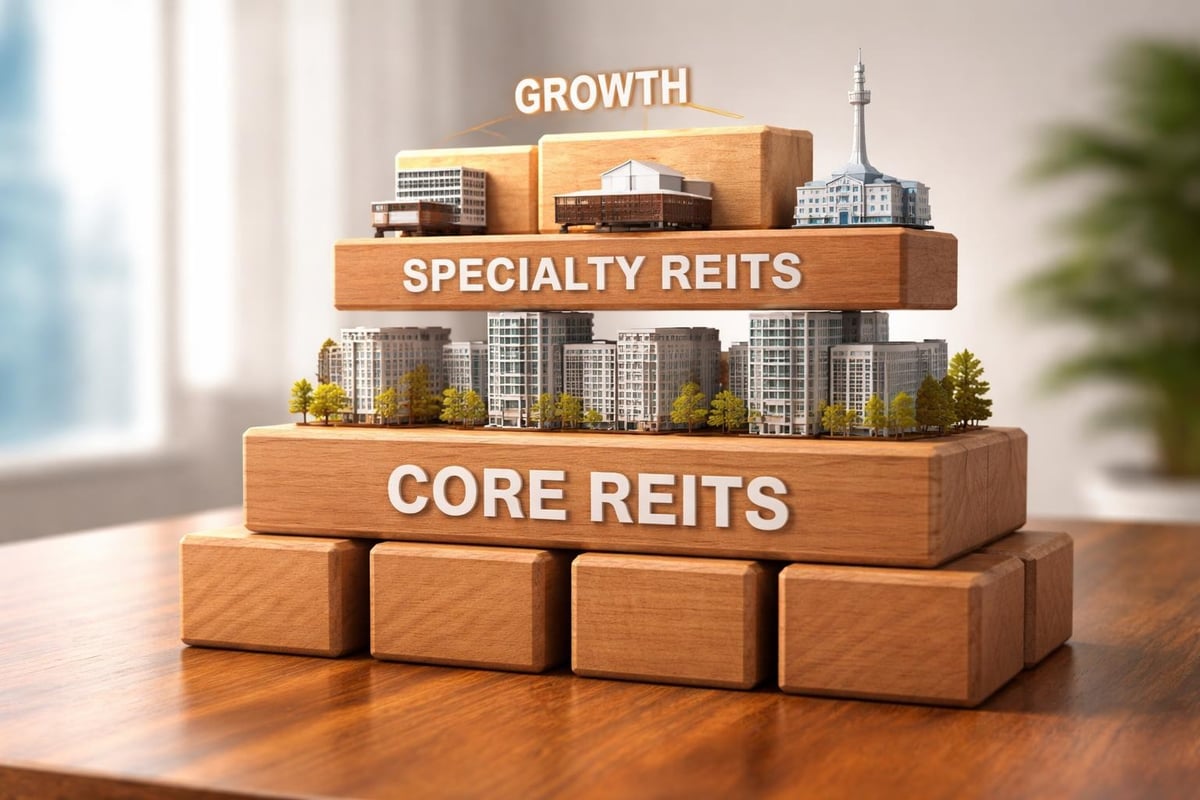
Core-Satellite Approach for REIT Sets:
- Core Holdings (60-70%): Large-cap, diversified REITs with strong track records
- Satellite Holdings (20-30%): Specialized or mid-cap REITs targeting specific opportunities
- Opportunistic Positions (10%): Smaller positions in emerging sectors or recovery plays
This structure provides stability through core holdings while allowing participation in higher-growth opportunities through satellite positions.
REIT Set Alternatives: ETFs and Mutual Funds
Not every investor wants to construct an individual reit set from scratch. Exchange-traded funds and mutual funds offer pre-packaged diversification across multiple REITs.
Comparing Individual REIT Sets to REIT Funds
| Approach | Customization | Cost | Management Time | Tax Efficiency |
|---|---|---|---|---|
| Individual REIT Set | High | Lower ongoing fees | Significant | Better control |
| REIT ETFs | Low | Low expense ratios | Minimal | Good |
| REIT Mutual Funds | Low | Higher expense ratios | Minimal | Moderate |
REIT ETFs available in 2026 provide instant diversification with a single purchase. They're ideal for investors who want real estate exposure without extensive research or active management.
However, building your own reit set offers advantages that funds cannot match. You maintain complete control over sector allocation, can harvest tax losses strategically, and avoid unwanted exposures that may exist in broad-market funds. Additionally, you can tailor your set precisely to your investment thesis rather than accepting a fund manager's decisions.
Combining Approaches for Optimal Results
Many sophisticated investors use a hybrid strategy, maintaining both individual REIT positions and fund holdings. You might use a REIT ETF as a core position for broad market exposure while adding individual REITs to overweight specific sectors or capture opportunities your research identifies.
This combined approach in your reit set delivers diversification benefits while preserving the flexibility to express conviction views through individual holdings.
Risk Management Within Your REIT Set
Every investment carries risk, and a reit set concentrates exposure to real estate markets. Effective risk management protects capital while allowing for growth.
Identifying Common REIT Risks
Understanding how REITs function as investment vehicles helps investors recognize potential vulnerabilities:
- Interest Rate Risk: Rising rates can pressure REIT valuations and increase borrowing costs
- Sector Concentration: Overexposure to declining property types
- Economic Sensitivity: Recession impacts on rental income and occupancy
- Liquidity Risk: Difficulty selling positions during market stress
- Management Risk: Poor capital allocation or governance decisions
A diversified reit set mitigates many of these risks through strategic asset allocation. By spreading investments across sectors, geographies, and REIT types, you reduce the impact of any single adverse event.
Stress Testing Your REIT Set
Periodically evaluate how your portfolio would perform under various scenarios:
- Interest Rate Shock: Model a rapid 200-basis-point rate increase
- Recession Scenario: Estimate occupancy declines and rent reductions
- Sector Disruption: Consider impact of e-commerce on retail holdings
- Liquidity Crisis: Assess ability to maintain positions during market panic
These exercises reveal vulnerabilities before they materialize into losses. Adjust your reit set composition based on findings, perhaps reducing exposure to highly sensitive sectors or increasing cash reserves.
Optimizing Income Generation Through REIT Sets
One primary attraction of REIT investing is dividend income. Legal requirements mandate that REITs distribute at least 90% of taxable income to shareholders, making them reliable income generators.
Maximizing Dividend Yield Safely
While chasing the highest yields seems appealing, sustainable income requires scrutiny of dividend quality:
High-Quality Dividend Characteristics:
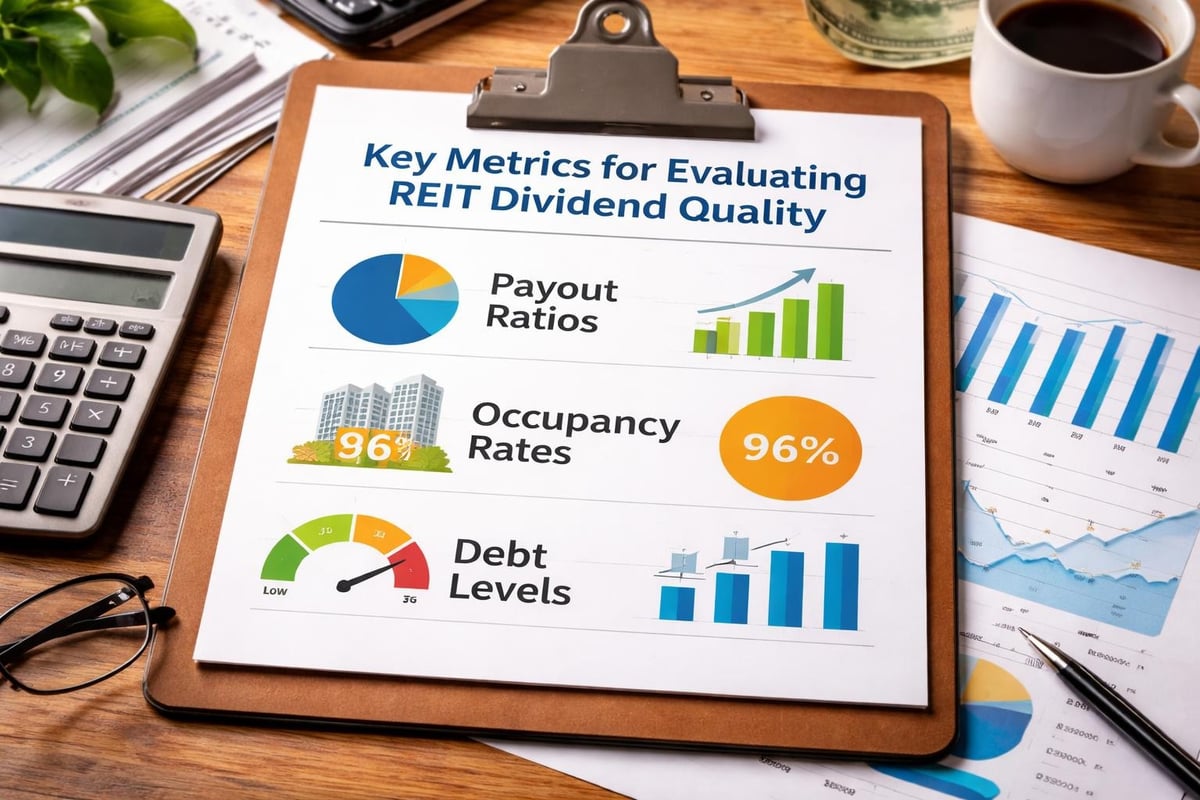
- Payout ratio below 85% of FFO
- Consistent or growing distributions over five-plus years
- Strong occupancy rates and lease renewal activity
- Conservative leverage with debt-to-EBITDA below 6x
Constructing your reit set with dividend sustainability in mind provides reliable cash flow that supports long-term wealth building. A portfolio yielding 4-6% annually with modest growth potential often outperforms chasing 8-10% yields from financially stressed REITs.
Creating a Dividend Ladder
Stagger ex-dividend dates across your reit set to generate monthly income rather than lumpy quarterly distributions. Many REITs pay dividends monthly, while others distribute quarterly. Strategic selection creates steady cash flow throughout the year.
This approach provides psychological benefits by delivering regular income and practical advantages for investors relying on distributions for living expenses or reinvestment opportunities.
Tax Considerations for REIT Set Investors
REIT dividends receive different tax treatment than qualified corporate dividends, impacting after-tax returns significantly.
Understanding REIT Tax Treatment
REIT distributions typically consist of:
- Ordinary income: Taxed at your marginal rate (most common)
- Capital gains: Taxed at preferential rates
- Return of capital: Reduces cost basis, defers taxation
The Tax Cuts and Jobs Act of 2017 introduced a 20% qualified business income deduction for REIT dividends, partially offsetting the ordinary income treatment. This deduction expires after 2025 unless extended, making 2026 a critical year for tax planning.
Tax-Efficient REIT Set Strategies:
- Hold REITs in tax-advantaged accounts (IRAs, 401(k)s) when possible
- Use taxable accounts for REITs with higher return-of-capital components
- Harvest tax losses strategically to offset gains
- Consider REIT location relative to state income taxes
Your reit set composition might differ between taxable and retirement accounts based on these considerations. High-yielding mortgage REITs might belong in IRAs, while growth-oriented REITs with lower current yields could sit in taxable accounts.
Monitoring and Rebalancing Your REIT Set
Building your initial portfolio represents just the beginning. Ongoing management ensures your reit set remains aligned with objectives as markets evolve.
Establishing Review Protocols
Set regular intervals for comprehensive portfolio reviews:
- Quarterly: Monitor earnings reports, occupancy trends, and dividend announcements
- Semi-annually: Review sector allocation and rebalancing needs
- Annually: Reassess overall strategy, tax positioning, and long-term goals
Between formal reviews, establish alert systems for significant developments like dividend cuts, major acquisitions, or management changes that might warrant immediate action.
Rebalancing Triggers and Methodologies
Your reit set will drift from target allocations as different holdings perform variably. Establish clear rules for when to rebalance:
- Rebalance when any sector exceeds target allocation by more than 5%
- Trim positions that grow beyond 15% of total portfolio value
- Add to underweighted sectors when they fall 3% below targets
- Implement tax-loss harvesting when positions decline 10% or more
Calendar-based rebalancing (annually or semi-annually) provides a systematic approach, while threshold-based rebalancing responds to market movements. Many investors combine both methods for optimal results.
Advanced REIT Set Strategies for Experienced Investors
As you gain experience managing a reit set, more sophisticated approaches become available to enhance returns and manage risk.
Incorporating International REITs
While U.S. REITs offer substantial opportunities, international exposure adds another diversification layer. Many developed markets have mature REIT structures with attractive yields and growth prospects.
Consider allocating 10-20% of your reit set to international holdings, focusing on countries with established regulatory frameworks and investor protections. Australia, Canada, Singapore, and several European nations offer accessible REIT markets through ADRs or international ETFs.
Tactical Sector Rotation
Beyond maintaining static allocations, experienced investors rotate emphasis based on economic cycles and market conditions:
Economic Expansion: Emphasize office, retail, and hotel REITs
Late Cycle: Shift toward healthcare, residential, and industrial
Recession: Focus on necessity-based sectors like self-storage and healthcare
Recovery: Position for cyclical recovery in office and retail
This tactical approach within your reit set requires economic analysis and market timing skills but can significantly enhance returns when executed effectively.
Pairing REITs With Real Estate Operating Companies
Some investors complement their reit set with real estate operating companies (REOCs) that don't qualify as REITs due to different business structures. REOCs may offer growth potential through property development or management services that REITs cannot pursue due to distribution requirements.
This hybrid approach provides comprehensive real estate exposure while maintaining the income focus central to REIT investing.
Common Mistakes to Avoid When Building a REIT Set
Even experienced investors make errors when constructing real estate portfolios. Awareness of common pitfalls helps you avoid costly mistakes.
Chasing Yield Without Due Diligence
Extraordinarily high yields often signal underlying problems rather than opportunity. Before adding any REIT to your set, investigate why the yield exceeds peer averages. Distribution cuts devastate total returns, making dividend sustainability analysis essential.
Neglecting Geographic Diversification
Concentrating holdings in specific regions exposes your reit set to localized economic shocks, natural disasters, or regulatory changes. Ensure your portfolio includes REITs with properties spread across multiple states and regions.
Overtrading and Excessive Turnover
Frequently buying and selling REITs generates transaction costs and tax liabilities that erode returns. Maintain a long-term perspective, making changes only when fundamental factors warrant adjustment rather than responding to short-term price movements.
Ignoring Correlation With Broader Markets
REITs can exhibit significant correlation with equity markets during stress periods, reducing diversification benefits. Balance your overall investment portfolio to account for this relationship rather than assuming REITs provide complete independence from stocks.
Building a thoughtful reit set requires understanding sector dynamics, risk management principles, and strategic allocation techniques that align with your financial objectives. By diversifying across property types, maintaining quality standards, and implementing disciplined rebalancing practices, investors can harness real estate's wealth-building potential while managing risks effectively. Whether you're just beginning your real estate investment journey or looking to optimize an existing portfolio, Nadlan Forum provides the resources, community insights, and expert guidance needed to make informed decisions and build lasting wealth through strategic real estate investing.