


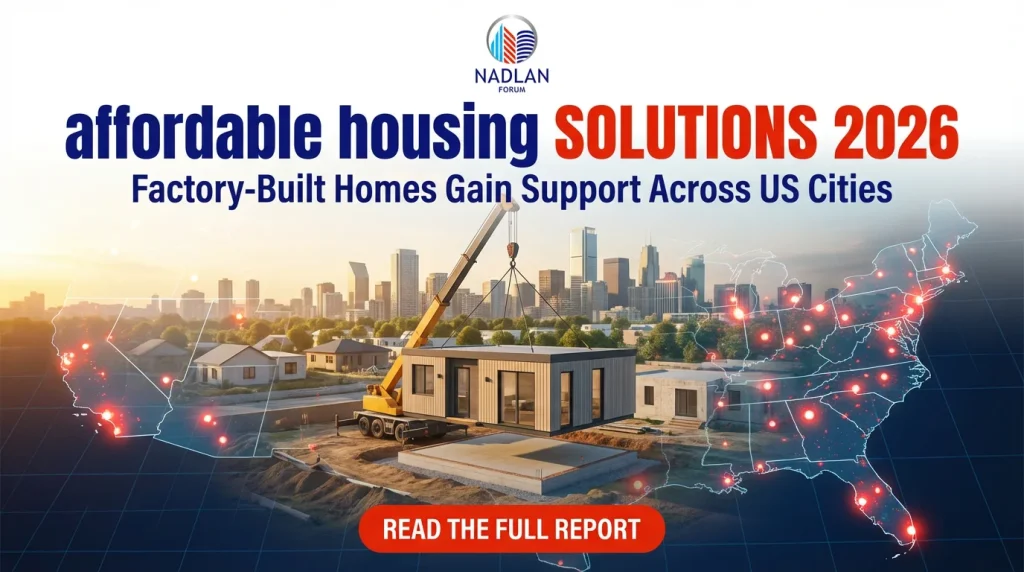
Communities across the United States are increasingly turning to factory-built homes as a practical way to address the ongoing housing affordability challenge. As home prices remain high and housing supply remains limited, manufactured housing is gaining new attention as a faster and more affordable way to build homes.
These homes, built in factories and assembled on-site, are beginning to appear in traditional residential neighborhoods rather than being limited to trailer parks or specialized housing communities.
Developers, policymakers, and housing advocates say modern factory-built homes could help expand housing supply while reducing construction costs.
Manufactured Homes Enter Established Neighborhoods
One example of this growing trend can be seen in Petersburg, Virginia, where new factory-built homes are being placed in existing residential areas.
Construction crews recently assembled a prefabricated house by joining two sections delivered by truck. Once completed, the home blends in with nearby houses, featuring elements such as a pitched roof, front porch, and modern exterior design.
Another home delivered to the same neighborhood included siding, window shutters, and design features similar to traditionally built houses.
These examples illustrate how modern manufactured homes have evolved significantly from older designs that were often associated with mobile home parks.
Changing Perceptions of Manufactured Housing
For many years, manufactured homes carried a social stigma. Older models were often smaller, simpler, and located primarily in trailer parks.
However, advances in design and construction have changed how these homes look and function.
Modern factory-built homes for affordable housing now include:
- Contemporary layouts
- Larger living spaces
- Modern kitchens and bathrooms
- Permanent foundations
- Exterior designs similar to site-built homes
These improvements have helped manufactured housing become a more widely accepted option in communities across the country.
Affordable Housing for Families
Developers say factory-built homes can provide affordable housing opportunities for families who might otherwise struggle to buy or rent traditional homes.
In the Petersburg development, several manufactured homes are being built on vacant lots and targeted toward low- and moderate-income households.
The goal is to provide families with access to the benefits of single-family living, including:
- More space for children
- Access to nearby schools
- Walkable neighborhoods
- Community amenities
By placing these homes within established neighborhoods, developers hope to expand housing options without building entirely new housing developments.
Lower Housing Costs for Residents
For residents, the affordability of factory-built homes can have a significant impact.
One resident who moved into a newly built manufactured home reported that the rent for a four-bedroom house, including utilities, was lower than the cost of a smaller two-bedroom apartment.
The home also offered features such as:
- Spacious bedrooms
- Walk-in closets
- A kitchen island
- Modern lighting and finishes
Lower housing costs allow some families to reduce work hours, save money, or spend more time with family.
Affordable housing options like this can help stabilize household finances and improve quality of life.
Faster Construction and Lower Costs
One of the main advantages of factory-built housing is the speed of construction.
Because homes are built in controlled factory environments, developers can avoid many of the delays associated with traditional construction, such as weather interruptions or labor shortages.
Manufactured homes are also generally less expensive to build, often costing about half as much per square foot compared with traditional site-built homes.
This cost advantage makes them attractive for developers working to create affordable housing projects.
Filling the Gap for Starter Homes
Housing experts say manufactured homes can help fill a gap in the housing market.
In previous decades, many smaller and more affordable starter homes were built for first-time buyers. However, fewer of these homes are being constructed today due to rising land costs and regulatory requirements.
Manufactured housing may provide a way to reintroduce smaller, lower-cost homes into the market.
Some housing researchers believe this type of construction can help expand housing supply without relying heavily on government subsidies.
Zoning Rules Slowly Changing
Another reason factory-built housing is becoming more common is that zoning policies are evolving in several states.
So far, nine states have relaxed zoning restrictions to allow manufactured homes in more residential areas.
These policy changes allow developers to place factory-built homes on vacant lots that might previously have been restricted to traditional construction.
Virginia lawmakers have also passed legislation supporting the expansion of manufactured housing in certain areas.
Such changes are intended to help communities address housing shortages more quickly.
Financing Challenges Still Remain
Despite the benefits of factory-built homes, financing them can still be more difficult than financing traditional houses.
In many cases, manufactured homes are classified as personal property rather than real estate, especially if they are not permanently attached to land.
Because of this classification, buyers may face:
- Higher loan interest rates
- Shorter loan terms
- Fewer mortgage options
Housing experts say updating financing rules could make these homes more accessible to buyers.
Potential Policy Changes Ahead
New housing legislation currently under discussion could further change how factory-built homes are regulated.
One proposal would remove the requirement that manufactured homes include a permanent steel chassis.
The chassis was originally designed to allow homes to be transported easily. However, many modern manufactured homes are placed on permanent foundations and are never moved after installation.
Removing this requirement could allow builders to design homes more similar to traditional construction.
Revitalizing Older Neighborhoods
In cities like Petersburg, factory-built homes are also helping revitalize neighborhoods that have experienced economic decline.
Some neighborhoods previously contained vacant or deteriorating properties. By replacing these structures with new homes, local officials hope to improve housing conditions and encourage community investment.
Local leaders say the new homes are already transforming areas that had struggled with abandoned properties and declining infrastructure.
Replacing vacant lots with new housing can bring new residents, improve property values, and strengthen communities.
The Future of Factory-Built Housing
The growing interest in factory-built homes for affordable housing suggests that manufactured housing could play a larger role in the future housing market.
As housing shortages continue and construction costs remain high, policymakers and developers may increasingly explore alternatives to traditional building methods.
While challenges such as financing rules and zoning policies remain, the combination of lower costs, faster construction, and modern design is helping factory-built homes gain wider acceptance.
For many communities seeking practical ways to expand housing supply, manufactured housing may offer a flexible and scalable solution to one of the country’s most pressing housing challenges. For direct financing consultations or mortgage options for you visit 👉 Nadlan Capital Group.