


Despite some cooling in the rental market, the affordability crisis for renters in the U.S. continues to be a major concern, according to the latest report from Harvard’s Joint Center for Housing Studies (JCHS). The “America’s Rental Housing 2026” report examines trends in the rental market and how affordability remains a significant challenge for many renters.
While rents have dipped slightly at the end of 2025, there is still a long-term upward movement in rental prices, largely driven by the high costs of construction and an increase in the number of higher-income households entering the rental market.

Key Findings from the 2026 Rental Housing Report
1. Slowing Nationwide Rental Demand
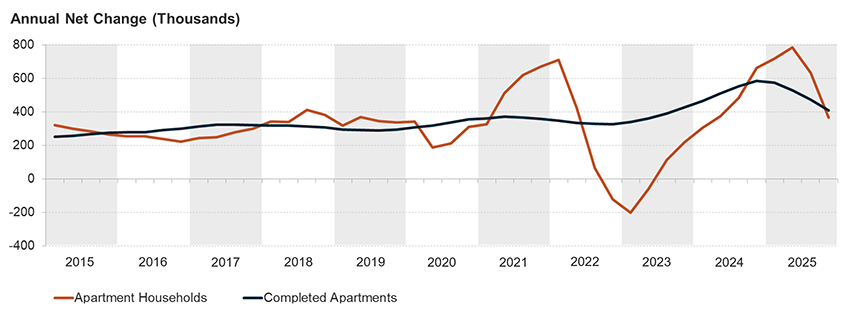
The surge in renter households, particularly in the first half of 2025, was driven by the high cost of homeownership, with 784,000 new apartment households being created in Q2 of 2025. However, by Q4 2025, rental demand began to slow, with the number of new apartment households dropping to 366,000.
Higher-income renters have become the largest group fueling this growth in recent years. The number of renter households earning $75,000 or more increased by 1.7 million between 2021 and 2024. These higher-income households are often the primary source of new demand in the rental market.
2. Softening Rental Markets
Despite the previous surge in demand, rents for professionally managed apartments saw a modest decline of 0.6% year-over-year in Q4 2025. This drop is most noticeable in the West and South regions, where new apartment supply has been concentrated. Increased vacancy rates and slowing demand have contributed to these softening market conditions.

3. Moderating Multifamily Construction
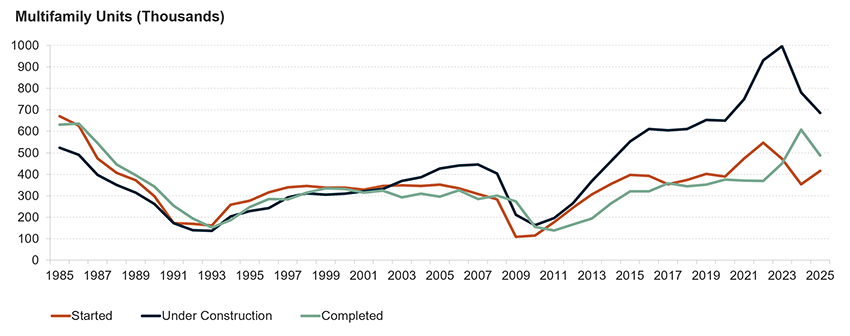
The construction of new rental units is also experiencing challenges. Multifamily construction, although still relatively robust compared to pre-pandemic levels, has slowed significantly from its peak. In 2025, 416,000 multifamily units were started, a decrease from the 996,000 units started in 2023.
While the construction pipeline remains significant, the slowdown in new construction is contributing to the continuing affordability issues, especially as demand continues to rise in many areas.
4. Shifting Rent Distribution
The distribution of rental prices is changing as well. Over the past decade, there has been a marked increase in high-rent units. Between 2014 and 2024, the number of rental units priced at $1,400 or more grew by 11.8 million, while the number of units renting for less than $1,400 decreased by 9.3 million.
This trend indicates a growing divide in rental affordability, with fewer low-cost options available for renters.
5. Record Number of Cost-Burdened Renters
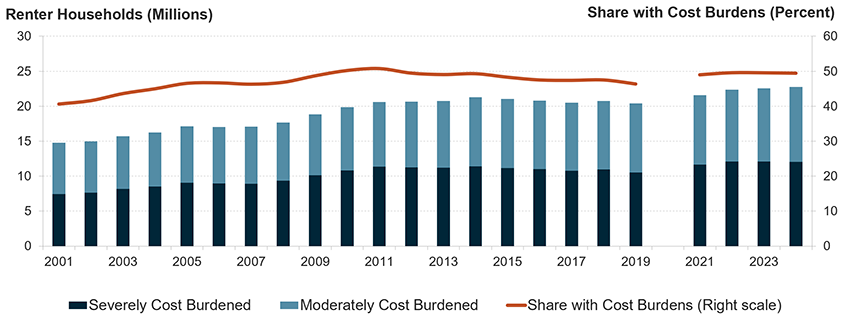
The number of renters facing severe financial burdens due to high housing costs reached a new high in 2024, with 22.7 million renters, or 49%, spending more than 30% of their income on rent. This number has continued to grow over the years, with renters now facing a significant challenge in managing other costs, such as food and healthcare.
The median income for renters has not kept pace with rising rents, with a real wage increase of only 9% between 2001 and 2024, compared to a 30% increase in rents during the same period. As a result, many lower-income renters are facing a reduction in residual income, leaving them with fewer resources to cover rising living costs.

6. Policy Solutions to Address Rental Affordability
To address the affordability crisis, several policy solutions are being explored. The federal government has increased funding for affordable housing initiatives, including a 12% permanent increase in funding for the Low-Income Housing Tax Credit. Additionally, local governments are implementing mixed-income and social housing models, with cities like Seattle and Chicago leading efforts to improve affordability and increase housing supply.
While these efforts are positive steps, they still fall short of the scale needed to fully address the growing demand for affordable rental housing. The ongoing gaps in the social safety net and rising housing costs continue to place pressure on renters, particularly those with low incomes.
What This Means for Renters and Policymakers
The findings of this report underscore the need for continued attention to rental affordability. While rents have decreased slightly in the short term, the long-term trends indicate that affordability will remain a significant challenge for many renters in the U.S.
Policymakers are beginning to take action, but more comprehensive solutions are needed to ensure that affordable housing is accessible to all income levels. For renters, particularly those in lower-income brackets, the pressure of rising rents continues to challenge their ability to maintain financial stability.
In conclusion, while there are some signs of relief in the rental market, the affordability crisis is far from over. It will require both market and policy changes to address the growing divide in rental housing costs and ensure that renters have access to affordable and stable housing options in the years to come. For direct financing consultations or mortgage options for you visit 👉 Nadlan Capital Group.
