


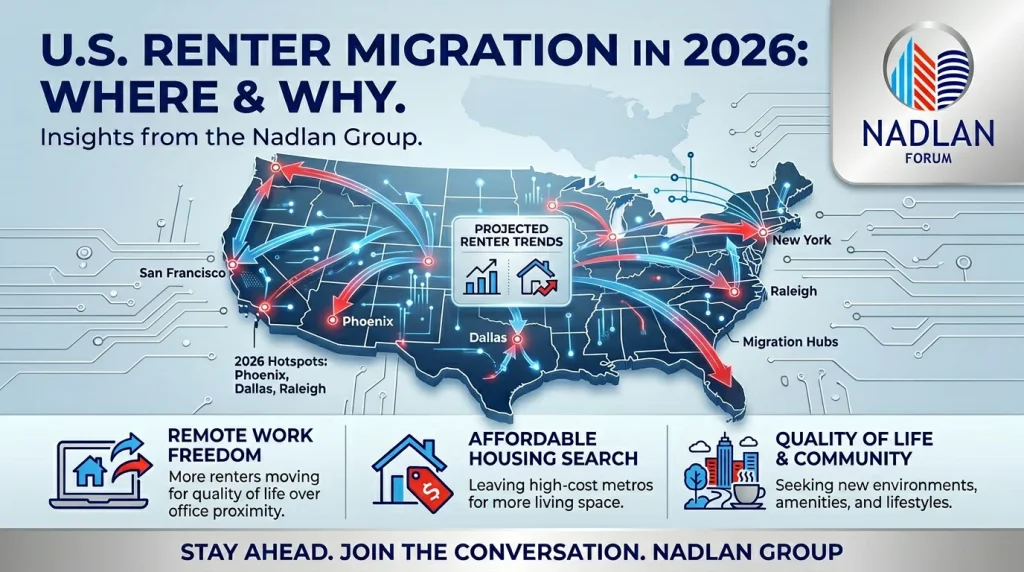
Over the past five years, renter migration across the United States has changed in noticeable ways. Shifts in remote work, rising living costs, and changing job opportunities have all played a role. While the pandemic once led to a surge in long-distance moves, that trend is now cooling as people become more cautious about expenses.
Recent data shows that migration is still active, but it is more balanced than before. Renters are making more careful decisions, focusing on cost, location, and long-term stability rather than moving quickly across the country.
Long Distance Moves Are Slowing Down
During the peak of the pandemic, many renters moved far from major cities in search of space and lower costs. However, that trend has slowed.
In 2025, about 39% of renters searched for homes in a different metro area, which is similar to previous levels. At the same time, the share of renters planning to move across state lines dropped to 24%.
Higher living costs, including fuel and moving expenses, are making people think twice before relocating long distances. As a result, many renters are choosing moves that are closer to home.

Move Away from Expensive Markets Continues
Even though overall migration has slowed, one pattern remains consistent. Renters are still leaving high-cost states and cities in favor of more affordable areas.
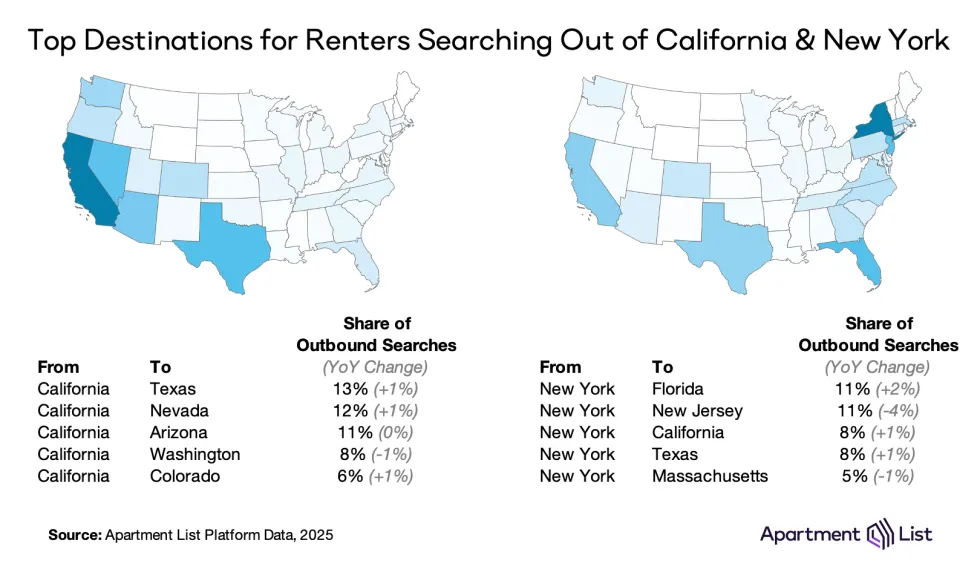
States like California, New York, Illinois, New Jersey, and Massachusetts continue to see more people moving out than moving in. High housing prices and cost of living are key reasons behind this trend.
California stands out in particular, with a large number of residents leaving for other states. Even though population growth from other sources helps balance the numbers, the state remains one of the biggest sources of outbound movers in the country.
States Gaining the Most Renters
At the same time, several states are attracting new residents at a steady pace.
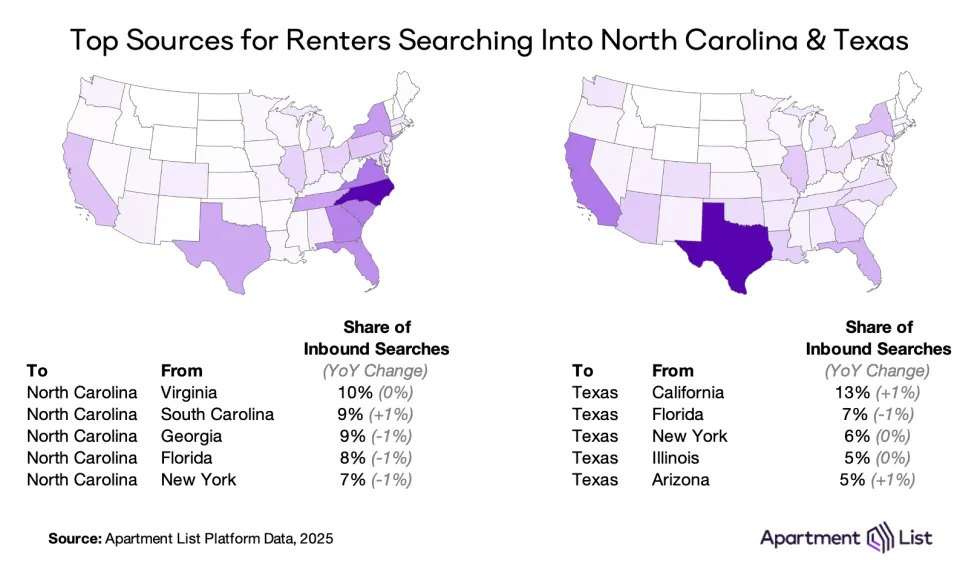
North Carolina, Texas, South Carolina, Tennessee, and Arizona are among the top destinations. These states offer lower housing costs, growing job markets, and more space compared to traditional high-cost areas.
North Carolina has seen strong growth in both numbers and percentage, while South Carolina has continued to rank among the fastest-growing states for several years.
These regions are becoming key centers for population growth in the U.S.
Popular Moving Routes Across the Country
Migration patterns show clear connections between certain states.
Renters leaving California are most likely to move to Texas, followed by nearby states such as Nevada and Arizona. Colorado and Washington are also common destinations.
For renters leaving New York, Florida has become the top choice. Around 11% of renters looking to move out of New York are considering Florida, making it the leading destination. Other popular options include Texas and California.
At the same time, states like Texas and North Carolina are attracting renters from multiple regions, including the Northeast and the West Coast.
Cities Seeing the Most Interest from Renters
Some cities are gaining attention from renters across the country.
Places like Savannah, Durham, Charleston, and Cape Coral are seeing a large share of rental searches coming from outside their local markets. Other cities such as Reno, Knoxville, and Colorado Springs are also drawing interest.
These cities are often smaller or mid-sized markets located near larger urban areas. Renters are choosing them to reduce costs while still staying within reach of jobs and services.
For example, people are moving from larger cities like Atlanta to nearby Savannah, or from Denver to Colorado Springs. This shows a shift toward nearby, more affordable options rather than cross-country relocation.
Why Renters Are Moving to These Areas
Several key factors are driving these migration patterns:
- Lower rent and living costs: Renters want more value for their money.
- Flexible work options: Some workers still have the option to work remotely or hybrid.
- Less crowded areas: Smaller cities offer more space and less congestion.
- Growing job markets: Many of these regions are seeing steady economic growth.
These reasons are helping smaller cities and lower-cost states gain popularity.
Supply Will Be a Key Factor
As more renters move into these areas, housing supply will play an important role. If demand grows faster than supply, rents could rise, making these markets less affordable over time.
This could lead to new migration patterns in the future, as renters continue to search for better options.
What This Means for the Future
The U.S. rental market is entering a more stable phase after several years of major shifts. While long-distance migration has slowed, the demand for affordable living remains strong.
The Southeast and Mountain West regions are expected to continue attracting renters, especially if they maintain lower costs and job growth.
At the same time, changes in work trends and the economy will continue to shape where people choose to live.
Overall, renters today are more focused on practical decisions. Instead of chasing trends, they are choosing locations that offer balance between cost, opportunity, and quality of life. For direct financing consultations or mortgage options for you visit 👉 Nadlan Capital Group.
