


Population Growth Slows as Residents Move Out
California’s population growth is facing new challenges as more residents choose to leave the state in search of lower living costs. Research from the California Policy Lab shows that while the pace of out-migration has slowed since the pandemic, a large number of people are still relocating each year.
In 2025 alone, California lost close to 150,000 residents. While that number represents less than 1% of the state’s total population, it signals a trend that could have long-term effects if it continues.
At the same time, fewer people from other states are moving into California, partly due to the high cost of housing and everyday expenses.
Why Residents Are Leaving California

Lower Cost of Living in Other States
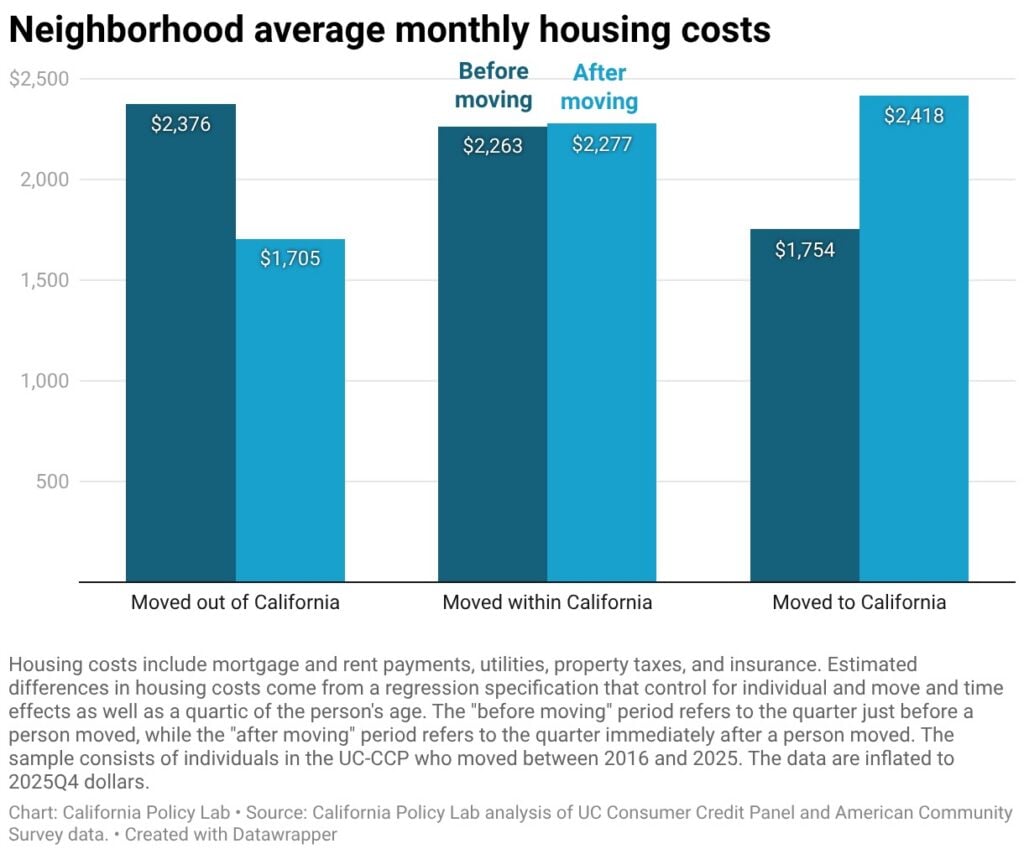
One of the main reasons people are leaving is the difference in housing costs. Many residents who move out of California find that they can reduce their monthly housing expenses significantly.
The study shows that people who relocate often pay hundreds of dollars less each month for housing compared to what they paid in California. In many cases, housing costs in other states can be nearly half of those in California.
States such as Texas, Arizona, Nevada, and Florida are among the most common destinations. These areas offer more affordable homes and lower overall living costs.
Better Chances of Homeownership
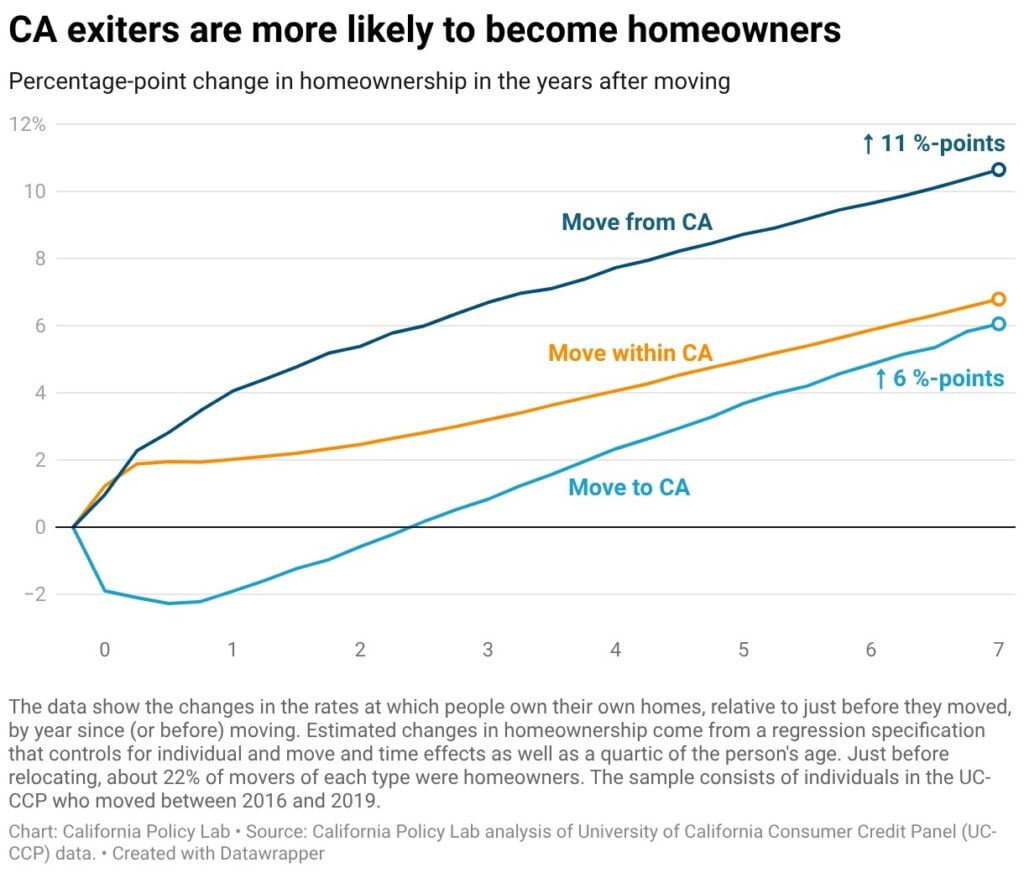
Another key factor is access to homeownership. Many people who leave California are more likely to buy homes in their new locations.
The research shows that former California residents have a much higher chance of becoming homeowners within several years after moving. Even though average incomes in these new states may be slightly lower, the reduced cost of living makes homeownership more achievable.
In some cases, remote work allows individuals to keep higher-paying California jobs while living in more affordable areas, further improving their financial situation.
Changing Demographics and Migration Patterns
California has experienced strong population growth for decades, especially in the second half of the 20th century. Today, it remains one of the largest and most economically powerful states in the country.
However, recent trends show changes in population dynamics. Fewer international migrants are arriving, birth rates have declined, and more residents are moving to other states.
Interestingly, the profile of people leaving is also changing. In recent years, more individuals from higher-income areas are choosing to relocate, while fewer people from lower-income regions are leaving.
This shift suggests that affordability concerns are affecting a broader range of households, not just those with limited income.

Rising Costs Across Everyday Expenses
Housing is not the only factor driving migration. The overall cost of living in California is significantly higher than in most other parts of the country.
Data shows that:
- Grocery prices are about 11% higher
- Gas prices are roughly 40% higher
- Utility costs are around 61% higher
These additional expenses add pressure to household budgets and make it harder for residents to maintain financial stability.
Even in less expensive parts of California, costs remain higher than in many other states, making relocation an attractive option for some households.
Economic and Policy Factors Behind the Trend
The research also highlights how policy and economic conditions play a role in migration decisions. For example, property tax rules under Proposition 13 have created differences in tax burdens between long-term homeowners and new buyers.
Homeowners who have lived in their properties for many years often pay much lower taxes compared to those who recently purchased homes. This can make it more expensive for new buyers to enter the market.
In addition, broader economic pressures such as high housing prices and limited supply are contributing to a sense of financial strain among many residents.
While environmental risks like wildfires and drought also influence decisions, the study suggests that affordability remains the primary driver.
Impact on the State’s Future
If current trends continue, California could face several long-term challenges. A declining or slower-growing population may reduce tax revenue, which could affect funding for infrastructure, public safety, and other services.
There may also be political implications, as population changes can influence representation in Congress.
At the same time, continued out-migration could reshape communities, with shifts in income levels and housing demand across different regions.
What Could Change Going Forward
State leaders have started to focus more on housing affordability and supply in recent years. Efforts to build more homes and improve access to affordable housing are underway, but progress has been gradual.
Experts suggest that meaningful improvements will require long-term solutions, including increasing housing supply, reducing development barriers, and addressing cost pressures across multiple areas.
Until then, many residents may continue to look outside the state for more affordable options.
Final Thoughts
California remains an important economic center, but high living costs are changing how people live and where they choose to go.
The slowdown in population growth reflects a larger issue of affordability that affects both current residents and potential newcomers.
As more people weigh the benefits of staying versus relocating, the balance between opportunity and cost will continue to shape California’s future. For direct financing consultations or mortgage options for you visit 👉 Nadlan Capital Group.
