


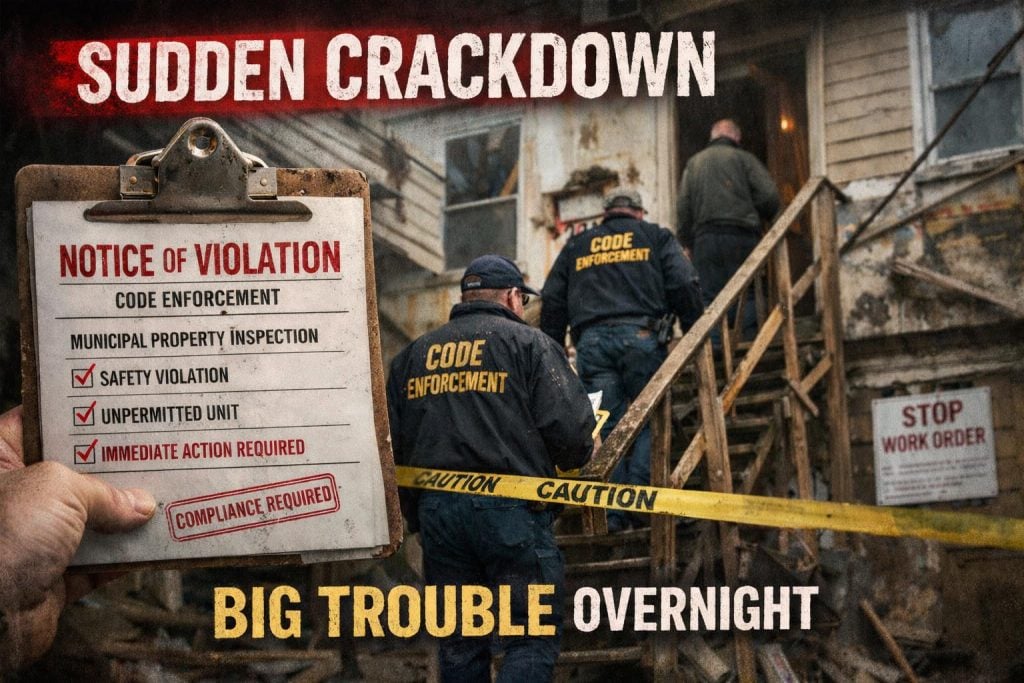
The property looks stable… until enforcement begins
You look at a property—everything works.
It’s rented, cash flow is coming in, the city is quiet.
Nothing interferes with the asset. It feels stable.
But it’s not stable.
It’s just not being enforced yet.
Here’s what most investors miss
In many U.S. cities, code enforcement is inconsistent:
- Staff shortages
- Other priorities
- Years of “looking the other way”
And then one day—it changes.
No new law.
No new regulation.
Just one thing:
Enforcement starts.
What happens next?
- First letter arrives
- Then another
- Repair demands
- Fines
- Sometimes full compliance requirements—as if the property was built yesterday
What worked for 10 years becomes a problem overnight.
This is where it hurts
This risk was:
- Not in the purchase price
- Not in your calculations
- Not in your NOI
And yet—it wipes it out.
- Forced CapEx
- Income drops
- Units shut down
The classic example
Unpermitted units.
Everyone knows they exist.
The city knows too.
Nothing happens—for years.
Then:
- New city leadership
- Gentrification begins
- Enforcement ramps up
Suddenly:
- You must bring everything to code
- Some units disappear
- Cash flow shrinks
- The deal collapses
Why smart money still falls here
Because most investors check:
- Title
- Comps
- Taxes
But they don’t ask one critical question:
What isn’t being enforced today—and what happens if it is tomorrow?
The shift in thinking
Experienced investors don’t just check:
- What’s legal
They check:
- What’s temporarily tolerated
Not just:
- What’s written
But:
- What’s actually enforced
Bottom line
A property without enforcement is not a safe property.
It’s just a property that hasn’t had its turn yet.
And if you don’t see that—
you’re not pricing risk.
You’re ignoring it.