


Fed Officials Highlight Growing Economic Risks
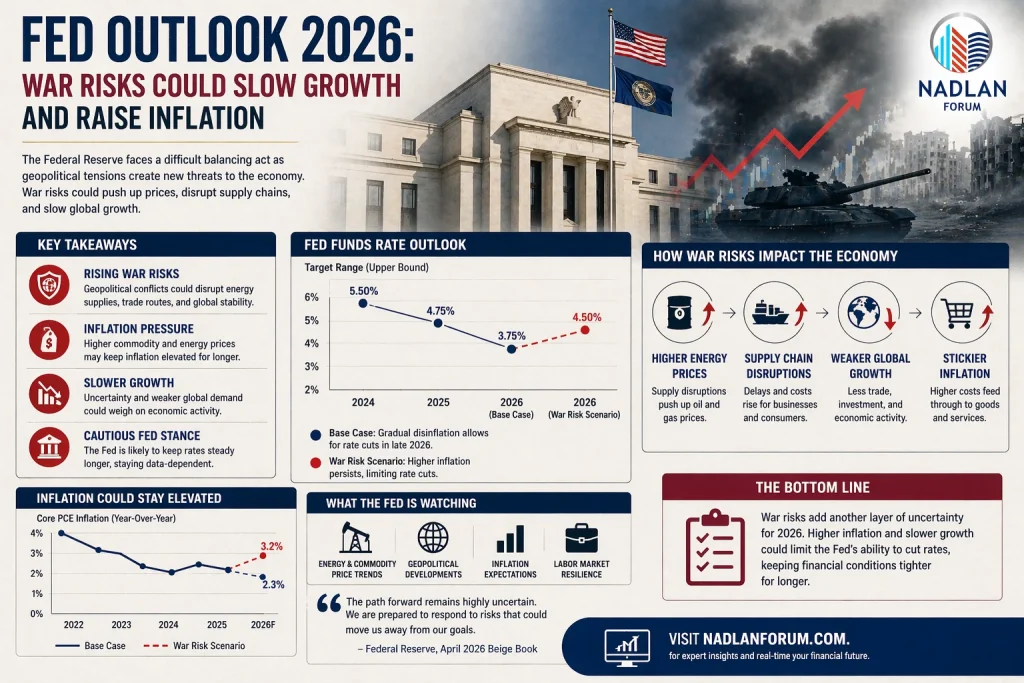
Recent comments from John Williams show increasing concern about how global conflict is affecting the U.S. economy. Speaking to banking leaders, he noted that the ongoing tensions in the Middle East are already creating pressure on both economic growth and inflation.
This is the second time in April that Williams has raised similar concerns, pointing to rising uncertainty as a key challenge for policymakers. While the broader outlook still includes steady growth and easing inflation, new risks are becoming harder to ignore.
A Difficult Balance for the Federal Reserve
The Federal Reserve operates under a dual mandate: keeping prices stable while supporting employment. Current conditions are testing both goals at the same time.
Williams explained that disruptions in energy supply could push prices higher, while at the same time slowing economic activity. This combination is often referred to as stagflation—a situation that creates difficult choices for policymakers.
Jerome Powell has previously downplayed the likelihood of a severe stagflation scenario, but recent comments suggest that some level of risk remains.
Energy Prices and Supply Chain Pressure
One of the main concerns is the impact of rising energy costs. Higher oil and gas prices are not limited to fuel—they tend to affect a wide range of goods and services.
Williams pointed out that increasing costs are already showing up in:
- Transportation and air travel
- Grocery prices
- Agricultural inputs like fertilizer
- General consumer goods
At the same time, supply chains are facing renewed pressure. The New York Fed’s internal data shows that supply disruptions have reached their highest level since early 2023.
These factors together can push inflation higher even if demand remains steady.
Current Interest Rate Position
The Federal Reserve has chosen to hold interest rates steady for now. The benchmark rate remains in the range of 3.5% to 3.75%, following the latest meeting of the Federal Open Market Committee.
Markets currently expect the Fed to maintain this position in the near term. However, future decisions remain uncertain as new data comes in.
Williams emphasized that policy is “well positioned” to respond to changes, but he did not signal a clear direction for the next move.
Growth and Inflation Forecasts
Despite the risks, the baseline outlook remains moderately stable. Williams expects:
- Economic growth between 2% and 2.5% in 2026
- Inflation around 2.75% to 3% in the near term
- A gradual return to the 2% inflation target by 2027
These projections depend heavily on how global conditions evolve, especially energy markets and supply chains.
Other Fed Voices Show Mixed Views
Williams is not alone in expressing caution. Several other Federal Reserve officials have shared similar concerns, though their outlooks vary.
Alberto Musalem noted that while current policy remains appropriate, inflation risks tied to global conflict could weigh on spending and growth.
Beth Hammack highlighted that future decisions could go in either direction. If inflation stays high, rate hikes may be needed. If the economy weakens, rate cuts could come into play.
Austan Goolsbee also pointed out the difficulty of policymaking in uncertain conditions, emphasizing that inflation remains a key concern.
Why Policy Decisions Are Getting Harder
The current environment makes it difficult for the Fed to take a clear path. Several factors are pulling the economy in different directions:
- Rising energy costs pushing inflation higher
- Slower job growth creating concern about employment
- Ongoing geopolitical risks affecting global markets
- Consumer and business uncertainty reducing spending
Because of these mixed signals, the Fed is likely to take a cautious approach and wait for clearer trends before making major changes.
Possible Rate Cuts Still on the Table
Even with rising concerns, some policymakers still see room for rate cuts later in the year.
Christopher Waller suggested that if the labor market weakens further, reducing rates could help support the economy.
Meanwhile, Michelle Bowman indicated that multiple rate cuts could still happen, depending on how inflation and growth evolve.
This range of views highlights how uncertain the outlook remains.
What This Means for the Economy
For households and businesses, the current situation may lead to:
- Continued pressure on prices, especially energy-related costs
- Slower economic growth compared to earlier expectations
- Stable but uncertain interest rate conditions
- Delayed decisions on borrowing and investment
The path forward will depend largely on global developments and how quickly supply disruptions ease.
Final Thoughts
The Federal Reserve is facing a complex situation in 2026. While the economy is still growing, rising inflation risks and global uncertainty are creating new challenges.
Officials like John Williams are signaling caution, emphasizing the need to stay flexible as conditions evolve. Whether the next move is a rate cut, hike, or continued pause will depend on how these risks unfold in the months ahead. For direct financing consultations or mortgage options for you visit 👉 Nadlan Capital Group.
