


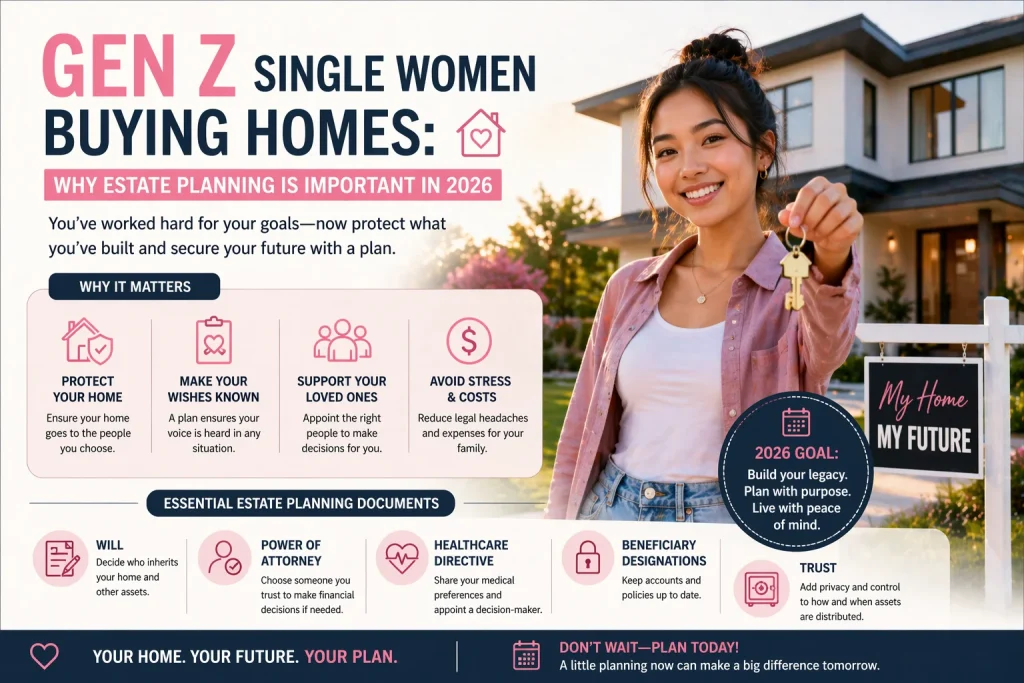
Single Women Lead Gen Z Homeownership Growth
Homeownership trends are shifting, and younger women are playing a bigger role than ever. Recent data from the National Association of Realtors shows that 35% of Gen Z homebuyers are single women, nearly double the share of single men in the same age group.
This marks a steady rise from the previous year and highlights a broader trend: more young women are entering the housing market on their own. For many, owning a home is not just about stability—it’s also a way to build long-term wealth and financial independence.
However, financial experts say that buying a home is only one part of the picture. Protecting that asset is just as important, and that’s where estate planning comes in.
Why Estate Planning Matters for New Homeowners
For many first-time buyers, especially younger ones, estate planning is often overlooked. After closing on a home, most people return to their daily routine without thinking about what would happen to that property in unexpected situations.
An estate plan is a set of legal documents that outlines:
- Who will inherit your assets
- Who can manage your finances if you cannot
- What happens to your home after your death
Without a plan, decisions about your property may be handled by state law instead of your personal wishes. This can lead to delays, legal costs, and outcomes you may not have intended.
Low Adoption of Estate Planning Among Singles
Despite owning valuable assets, many single homeowners are not prepared. Studies show that:
- Only 16% of single individuals have a will
- Around 60% of women do not have any estate plan
- In contrast, 37% of married individuals have a will
At the same time, homeownership itself increases awareness. About 40% of homeowners have a will, compared to just 16% of renters.
These numbers suggest that while owning property encourages planning, many people especially younger buyers still delay taking action.
What Happens Without a Will?
If a homeowner passes away without a will (known as dying “intestate”), state laws decide who inherits the property. This process can be complex and may not reflect the owner’s wishes.
A will helps avoid that uncertainty by clearly stating:
- Who gets the home
- Whether the home should be sold
- How proceeds should be distributed
However, assets passed through a will often go through probate, a legal process that can take time and involve court oversight.
Options to Protect Your Home and Assets
There are several ways homeowners can protect their property and ensure a smooth transfer:
1. Create a Will
This is the most basic and essential step. It ensures your home goes to the person you choose.
2. Name Beneficiaries Where Possible
Accounts like retirement funds, insurance policies, and savings accounts can bypass probate if beneficiaries are listed.
3. Consider a Trust
A living trust allows homeowners to manage assets while alive and transfer them directly to heirs without going through probate. This can save time and reduce legal complications.
4. Plan Ownership Structure Carefully
For shared ownership, options like joint tenancy or tenancy in common can impact how property is transferred.
Experts often warn against leaving a home to multiple heirs without a clear plan, as disagreements can lead to disputes or forced sales.
Planning for Life, Not Just Death
Estate planning is not only about what happens after death. It also protects homeowners during their lifetime.
Important steps include:
- Assigning a financial power of attorney to manage bills and mortgage payments if you become unable to do so
- Choosing a healthcare proxy to make medical decisions on your behalf
- Considering disability insurance to protect income in case of illness or injury
These measures help ensure that your home and your financial stability remain secure even during unexpected life events.
A Growing Trend with Long-Term Impact
The rise of single women in the housing market reflects changing financial and social dynamics. According to the Pew Research Center, women already own a larger share of homes among unmarried Americans, and that trend continues with younger generations.
As more Gen Z women become homeowners, the need for financial planning tools like wills and trusts will likely grow as well.
The Bottom Line
Buying a home is a major milestone, especially for young, single buyers. But ownership also comes with responsibility. Without an estate plan, even a valuable asset like a home can become a source of legal complications.
For Gen Z single women entering the housing market, the next smart step after buying a home is simple: make a plan to protect it.
Taking time now to set up a will, assign decision-makers, and organize finances can make a big difference later—for both you and the people you care about. For direct financing consultations or mortgage options for you visit 👉 Nadlan Capital Group.
