


Local Buyers Dominate Distressed Property Auctions
Distressed property auctions across the United States are increasingly being driven by local buyers and smaller investors rather than large institutional firms.
According to the latest buyer insights report from Auction.com, most participants purchasing distressed properties in 2025 were low-volume local buyers focused on improving neighborhoods, building wealth, and expanding affordable housing opportunities.
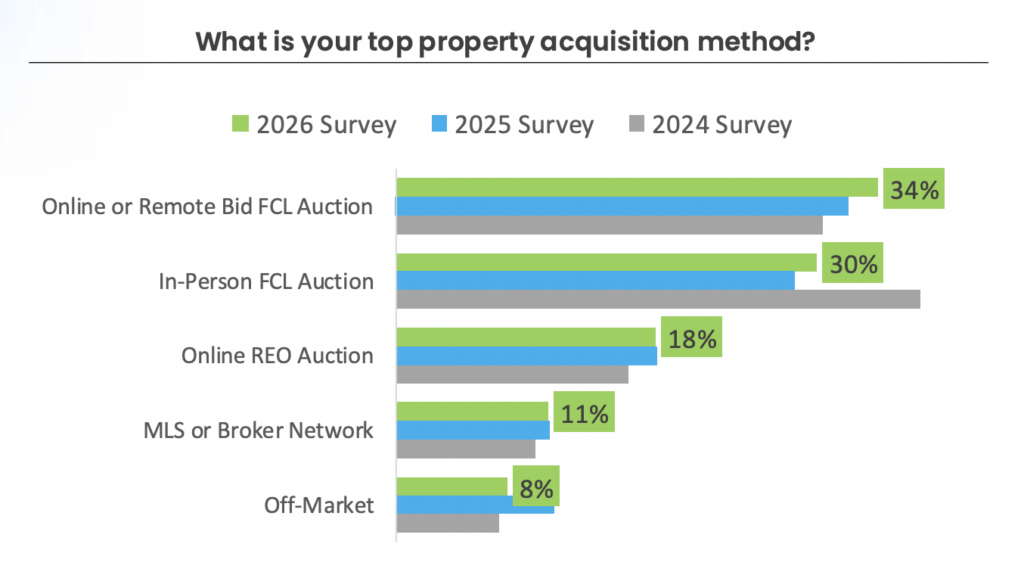
The report found that approximately 96% of buyers purchased 10 or fewer properties during the year, while roughly 94% identified themselves as local community developers or owner-occupants.

Small Investors Continue Leading the Market
The data suggests distressed housing auctions are still largely controlled by smaller-scale buyers rather than major Wall Street investment groups.
Only around 1% of surveyed buyers reported purchasing more than 25 properties during 2025.
In fact, most buyers acquired only a single property throughout the year.
The findings challenge the perception that large institutional investors dominate distressed property auctions nationwide.
Local Community Developers Becoming More Active
The biggest growth came from local community developers.
Approximately 76% of surveyed buyers identified as local developers working within their own communities, a noticeable increase from previous years.
Meanwhile, owner-occupant participation declined slightly but still remained a meaningful portion of auction activity.
Many of these buyers focus on:
- Renovating distressed homes
- Reselling to first-time buyers
- Expanding affordable housing supply
- Revitalizing older neighborhoods
Buyers Focus on Long-Term Wealth and Neighborhood Improvement
Financial return remains a major motivation, but the report showed buyers are also increasingly focused on community impact.
About 90% of surveyed buyers said building generational wealth was one of their primary reasons for investing in distressed properties.
At the same time, many also cited goals such as:
- Improving neighborhoods
- Supporting homeownership
- Creating affordable housing
- Generating local jobs
This combination of financial and community-driven motivations continues shaping the distressed housing market.

Renovation Spending Remains Significant
Distressed property buyers are also investing large amounts into property rehabilitation.
Roughly two-thirds of buyers reported spending at least $20,000 on renovations and holding costs after purchasing homes.
A sizable percentage spent more than $50,000 restoring properties.
These investments often include:
- Structural repairs
- Roof replacements
- Plumbing and electrical updates
- Interior remodeling
- Property cleanup and landscaping
The report suggests buyers remain committed to improving housing quality rather than simply flipping homes quickly.
Auction Buyers Supporting Local Jobs
The report also highlighted the employment impact tied to property rehabilitation.
Most local developers said they support multiple jobs annually through renovation and construction activity.
That includes contractors, electricians, plumbers, painters, landscapers, and other skilled trades connected to housing rehabilitation projects.
Smaller local developers were especially active in creating recurring work opportunities within their communities.
More Buyers Willing to Purchase Occupied Homes
One notable trend involved occupied properties.
Approximately half of all surveyed buyers said they were willing to purchase occupied homes at auction.
Larger-volume investors were generally more comfortable acquiring occupied properties compared to smaller buyers.
Among buyers purchasing occupied homes:
- Many offered relocation assistance
- Some allowed lease-back arrangements
- Others worked with residents on transition plans
The report indicated that most buyers attempted to create smoother transitions for current occupants rather than pursuing immediate displacement.
Online Auctions Continue Expanding
The distressed property market is also shifting increasingly toward digital platforms.
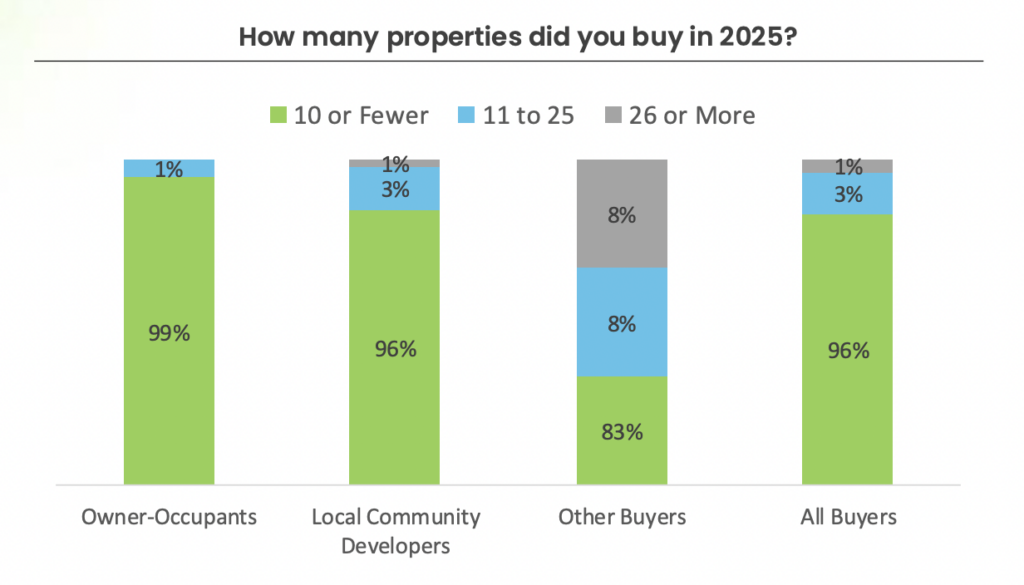
Online and remote foreclosure auctions became the most preferred acquisition method among buyers in 2026.
More than one-third of participants said online auctions were now their primary method for buying distressed real estate.
Meanwhile, traditional in-person foreclosure auctions continued losing market share compared to earlier years.
Analysts say online auctions offer several advantages:
- Easier property access
- Faster bidding processes
- Wider geographic participation
- Reduced travel costs
Different Strategies Emerging Among Buyers
Buyers continue using different investment strategies depending on experience level and local market conditions.
The most common approach remains:
Renovate and Resell
Many local developers buy distressed properties, renovate them, and resell them to owner-occupants or first-time buyers.
Renovate and Hold as Rental
Others choose to keep properties as long-term rental investments.
Long-Term Appreciation
Some investors focus on holding properties in areas expected to benefit from future redevelopment or economic growth.
Distressed Housing Remains Important for Supply
Distressed property auctions continue playing an important role in returning vacant or neglected housing back into local markets.
In many cities, auction activity helps reduce blight and increase the number of livable homes available to buyers and renters.
This is especially important in older urban areas where aging housing stock often requires major repairs before becoming market-ready again.
Housing Affordability Still Influencing Demand
Interest in distressed properties also remains tied to broader housing affordability challenges.
Higher mortgage rates and rising home prices have pushed many buyers and smaller investors toward distressed housing opportunities as a more affordable entry point into the market.
At the same time, strong renovation costs and financing challenges continue limiting some participation.
Final Thoughts
Distressed property auctions in 2026 continue showing strong activity from local buyers, community developers, and smaller investors rather than large institutional firms.
The growing use of online auctions, rising renovation investment, and continued focus on neighborhood improvement are reshaping how distressed real estate markets operate across the country. For direct financing consultations or mortgage options for you visit 👉 Nadlan Capital Group.
