


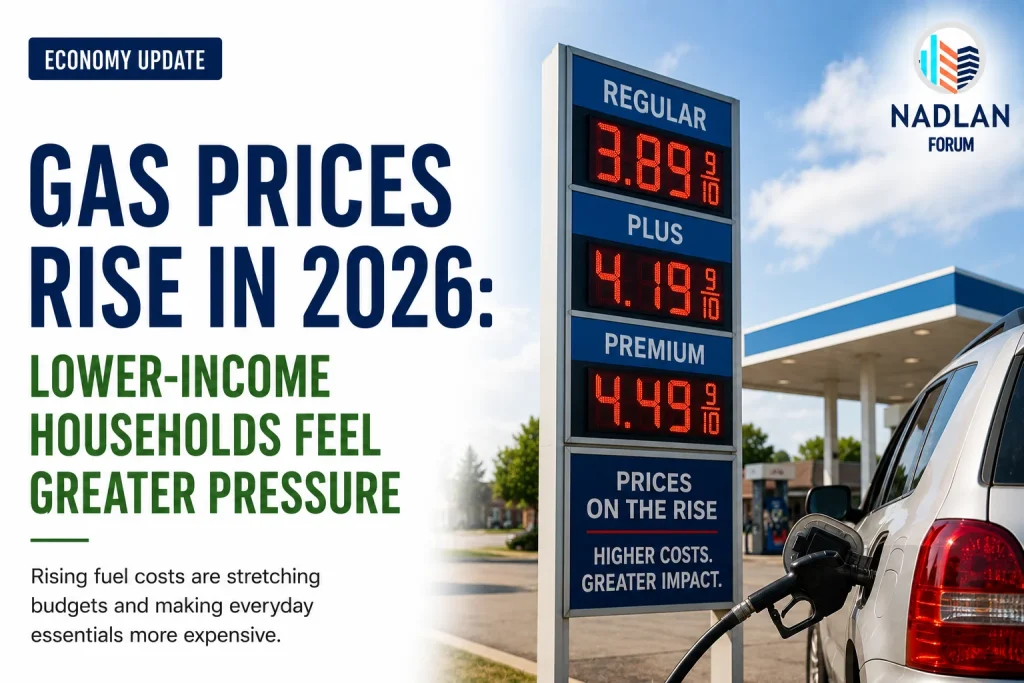
Fuel Costs Increase Across the U.S.
Gas prices in the United States have moved higher again, creating added pressure on household budgets. While rising fuel costs affect everyone, new research shows that the impact is not equal across income groups.
A recent study from the Federal Reserve Bank of New York highlights how lower-income households are adjusting their behavior more sharply compared to higher-income groups.
Lower-Income Households Cut Back on Usage
During the spike in energy prices in March 2026, households earning less than $40,000 per year showed the smallest increase in gas spending. Their total spending on fuel rose by about 12%, but this was largely due to higher prices rather than increased usage.
In fact, this group reduced their actual gasoline consumption by around 7%. This suggests that many households responded by driving less, combining trips, or switching to other forms of transportation where possible.
Higher-Income Groups Show Different Behavior
In contrast, households earning more than $125,000 per year reacted differently. Their gas spending increased by about 19%, while their actual fuel usage dropped only slightly—by around 1%.
This shows that higher-income households are less affected by rising prices and are able to maintain their normal consumption patterns.
A Clear Example of a K-Shaped Economy
Economists describe this pattern as a “K-shaped” response. This means different groups experience the same economic event in very different ways.
Lower-income households reduce spending and consumption, while higher-income households continue spending with minimal changes. This gap has been visible in many areas of the economy since the COVID-19 pandemic.
The difference is partly due to financial flexibility. Higher-income households often have savings or assets that allow them to absorb price increases more easily.
Inflation Adds to the Pressure
Inflation has played a major role in widening this gap. Since early 2020, consumer prices have increased significantly, while wage growth has not kept pace in real terms.
According to data from the Bureau of Labor Statistics, prices have risen by about 28% over this period, while wages have grown at a similar pace. This means that real purchasing power has not improved much for many households.
As a result, rising costs for essentials like fuel are harder to manage, especially for those with lower incomes.
Energy Prices Continue to Climb
Fuel prices have increased sharply in recent years. Since the pandemic period, energy costs have risen by more than 50%. In March 2026, gas prices jumped close to $3.81 per gallon and have since moved higher to around $4.30.
These increases are linked to global events, including supply disruptions and geopolitical tensions. When energy prices rise quickly, the effects are felt almost immediately by consumers.
Changes in Daily Behavior
The study suggests that lower-income households are making practical adjustments to cope with higher fuel costs. These may include:
- Driving less frequently
- Carpooling with others
- Using public transportation where available
These changes help reduce spending but may also limit mobility and access to work or services.
On the other hand, higher-income households are less likely to make such adjustments, as fuel costs represent a smaller share of their overall budget.
Similar Trends Seen Before
The current pattern is similar to what happened during earlier energy price spikes, such as in 2022. However, the gap between income groups appears to be even larger this time.
Overall gasoline spending increased by about 15% in March, based on survey data from around 2,000 households. This shows that while total spending is rising, the way people respond depends heavily on income level.
What This Means Going Forward
Rising gas prices are likely to remain a concern, especially if global energy markets stay unstable. For lower-income households, continued increases could lead to further reductions in consumption and added financial strain.
For policymakers, these findings highlight the importance of addressing affordability and supporting households most affected by inflation.
Final Thoughts
The impact of rising gas prices in 2026 shows a clear divide between income groups. While some households can absorb higher costs, others must change their daily habits to keep up.
This difference reflects a broader trend in the economy, where financial challenges are not shared equally. For direct financing consultations or mortgage options for you visit 👉 Nadlan Capital Group.
