


Mortgage Rates React to Global Headlines
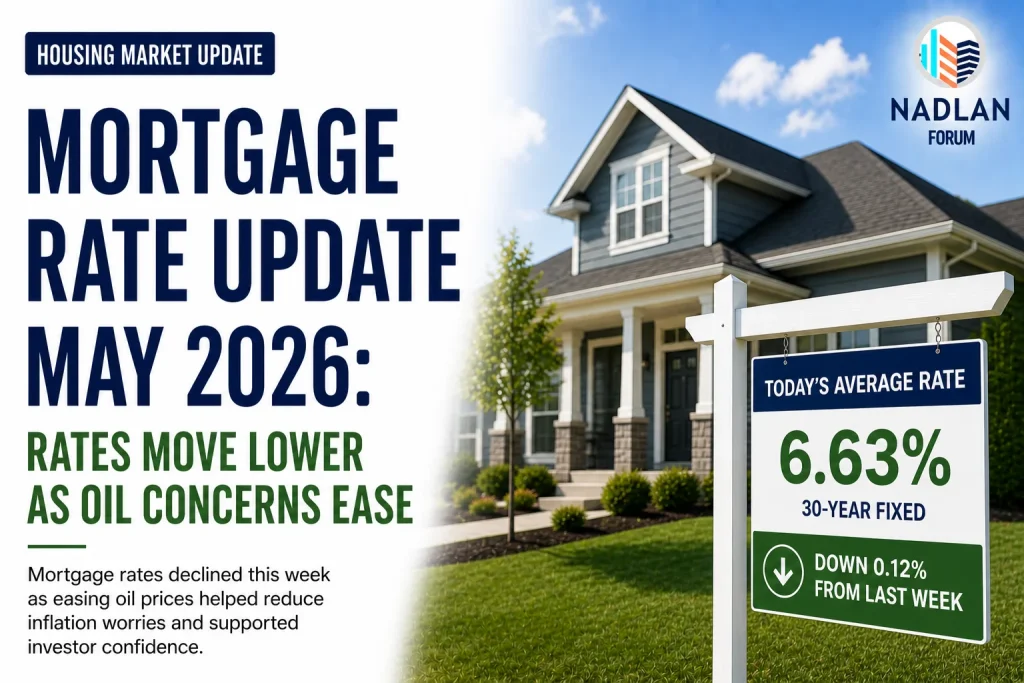
Mortgage rates moved slightly lower this week after financial markets reacted to news suggesting progress toward easing tensions between the United States and Iran.
Earlier in the week, reports indicated that both sides were close to agreeing on a short preliminary agreement aimed at ending the conflict. While the agreement would not represent a full peace deal, it could help stop fighting immediately while longer negotiations continue.
For financial markets, that possibility was enough to change expectations around inflation and interest rates.
Why Oil Prices Matter for Mortgage Rates
Mortgage rates are closely connected to the bond market. When investors expect inflation to rise, bond prices often fall, which pushes interest rates higher.
One of the biggest drivers of inflation during the conflict has been oil prices. The war created concerns about supply disruptions, causing energy prices to move sharply higher.
If tensions ease and oil prices decline, inflation pressure could also fall. That is why bond markets reacted positively to the news, helping rates move slightly lower.
Treasury Yields Declined Midweek
The strongest market reaction happened on Wednesday. Treasury yields, especially the 10-year Treasury note that often influences mortgage pricing, moved lower as investors responded to the headlines.
Mortgage rates do not update instantly throughout the day like Treasury markets do, but average daily mortgage rates also followed the same direction.
By the middle of the week, mortgage rates had returned close to levels seen at the end of the previous week after starting May at their highest point in more than a month.
Jobs Report Did Not Push Rates Higher
Normally, Friday’s labor market report would have had a major impact on interest rates.
The U.S. economy added 115,000 jobs in April, much higher than forecasts near 62,000. In many cases, stronger employment data would push mortgage rates higher because it suggests the economy remains resilient and inflation risks could continue.
However, markets reacted differently this time.
The unemployment rate remained steady at 4.3%, matching expectations. Investors appeared more focused on broader economic uncertainty and energy prices rather than the headline payroll number alone.
As a result, rates drifted slightly lower instead of rising sharply.
Labor Market Signals Remain Mixed
The latest jobs report also showed signs that the labor market may be cooling gradually.
While payroll growth exceeded expectations, wage growth slowed and labor force participation declined slightly. These mixed signals reduced concerns that the economy was overheating.
For bond markets, weaker inflation pressure is often positive because it lowers the chance of additional interest rate increases.
Inflation Data Will Be Key Next Week
Looking ahead, investors are expected to focus heavily on upcoming inflation reports.
Two important updates are scheduled:
- Consumer Price Index (CPI) report
- Producer Price Index (PPI) report
These reports will provide more information about how quickly prices increased during April.
If inflation data comes in lower than expected, mortgage rates could remain stable or move lower. However, stronger inflation numbers could quickly reverse recent improvements.
Federal Reserve Still Watching Carefully
The Federal Reserve continues to monitor inflation, labor market conditions, and global risks before making future interest rate decisions.
Recent comments from Fed officials suggest that policymakers are likely to keep rates steady until inflation shows clearer signs of slowing.
This means mortgage markets may continue reacting strongly to economic reports and geopolitical developments over the coming weeks.
What This Means for Homebuyers
For homebuyers and homeowners, the recent decline in mortgage rates offers a small improvement in affordability. Even modest rate changes can affect monthly payments and borrowing power.
However, rates remain much higher than the record lows seen during 2020 and 2021, so affordability challenges continue for many buyers.
Final Thoughts
Mortgage rates in May 2026 moved slightly lower after markets responded to signs of easing tensions in the Middle East and lower inflation concerns tied to oil prices.
Even though the labor market remains relatively stable, investors are paying closer attention to inflation and global events. The next round of economic data will likely play a major role in determining where mortgage rates move next. For direct financing consultations or mortgage options for you visit 👉 Nadlan Capital Group.