


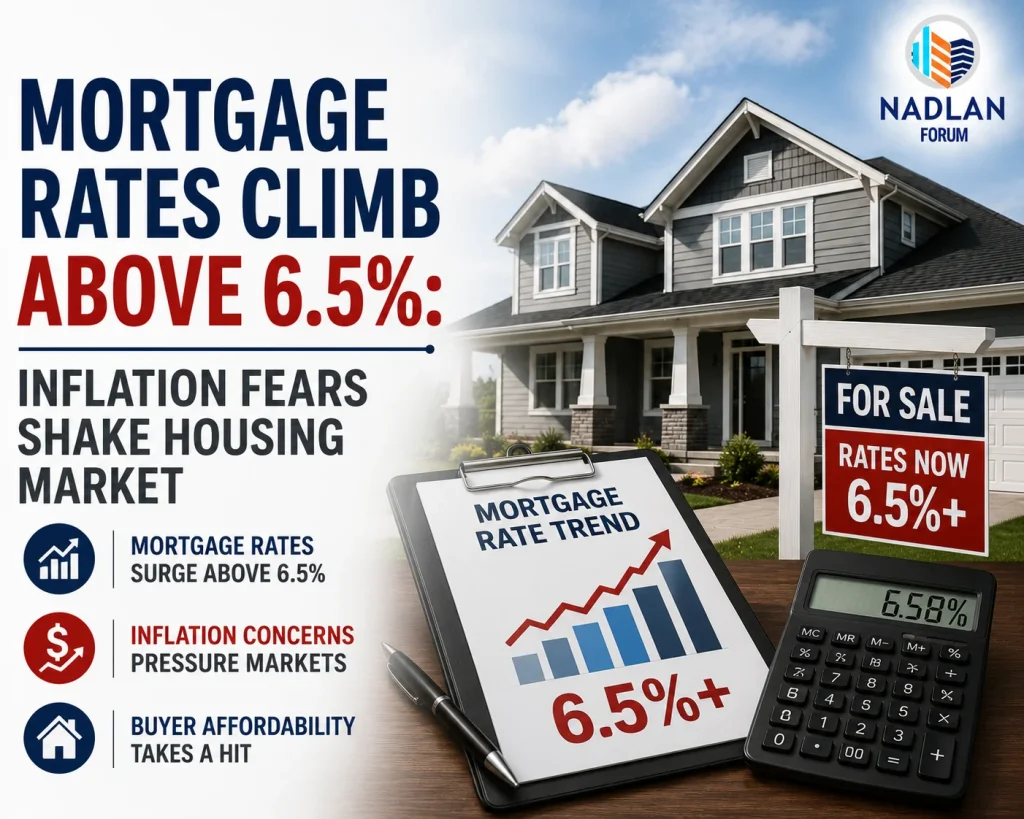
Mortgage rates moved sharply higher this week as inflation worries and rising Treasury yields continued pressuring the housing market.
The average 30-year fixed mortgage rate climbed to 6.51%, according to Freddie Mac data, marking one of the highest levels seen in recent months. Other industry measurements showed rates moving even higher, with some lenders approaching 6.7% for standard 30-year loans.
The increase comes as investors react to rising inflation risks, global bond market volatility, and ongoing geopolitical tensions connected to the Iran conflict.
Treasury Yields Push Mortgage Rates Higher
Mortgage rates closely follow movements in the Treasury market, especially the 10-year Treasury yield.
Over the past week, the 10-year yield jumped roughly 15 basis points to around 4.6% as investors sold government bonds amid fears that inflation may remain elevated longer than expected.
When Treasury yields rise:
- Mortgage rates typically increase
- Borrowing becomes more expensive
- Monthly housing payments rise
- Buyer affordability weakens
Industry analysts say the recent surge in bond yields has been one of the main drivers behind the latest jump in mortgage rates.
Current Mortgage Rates for May 21, 2026
According to the latest national averages from Zillow, mortgage rates increased across nearly all major loan categories.
Current Purchase Mortgage Rates
- 30-year fixed: 6.55%
- 20-year fixed: 6.54%
- 15-year fixed: 6.02%
- 5/1 ARM: 6.80%
- 7/1 ARM: 6.40%
- 30-year VA: 5.96%
- 15-year VA: 5.57%
- 5/1 VA: 5.63%
These figures represent national averages and may vary depending on credit score, location, loan size, and lender pricing.
Refinance Rates Also Move Higher
Homeowners looking to refinance are also facing rising borrowing costs.
Current Refinance Rates
- 30-year fixed refinance: 6.50%
- 20-year fixed refinance: 6.47%
- 15-year fixed refinance: 5.97%
- 5/1 ARM refinance: 6.33%
- 7/1 ARM refinance: 6.52%
- 30-year VA refinance: 6.04%
- 15-year VA refinance: 5.80%
- 5/1 VA refinance: 5.71%
Although refinance rates can sometimes move below purchase loan rates, they are currently remaining elevated as financial markets continue adjusting to inflation expectations.
Inflation Fears Continue Building
Financial markets remain highly focused on inflation after several recent economic reports showed stronger-than-expected price growth.
Recent data revealed:
- Consumer inflation accelerating
- Producer prices surging
- Energy costs climbing sharply
- Fuel prices remaining elevated
- Core inflation staying above Federal Reserve targets
The ongoing Iran conflict has also increased concerns about oil supply disruptions and higher energy costs, both of which can feed into broader inflation across the economy.
Federal Reserve Expectations Shift
Investors now believe the Federal Reserve is far less likely to cut interest rates this year.
Some traders are even beginning to price in the possibility of future rate hikes if inflation continues worsening.
Although the Fed does not directly set mortgage rates, its policies strongly influence bond markets and investor expectations.
As expectations for higher-for-longer interest rates grow, mortgage rates tend to rise as well.
Housing Affordability Faces New Pressure
The latest increase in mortgage rates is adding more pressure to housing affordability nationwide.
Many buyers are already struggling with:
- Elevated home prices
- Higher insurance costs
- Rising property taxes
- Limited housing inventory
- Increased monthly payments
Even small increases in mortgage rates can significantly impact affordability.
For example, a buyer financing a $400,000 home today may now face hundreds of dollars more in monthly payments compared to earlier this year.
Why Mortgage Rates Matter So Much
Mortgage rates directly affect how much buyers can afford to borrow.
Higher rates mean:
- Higher monthly payments
- Reduced purchasing power
- Smaller loan approvals
- More expensive refinancing costs
For many households, rising mortgage rates can push homes out of reach entirely.
The latest jump above 6.5% marks a major shift from the historically low borrowing costs many buyers enjoyed during 2020 and 2021.
Fixed-Rate vs Adjustable-Rate Mortgages
As rates rise, some borrowers are exploring adjustable-rate mortgages, or ARMs, to lower their initial payments.
A fixed-rate mortgage keeps the same interest rate for the entire loan term.
An adjustable-rate mortgage locks in a lower introductory rate for several years before adjusting periodically afterward.
For example:
- A 5/1 ARM keeps the same rate for five years
- After that, the rate adjusts annually
ARMs can offer lower initial payments, but borrowers risk future rate increases if interest rates remain elevated.
30-Year Loans Remain Most Popular
Despite rising costs, the 30-year fixed mortgage continues to dominate the housing market because of its lower monthly payments compared to shorter-term loans.
The tradeoff is higher long-term interest costs.
A 15-year mortgage generally offers:
- Lower interest rates
- Faster loan payoff
- Lower total interest paid
However, monthly payments are much higher because the loan is repaid over a shorter period.
Buyers Continue Shopping Carefully
Many homebuyers are now becoming more cautious as affordability pressures increase.
Some households are:
- Delaying home purchases
- Lowering their budgets
- Searching for smaller homes
- Comparing more lenders
- Considering rate buydowns
Others continue buying due to limited housing inventory and fears that prices could rise further if rates eventually stabilize.
Can Mortgage Rates Fall Again?
Forecasts for the remainder of 2026 remain highly uncertain.
Some economists believe rates could stabilize later this year if inflation begins cooling and Treasury yields ease.
However, additional inflation shocks or worsening geopolitical tensions could keep borrowing costs elevated for longer.
Most major housing forecasts currently expect mortgage rates to remain above 6% throughout much of 2026 and possibly into 2027.
What Borrowers Can Still Control
Even in a high-rate environment, borrowers can still improve their chances of securing better loan terms.
Lenders typically offer lower rates to buyers with:
- Higher credit scores
- Larger down payments
- Lower debt-to-income ratios
- Stronger income histories
Comparing multiple lenders and improving financial profiles before applying can still help borrowers reduce overall loan costs. For direct financing consultations or mortgage options for you visit 👉 Nadlan Capital Group.
