


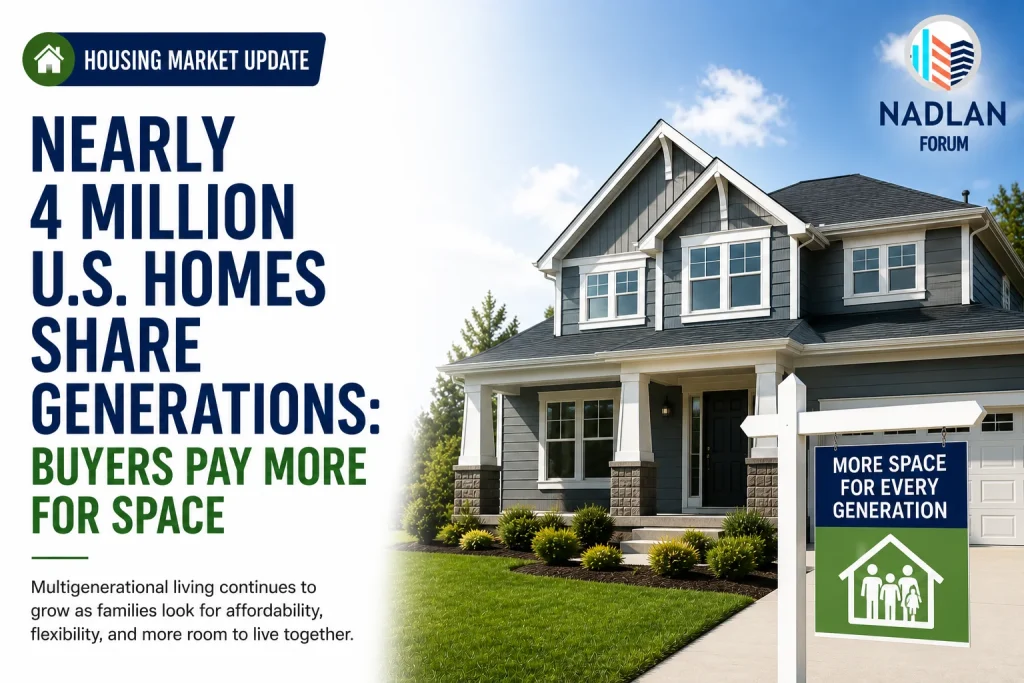
Multigenerational living is becoming a stronger part of the U.S. housing market, even if it is not always in the spotlight. Recent data from Realtor.com shows that nearly 4 million homes across the country now include multiple generations living together. This shift is gradually changing how people buy and sell homes, especially as housing costs continue to rise.
As families prepare to celebrate Mother’s Day, the numbers highlight a meaningful detail: close to 3 million owner-occupied homes include at least two mothers under one roof. These homes often feature layouts designed for shared living, such as in-law suites, guest houses, or separate living areas.
According to housing analysts, this trend is not just about space it reflects a growing need for shared responsibility, financial support, and family connection. Buyers are still willing to pay more for these types of homes, even when prices are significantly higher.
Growing Demand Despite Higher Prices
In 2025, the median listing price for multigenerational homes reached about $709,000. That is roughly 65% higher than the $429,900 median price for standard homes. While part of this difference comes from larger property sizes, the added cost also reflects special features like separate kitchens, private entrances, and flexible living spaces.
Even when comparing price per square foot, multigenerational homes still cost more—around $262 per square foot compared to $215 for regular homes. This shows that buyers place real value on the ability to live with extended family comfortably.
What is more interesting is that demand is not slowing down. These homes receive about 13.5% more online views than typical listings and sell in about the same time—around 59 days. This suggests that higher prices are not discouraging buyers.
Uneven Supply Across Regions
The availability of multigenerational homes varies widely across the country. Western regions, especially California, have the highest share of these listings. Cities like Los Angeles, San Diego, San Jose, San Francisco, and Riverside lead the market, with some areas seeing more than 20% of listings designed for extended families.
In these places, multigenerational living is already common, so price differences between standard and shared homes are smaller. For example, the price premium in Los Angeles is only around 1.6%, while in San Francisco it is about 8.4%.
However, the situation looks very different in the Midwest and parts of the South. Cities such as Detroit, Cleveland, and Buffalo have very limited supply. When a multigenerational home does appear on the market in these areas, it often comes with much higher price premiums—sometimes more than double the cost of standard homes.
These homes also attract much more attention from buyers. Listings in Detroit, for example, receive over 80% more views than regular homes, showing strong demand despite limited availability.
Why Families Are Choosing This Lifestyle
Multigenerational households now make up about 4.5% of all owner-occupied homes, slightly higher than a few years ago. While the percentage change may seem small, the actual number of families living this way has grown steadily—from around 3.2 million in 2014 to nearly 3.9 million in 2024.
A typical multigenerational household includes about five people living in a four-bedroom home, with a combined income of around $131,000 per year. This setup helps families manage rising housing costs, childcare expenses, and daily living needs more effectively.
Cultural factors also play a role. Many families, especially in urban areas along the West Coast and East Coast, see shared living as a practical and supportive arrangement. It allows older generations to receive care while younger members benefit from shared expenses and responsibilities.
A Market That Continues to Evolve
The rise of multigenerational homes shows how the housing market is adapting to real-life needs. As affordability challenges continue, more families are choosing to live together, not just for financial reasons but also for emotional support and convenience.
At the same time, the gap between demand and supply remains a key issue in many regions. In areas where these homes are rare, they quickly become valuable assets for sellers.
Overall, multigenerational living is no longer a niche trend. It is becoming a steady part of how Americans approach housing, and its influence on home design, pricing, and buyer preferences is likely to grow in the coming years. For direct financing consultations or mortgage options for you visit 👉 Nadlan Capital Group.
