


Rent Growth Slows but Costs Stay High
Rent increases are no longer rising as fast as before, but that has not improved the situation for many renters across the country. A new analysis from Zillow shows that millions of households are still struggling to afford monthly rent payments.
In 2024, the number of cost-burdened renter households rose to about 21.4 million, up from 20.9 million in 2023. These households spend more than 30% of their income on rent. At the same time, the number of severely burdened renters—those spending over half of their income—also increased, reaching nearly 10.9 million.
This shows that even though rent growth is slowing, actual rent levels remain too high for many families.

Why Slower Rent Growth Does Not Mean Relief
A slower increase in rent does not mean rent is becoming affordable. It simply means prices are rising at a lower rate than before. For renters, what matters most is the total amount they pay each month.
If rent stays high compared to income, financial pressure continues. Many households are still dealing with the impact of earlier years when rents increased quickly. Those past increases have made it harder for renters to recover, even if current growth is slower.
Rental Assistance Falls Behind Demand
Another major issue is the gap between renters in need and available government support. The Housing Choice Voucher program, managed by the U.S. Department of Housing and Urban Development, provides rental assistance to low-income households.
In 2024, about 2.79 million vouchers were in use, only slightly higher than the previous year. However, the number of cost-burdened renters far exceeds this support.
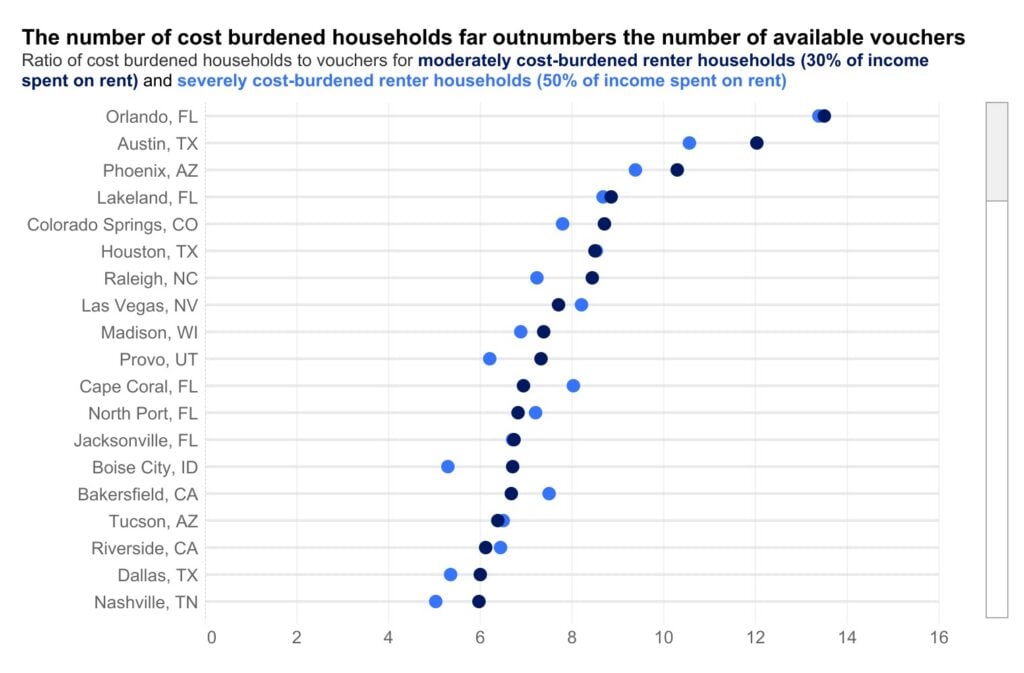
There are roughly 18.6 million more cost-burdened households than available vouchers. This gap has grown compared to the year before, showing that demand for help continues to increase faster than supply.
It is important to note that not all renters qualify for assistance, but the numbers highlight how limited support is compared to overall need.
Challenges Even for Those Who Qualify
Even when renters qualify for assistance and receive a voucher, finding housing is not always easy. Many landlords do not accept vouchers, which limits options for tenants.
In competitive rental markets, especially in urban areas, voucher holders often struggle to secure housing within the required time. If they cannot find a suitable unit, they may need to request an extension or risk losing the voucher.
Studies suggest that a significant portion of households that receive vouchers still fail to find housing that accepts them. This means the real gap between need and effective support may be even larger than the numbers show.
Differences Across Cities and Regions
The level of rent burden varies widely across different metro areas. Higher-cost cities tend to have more renters and higher rent levels, which increases the number of households facing financial pressure.
In many large metro areas, the gap between cost-burdened renters and available vouchers is especially large. Cities like Orlando, Austin, Phoenix, Lakeland, and Houston have some of the highest ratios of renters in need compared to available support.
Interestingly, these areas are not always the most expensive markets. The gap is also influenced by local policies, funding levels, and how voucher programs are managed.
Policy and Legal Factors Matter
Local laws and regulations also play a role in how effective rental assistance can be. Some areas have protections that prevent landlords from rejecting tenants based on their source of income, including vouchers.
However, not all states have these protections. In some places, laws limit the ability of local governments to require landlords to accept vouchers. This creates additional barriers for renters trying to use assistance.
In contrast, states like California have stronger rules that protect voucher holders from discrimination. These policies can make it easier for renters to find housing, though challenges still remain.
What This Means for Renters
The growing rent burden shows that affordability remains a serious issue in the U.S. housing market. Even with slower rent growth, many households continue to spend a large share of their income on housing.
Two key points stand out:
- Renters are still facing increasing financial pressure despite slower rent increases
- The gap between renter needs and available support remains large
Addressing these issues will require more than just slowing rent growth. It may involve increasing rental assistance, improving access to housing, and addressing supply challenges in local markets.
Final Thoughts
The rent burden in the U.S. continues to rise, showing that affordability problems are far from solved. While recent trends suggest some stabilization in rent growth, the overall cost of housing remains high.
For millions of renters, the challenge is not how fast rent is increasing, but whether they can afford to pay it at all. For direct financing consultations or mortgage options for you visit 👉 Nadlan Capital Group.
