


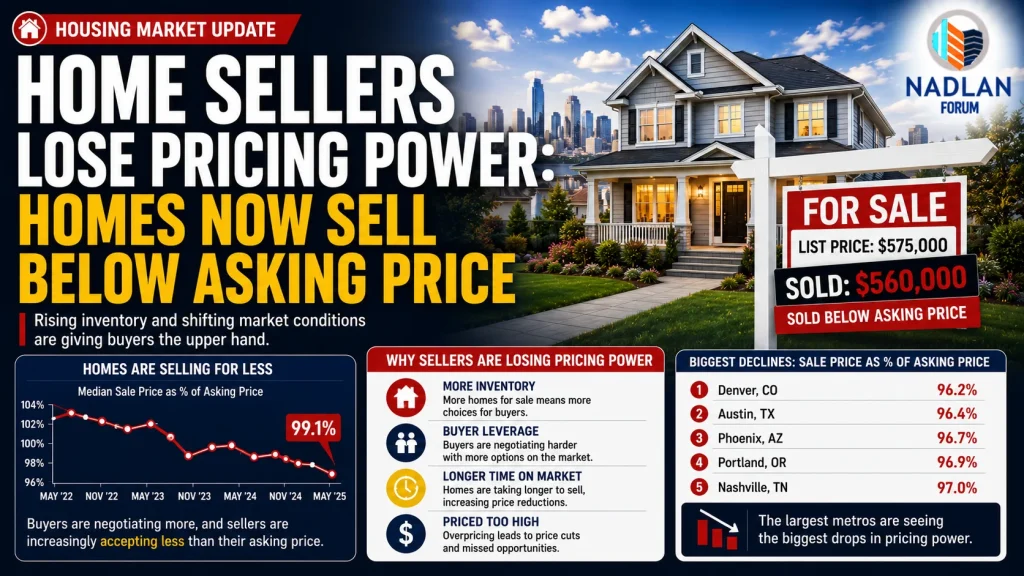
The U.S. housing market continues to move toward a more balanced environment, giving buyers opportunities that were almost impossible to find during the pandemic housing boom. After years of bidding wars and homes selling well above asking price, today’s market tells a different story.
New housing data shows that the average home is now selling below its list price, highlighting a significant shift in negotiating power. Higher mortgage rates, improving inventory, and changing buyer behavior have forced many sellers to rethink their pricing strategies.
For buyers, the changing market offers more flexibility. For sellers, realistic pricing has become one of the most important factors in achieving a successful sale.
Sellers No Longer Control the Market
During the pandemic, sellers often priced homes aggressively and still received multiple offers above asking price.
That environment has changed.
Today’s market rewards sellers who accurately price their homes from the beginning while penalizing those who overestimate demand.
Homes priced correctly attract buyers quickly, while overpriced properties often remain on the market longer and eventually require price reductions.
The First Four Weeks Matter Most
Timing plays a critical role in home sales.
Properties that sell within about four weeks of being listed tend to achieve the strongest pricing outcomes.
Many of these homes receive offers within the first two weeks because buyers recognize fair pricing and move quickly.
By comparison, homes that stay on the market for several months often lose negotiating leverage and may sell below comparable properties.
Home Sale Performance by Time on Market
| Time on Market | Pricing Performance |
|---|---|
| Around 4 Weeks | +1.8% above monthly comparable average |
| Around 18 Weeks | -1.3% below monthly comparable average |
| Performance Gap | More than 3 percentage points |
The data suggests that pricing a home correctly from the start can significantly affect the final sale price.
Why Overpriced Homes Struggle
An overpriced property often creates a cycle that becomes difficult to reverse.
Initial Listing
Higher prices discourage potential buyers from scheduling showings.
Longer Time on Market
Fewer interested buyers result in longer listing periods.
Price Reductions
Sellers eventually reduce prices to attract attention.
Weaker Negotiating Position
Buyers recognize the property’s extended time on the market and negotiate more aggressively.
As a result, many overpriced homes ultimately sell for less than they might have if they had been priced realistically from the beginning.
Price Reductions Are Becoming More Common
The housing market data shows that price reductions often become most common during the first month after listing.
Typical Pricing Timeline
| Listing Period | Market Activity |
| Weeks 1–2 | Strong buyer interest for correctly priced homes |
| Around Week 4 | Many price adjustments begin |
| Around Week 6 | Price reductions reach higher levels in slower markets |
| Six Months | Additional seller flexibility often emerges |
| Twelve Months | Significant negotiations become more common |
During the competitive housing market of 2021, sellers often adjusted prices around the third week.
Today’s slower market has extended that timeline.
Mortgage Rates Changed the Housing Market
One of the biggest factors behind today’s market conditions is the increase in mortgage rates.
During 2021 and parts of 2022, historically low borrowing costs encouraged buyers to compete aggressively for limited inventory.
As mortgage rates increased, affordability declined.
Higher borrowing costs reduced purchasing power and slowed buyer demand.
As a result:
- Bidding wars became less common.
- Buyers gained negotiating power.
- Price reductions increased.
- Sellers became more flexible.
The relationship between asking prices and final sale prices changed significantly.
Buyers Have More Negotiating Power
Today’s market offers several advantages for buyers.
Opportunities Available
- Seller concessions.
- Closing cost assistance.
- Mortgage rate buydowns.
- Repair credits.
- Inspection contingencies.
- Flexible closing timelines.
- Lower purchase prices.
Many buyers who were priced out of the market during the pandemic are finding more opportunities to negotiate favorable terms.
Builders Continue Offering Incentives
Homebuilders remain highly competitive in many markets.
To attract buyers, many builders continue offering:
- Mortgage rate buydowns.
- Price discounts.
- Closing cost assistance.
- Upgrade packages.
- Flexible financing programs.
These incentives can help improve affordability and reduce upfront purchasing costs.
Regional Housing Markets Tell Different Stories
National housing trends do not affect every market equally.
Regional Housing Conditions
| Region | Market Advantage |
| Northeast | Seller-friendly |
| Midwest | Generally balanced with tighter inventory |
| South | Buyer-friendly |
| West | Buyer-friendly |
The Northeast remains one of the few areas where homes often continue selling above asking prices.
Meanwhile, many Southern and Western markets have experienced significant inventory growth, giving buyers more choices and stronger negotiating positions.
Inventory Growth Changes the Market
Housing inventory has improved in many parts of the country.
More available homes allow buyers to:
- Compare multiple properties.
- Negotiate more effectively.
- Avoid rushed decisions.
- Request better contract terms.
Increased inventory reduces the urgency that fueled pandemic-era bidding wars.
What This Means for Sellers
Sellers can still achieve successful transactions, but expectations must adjust to today’s market conditions.
Successful strategies include:
- Pricing competitively.
- Preparing homes carefully.
- Responding quickly to market feedback.
- Making reasonable concessions.
- Remaining flexible during negotiations.
Accurate pricing has become one of the most important factors for maximizing sale proceeds.
What This Means for Buyers
Buyers have more options than they have enjoyed in several years.
Today’s market may allow purchasers to:
- Negotiate better prices.
- Secure financing incentives.
- Request repairs.
- Reduce closing costs.
- Take more time making decisions.
However, well-priced homes in desirable neighborhoods can still attract strong competition.
Local Markets Matter More Than National Trends
Housing conditions increasingly depend on local factors.
Important influences include:
- Employment growth.
- Population changes.
- Housing supply.
- Mortgage rates.
- Local economic conditions.
Borrowers and sellers should focus on regional market data rather than relying solely on national averages.
Key Housing Market Trends
| Indicator | Current Trend |
| Average Home Sale Price | Below asking price |
| Buyer Negotiating Power | Increasing |
| Price Reductions | More common |
| Housing Inventory | Rising in many regions |
| Builder Incentives | Active |
| Northeast Market | Seller-friendly |
| South and West | Buyer-friendly |
Bottom Line
The U.S. housing market has entered a new phase where buyers hold more negotiating power and sellers no longer enjoy the automatic advantages of the pandemic housing boom. Homes priced correctly continue selling relatively quickly, while overpriced properties often remain on the market longer and require price reductions.
Higher mortgage rates and improving inventory have changed market dynamics across much of the country. Buyers now have greater opportunities to negotiate price concessions, financing incentives, and favorable contract terms, while sellers must focus on realistic pricing and local market conditions to achieve the best results.
Although regional differences remain significant, the overall trend suggests a more balanced housing market where careful pricing and informed decision-making matter more than ever. For direct financing consultations or mortgage options for you visit 👉 Nadlan Capital Group.
