


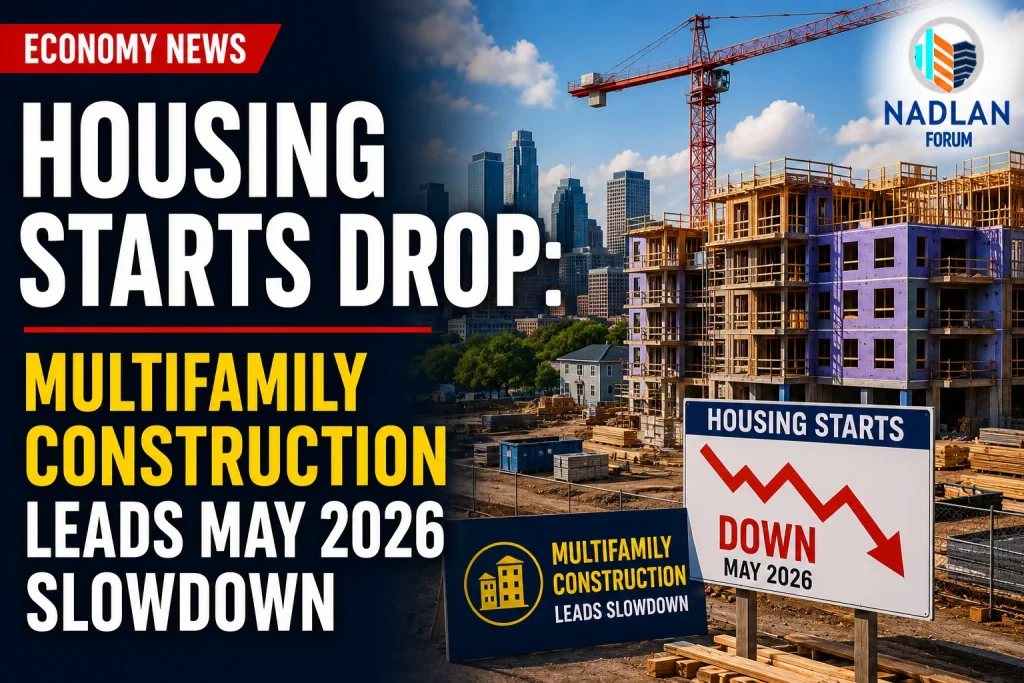
The pace of new home construction slowed significantly in May as builders continued to navigate a difficult housing environment marked by elevated mortgage rates, affordability concerns, labor shortages, and rising development costs.
New housing data shows that overall housing starts posted a sharp monthly decline, with the largest weakness coming from the multifamily sector. Apartment and condominium projects saw a substantial pullback, while single-family construction also moved lower.
The latest figures suggest that many builders remain cautious about launching new projects despite the nation’s ongoing housing shortage.
Housing Starts See Significant Monthly Decline
Total housing starts fell 15.4% in May to a seasonally adjusted annual rate of 1.18 million units.
Housing starts measure the number of residential units that begin construction during a given period. The annualized figure represents the pace of construction activity if the same level continued over the next 12 months.
The decline reflects growing pressure on builders as affordability challenges continue to limit buyer demand.
Although housing inventory remains below long-term needs in many markets, builders are increasingly adjusting construction plans to match slower sales activity.
Single-Family Construction Continues to Ease
Single-family housing starts declined 1.9% in May to an annual pace of 882,000 units.
Compared with the same month last year, single-family construction is down 6.7%.
Builders continue to face several obstacles, including:
- Higher mortgage rates reducing buyer purchasing power.
- Elevated material and development costs.
- Labor shortages across the construction industry.
- Affordability concerns among first-time buyers.
- Economic uncertainty affecting consumer confidence.
These factors have made it more difficult for builders to maintain strong construction momentum.
Multifamily Construction Sees Sharp Pullback
The largest decline occurred in the multifamily sector.
Construction starts for apartments, condominiums, and other multifamily projects dropped 40.2% in May to an annualized rate of 295,000 units.
Multifamily starts were also 14.2% lower than one year ago.
After several years of rapid apartment development in many metropolitan areas, some markets are now experiencing slower project activity as developers respond to changing market conditions, financing costs, and supply concerns.
The sharp decline in multifamily construction accounted for most of the overall decrease in housing starts during the month.
Builder Confidence Remains Under Pressure
Recent builder sentiment surveys suggest that many construction companies remain cautious about the near-term outlook.
Higher borrowing costs continue to reduce affordability for potential buyers, limiting demand for newly built homes.
To attract buyers, many builders are offering incentives such as:
- Mortgage rate buydowns.
- Closing cost assistance.
- Free upgrades and design packages.
- Direct price reductions.
While these strategies have helped generate sales activity, they have not fully offset the impact of higher financing costs.
As a result, many builders are carefully managing new project pipelines until market conditions improve.
Regional Housing Trends Show Mixed Results
Housing activity continues to vary across different parts of the country.
Year-to-date data shows:
Northeast
The Northeast posted the strongest performance, with combined housing starts increasing 17.5% compared with the previous year.
Strong population growth in select markets and limited housing supply continue to support construction activity in some areas.
Midwest
Housing starts in the Midwest declined 4.1%.
Despite some pockets of strength, builders remain cautious about expanding construction too aggressively.
South
The South, which has led national homebuilding activity for several years, recorded a modest 1.6% decline.
While demand remains relatively healthy, affordability pressures have begun affecting some of the region’s fastest-growing markets.
West
The West experienced a 4.9% decrease in housing starts.
High home prices, land costs, and regulatory challenges continue to affect development activity throughout many western states.
Building Permits Provide a Look Ahead
Building permits often serve as an early indicator of future construction activity because permits are typically issued before ground is broken on new projects.
Overall permits declined 0.7% in May to an annualized rate of 1.41 million units.
The data presents a mixed picture.
Single-Family Permits Increase
Single-family permits rose 0.6% to an annualized rate of 886,000 units.
Although this increase is encouraging, permit activity remains below year-ago levels, indicating that builders remain selective about future projects.
Multifamily Permits Decline
Multifamily permits fell 2.8% to an annualized pace of 527,000 units.
Despite the monthly decline, permit activity remains slightly above last year’s levels, suggesting some future apartment development remains in the pipeline.
Regional Permit Activity
Permit trends also varied by region.
Year-to-date permit activity shows:
- Northeast: Up 10.0%
- Midwest: Up 2.4%
- South: Down 6.7%
- West: Up 0.1%
These figures indicate that future construction growth may remain uneven across the country.
Homes Under Construction Continue to Decline
Another important indicator of housing supply is the number of homes currently under construction.
The latest report shows that single-family homes under construction totaled 587,000 units.
That figure is 5.9% lower than one year ago.
A decline in homes under construction suggests that fewer projects are moving through the building pipeline, which could limit future inventory growth if the trend continues.
What This Means for the Housing Market
The slowdown in housing starts comes at a time when many housing markets are gradually shifting toward more balanced conditions.
Inventory has improved in some regions, but supply remains well below historical norms in many areas.
A slower pace of construction could make it more difficult to close the nation’s housing shortage over the long term.
At the same time, builders are responding to current market realities by carefully managing risk and focusing on projects with stronger demand potential.
Outlook for the Rest of 2026
Looking ahead, housing construction will likely depend on several key factors:
- Mortgage rate movements.
- Inflation trends.
- Labor availability.
- Material costs.
- Consumer demand.
- Economic growth.
If mortgage rates begin to ease later this year, builders could see stronger buyer demand and renewed construction activity.
However, if affordability challenges persist, many developers may continue taking a cautious approach to new projects.
Bottom Line
Housing starts fell sharply in May 2026, largely due to a significant slowdown in multifamily construction. Single-family building also weakened as builders faced higher borrowing costs, labor shortages, and affordability concerns.
While building permits provide some signs of future activity, overall construction remains under pressure. The housing market continues to need additional supply, but current economic conditions are making it difficult for builders to accelerate development.
For homebuyers, investors, and housing professionals, construction trends will remain one of the most important indicators to watch throughout the remainder of 2026. For direct financing consultations or mortgage options for you visit 👉 Nadlan Capital Group.