


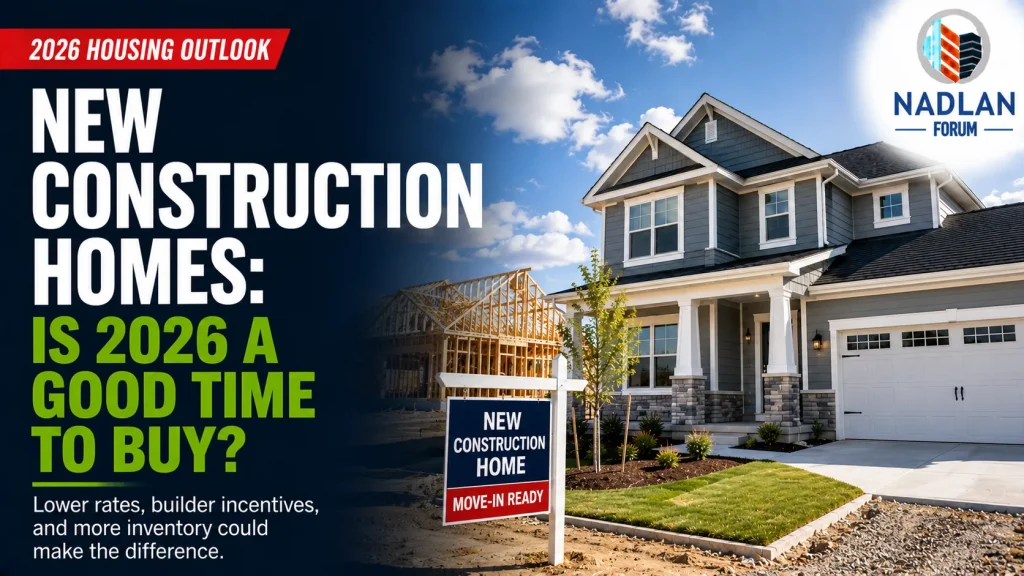
New construction homes are becoming a more attractive option for buyers struggling with high home prices, limited inventory and mortgage rates above recent historical averages.
In many parts of the country, builders have completed homes they need to sell, giving buyers more room to negotiate. Some developers are reducing prices, contributing toward closing costs or offering mortgage rates below the broader market.
These incentives can make a newly built home more affordable than expected. However, builder deals often come with conditions, and the lowest advertised rate may not provide the best long-term value.
Whether buying new construction makes sense depends on the local market, the quality of the development, the financing terms and how well the home fits the buyer’s lifestyle.
What Is a New Construction Home?
A new construction home is a property that has not previously been occupied.
New homes generally fall into three categories.
Quick Move-In Homes
A quick move-in home is already completed or nearing completion.
The floor plan, finishes and major design choices have usually been selected by the builder. Buyers may be able to close much sooner than they would on a home that has not yet been built.
Builders are often highly motivated to sell these properties because completed homes create carrying costs such as interest, taxes, insurance, maintenance and utility expenses.
Homes Under Construction
A home under construction has already entered the building process but is not yet finished.
Depending on the construction stage, buyers may still be able to choose:
- Flooring
- Cabinets
- Paint colors
- Countertops
- Appliances
- Lighting
- Bathroom finishes
The more advanced the construction is, the fewer customization options will generally remain.
Custom-Built Homes
A custom home is designed and built according to the buyer’s specifications.
This option provides greater control over the floor plan, materials and features, but it usually requires more time, planning and money.
Custom construction also creates additional risks related to permits, cost overruns, design changes and completion delays.
Builder Opportunities Depend on Location
The benefits of buying a new home vary greatly by region.
In the South and West, builders have developed large numbers of new communities. Greater supply has created more competition among builders, leading to stronger incentives and more flexible pricing.
Buyers in these regions may find:
- Larger price reductions
- Mortgage rate buydowns
- Closing cost assistance
- Free upgrades
- Lower down-payment options
- More quick move-in inventory
In the Northeast and Midwest, new construction is often more limited because land, labor and approval costs are higher.
With fewer new homes available, buyers may pay a premium rather than receive a discount.
Local supply matters more than national averages. A buyer may find strong builder incentives in one city and almost no negotiating room in another.
New and Existing Home Prices Are Moving Closer
Historically, new construction homes often sold at a noticeable premium compared with existing properties.
That price difference has narrowed in many markets.
Builders have reduced prices, offered smaller floor plans and increased incentives to compete with existing-home sellers.
New home price reductions reached unusually high levels during 2025 as builders worked to move available inventory.
Unlike many existing homeowners, builders cannot simply remove every property from the market and wait for better conditions. They have construction loans, operating expenses and future projects to manage.
This can make a builder more willing to negotiate than an individual homeowner with a low mortgage rate and no urgent reason to sell.
Builders Are Offering More Incentives
Builder incentives have become one of the main reasons buyers are considering new construction.
Recent industry estimates showed that a majority of new home communities were offering some type of incentive.
Quick move-in homes often received the strongest offers because builders wanted to sell completed properties quickly.
Common builder incentives include:
- Below-market mortgage rates
- Temporary or permanent rate buydowns
- Closing cost credits
- Reduced purchase prices
- Lower down payments
- Free appliances
- Upgraded finishes
- Landscaping packages
- Home warranty coverage
The actual value of an incentive depends on how it is structured and whether the buyer must use the builder’s preferred lender or title company.
Builder Mortgage Rates Can Be Lower
Mortgage financing is often the most valuable builder incentive.
Some large developers work with affiliated or preferred lenders to arrange discounted mortgage rates across an entire community.
Instead of negotiating each mortgage separately, the builder may use its financial resources to buy down rates for multiple buyers.
In some recent comparisons, buyers of new construction homes received rates nearly one percentage point lower than buyers of existing homes.
A difference of one percentage point can significantly affect the monthly payment.
For example, on a $400,000 mortgage, the payment difference between a 5.5% rate and a 6.5% rate can be several hundred dollars per month.
However, buyers must determine whether the discounted rate is permanent or temporary.
Understand Temporary Rate Buydowns
A temporary rate buydown reduces the borrower’s payment for a limited period.
One common option is a 2-1 buydown.
Under this structure:
- The mortgage rate is reduced by two percentage points during the first year.
- The rate is reduced by one percentage point during the second year.
- The full note rate begins in the third year.
For example, if the permanent mortgage rate is 6.5%, the borrower may pay:
- 4.5% during year one
- 5.5% during year two
- 6.5% beginning in year three
The builder usually deposits funds into an account that covers the difference during the reduced-payment period.
A temporary buydown can help with early affordability, but buyers must qualify for and be prepared to pay the full future payment.
Permanent Rate Buydowns
A permanent buydown reduces the mortgage rate for the entire loan term.
The builder may pay discount points upfront to lower the borrower’s rate.
This option can provide more long-term value than a temporary promotion, especially for buyers who expect to keep the home and mortgage for many years.
However, buyers should confirm whether the cost of the buydown has been included in a higher home price.
A lower rate does not automatically mean the overall deal is less expensive.
Compare the Rate With the APR
Builder advertisements often focus on the interest rate, but buyers should also examine the annual percentage rate, or APR.
The interest rate determines the cost of borrowing the principal balance.
The APR includes the interest rate along with many loan fees and upfront costs.
A builder may advertise a rate of 3.75%, while the APR is substantially higher because the offer includes points, lender charges or future rate adjustments.
A large difference between the interest rate and APR can indicate:
- High upfront fees
- Discount points
- Temporary financing
- Adjustable-rate terms
- Mortgage insurance
- Other loan costs
Comparing APRs helps buyers evaluate the true cost of competing mortgage offers.
Adjustable-Rate Builder Financing
Some builders advertise adjustable-rate mortgages as part of their incentive packages.
An ARM provides a fixed rate for an introductory period and then adjusts based on market conditions.
A 7/1 ARM, for example, keeps the rate fixed for seven years and adjusts once per year afterward.
An ARM may work for a buyer who plans to move or refinance before the first adjustment.
However, buyers should understand:
- The initial fixed period
- The adjustment frequency
- The rate index
- The lender margin
- The first adjustment cap
- The annual adjustment cap
- The lifetime maximum rate
A low starting payment should not distract from the possibility of higher payments later.
Compare the Builder’s Lender With Outside Lenders
Buyers are generally not required to accept a builder’s financing without comparison.
An independent lender may offer a higher interest rate but lower fees, a better loan structure or more favorable long-term costs.
Buyers should compare formal loan estimates from at least two or three lenders.
Important items to compare include:
- Interest rate
- APR
- Discount points
- Origination charges
- Closing costs
- Mortgage insurance
- Prepayment penalties
- Rate-lock period
- Monthly payment
- Total cash required at closing
The builder’s financing may still be the strongest offer, but comparison provides confidence that the incentive is real.
Ask Whether Incentives Depend on the Preferred Lender
Many builders require buyers to use an affiliated lender to receive certain discounts.
A builder may offer $15,000 toward closing costs, but only if the buyer uses the preferred lender.
The buyer should ask:
- Does the incentive disappear with an outside lender?
- Is the home price different without builder financing?
- Can the incentive be used for a price reduction instead?
- Is the lender owned by or affiliated with the builder?
- Are title or insurance services also required?
- Can the incentive be applied to discount points?
These questions help reveal whether the offer is flexible or tied to a specific financing package.
New Construction Buyers May Need Less Cash
New home buyers may receive lower down-payment options and more closing cost support than buyers of existing homes.
Recent market data showed average down payments on new homes falling below those on existing homes.
This is a change from earlier periods when new construction often required more upfront cash.
Builder credits may reduce expenses such as:
- Loan origination fees
- Appraisal costs
- Title charges
- Recording fees
- Prepaid taxes
- Homeowners insurance
- Discount points
However, lending rules limit how much a builder or seller can contribute based on the loan type and down payment.
Price Discounts May Be Available
Builders sometimes prefer offering incentives instead of lowering the listed price because a price cut may affect the value of other homes in the development.
Still, direct price reductions may be available, especially for:
- Completed inventory
- Homes near the end of a sales phase
- Properties with less popular floor plans
- Homes near roads or commercial areas
- Units with canceled contracts
- End-of-quarter sales goals
Buyers may have more negotiating power near the end of a month, quarter or fiscal year when sales teams are trying to meet targets.
Upgrades Can Add Value
Builders may offer free or discounted upgrades instead of lowering the home price.
Possible upgrades include:
- Better flooring
- Premium countertops
- Kitchen appliances
- Window blinds
- Lighting packages
- Smart-home equipment
- Bathroom finishes
- Garage storage
- Landscaping
Buyers should consider whether the upgrades provide real value or are simply cosmetic additions with inflated retail prices.
Structural improvements are usually harder and more expensive to add later than decorative finishes.
Examples include:
- Additional windows
- Extra bathrooms
- Extended garages
- Covered patios
- Electrical outlets
- Plumbing rough-ins
- Higher ceilings
New Homes May Require Fewer Early Repairs
One major advantage of new construction is the reduced need for immediate repairs.
A new home typically includes recently installed:
- Roofing
- Plumbing
- Electrical systems
- HVAC equipment
- Appliances
- Windows
- Insulation
This can lower maintenance expenses during the first few years.
However, new does not mean perfect. Construction defects can occur, and buyers should not rely solely on the builder’s quality-control process.
Builder Warranties Provide Some Protection
Most new construction homes include a builder warranty.
Warranty coverage may include:
- Workmanship
- Materials
- Plumbing
- Electrical systems
- HVAC equipment
- Structural defects
Coverage periods vary.
Cosmetic and workmanship items may be covered for one year, while major systems may receive longer protection. Structural coverage may last several years.
Buyers should read the warranty carefully to understand:
- What is covered
- What is excluded
- How claims are filed
- Response deadlines
- Arbitration requirements
- Maintenance responsibilities
A warranty does not replace a home inspection.
Never Skip a New Construction Inspection
A newly built home should still be inspected by an independent professional.
Construction defects can include:
- Poor drainage
- Roof installation problems
- Missing insulation
- Electrical defects
- Plumbing leaks
- Foundation cracks
- Improper grading
- HVAC issues
- Damaged windows
- Incomplete finishes
Buyers may schedule inspections at several stages.
Pre-Drywall Inspection
This inspection occurs before walls are closed.
It allows the inspector to review framing, plumbing, wiring, insulation and structural components that may later be hidden.
Final Inspection
The final inspection takes place before closing.
It reviews the completed home and identifies defects that should be corrected before ownership transfers.
Warranty Inspection
Some buyers schedule another inspection near the end of the first warranty year.
This allows them to submit repair requests before initial coverage expires.
Construction Delays Are Common
Homes under construction may not be completed on the original schedule.
Possible causes include:
- Weather
- Permit delays
- Labor shortages
- Material shortages
- Inspection problems
- Utility connections
- Design changes
- Supply chain disruptions
A delayed closing can affect moving plans, rental agreements, rate locks and storage costs.
Buyers should review the contract to determine what happens if construction is delayed.
Some builder contracts provide little compensation or cancellation flexibility.
Review the Purchase Contract Carefully
Builder contracts are usually written by the builder’s legal team and may provide stronger protection for the developer than the buyer.
Important provisions may address:
- Completion deadlines
- Price increases
- Material substitutions
- Deposit refunds
- Financing deadlines
- Inspection rights
- Warranty claims
- Dispute resolution
- Closing delays
- Homeowner association rules
Buyers should consider hiring a real estate attorney or experienced buyer’s agent to review the agreement.
The builder’s sales representative works for the builder, not the buyer.
Watch for Material Substitutions
Construction contracts often allow the builder to substitute materials when the original product is unavailable.
The replacement may be similar, but it may not be identical in quality, appearance or value.
Buyers should ask how substitutions are handled and whether approval is required for major changes.
All requested upgrades and finishes should be documented in writing.
Verbal promises can be difficult to enforce.
Lower Payments Can Create Thin Equity
Builder incentives can reduce mortgage payments, but buyers may begin with limited equity.
This can happen when the buyer:
- Pays close to the full asking price
- Makes a small down payment
- Finances closing costs
- Buys in a development with future discounted inventory
If nearby home prices fall, the borrower could owe more than the property is worth.
Builders may also reduce prices on later phases, affecting comparable values for earlier buyers.
A professional appraisal does not guarantee that the home will maintain its value.
Check Future Development Plans
A new community may change significantly after the buyer moves in.
Future phases could add:
- More homes
- Apartments
- Retail space
- Schools
- Roads
- Construction traffic
- Community facilities
Buyers should ask about the full development plan and expected completion timeline.
Living near active construction can involve noise, dust, blocked roads and heavy equipment for several years.
Homeowner Association Costs May Rise
Many new construction communities include homeowners associations.
Initial HOA fees may appear low because the builder controls the association or subsidizes certain costs.
Fees may increase after homeowners take control.
Buyers should review:
- Current monthly dues
- Planned increases
- Reserve funding
- Community amenities
- Maintenance responsibilities
- Rental restrictions
- Architectural rules
- Special assessment authority
A low introductory HOA fee may not represent the community’s long-term cost.
Property Taxes May Be Underestimated
Property tax estimates for new construction can be misleading.
Early estimates may be based only on the undeveloped land rather than the completed home.
After the property is reassessed, the tax bill may rise significantly.
Buyers should ask for an estimate based on the full expected value of the completed home.
This is especially important when calculating the total monthly payment.
Energy Efficiency Can Lower Utility Costs
New homes are generally built under newer energy codes.
They may include:
- Better insulation
- Energy-efficient windows
- Modern heating and cooling systems
- Improved air sealing
- Efficient appliances
- Smart thermostats
- LED lighting
These features can reduce utility bills and improve comfort.
However, savings will depend on the home’s size, local climate, energy prices and construction quality.
A larger new home may still use more energy than a smaller older property.
Location Can Be a Trade-Off
New developments are often built farther from established city centers because land is less expensive in suburban and outer areas.
This may provide larger homes and newer amenities but can create longer commutes.
Buyers should consider:
- Travel time
- Fuel costs
- Public transportation
- School access
- Shopping
- Health care
- Employment centers
- Future road construction
A lower home price may be partly offset by higher transportation expenses.
New Landscaping May Take Time
New construction communities often begin with limited trees and young landscaping.
Buyers may need to spend additional money on:
- Fencing
- Grass
- Irrigation
- Trees
- Patios
- Outdoor lighting
- Garden areas
Some of these costs may not be included in the purchase price.
The neighborhood may also lack shade and privacy until landscaping matures.
New Construction Home Benefits
The main advantages of buying a new home may include:
- Builder mortgage incentives
- Potentially lower rates
- Closing cost assistance
- Fewer immediate repairs
- New appliances and systems
- Energy-efficient construction
- Warranty protection
- Modern layouts
- Customization options
- Lower maintenance during the first years
These benefits can make new construction competitive with an existing property, especially when the builder is motivated.
New Construction Home Risks
Potential disadvantages include:
- Construction delays
- Limited negotiating flexibility in some markets
- Preferred-lender restrictions
- Higher future property taxes
- Rising HOA fees
- Thin starting equity
- Ongoing neighborhood construction
- Longer commutes
- Limited landscaping
- Contract terms favoring the builder
- Possible workmanship defects
Buyers should compare the complete cost and not rely only on the advertised monthly payment.
Is New Construction Better Than an Existing Home?
Neither option is automatically better.
A new home may offer lower maintenance, updated design and attractive financing.
An existing home may offer:
- An established neighborhood
- Mature landscaping
- A more central location
- A larger lot
- Clear property-tax history
- More independent financing options
- Greater ability to assess resale value
The better choice depends on the buyer’s priorities, budget and local inventory.
Questions to Ask Before Buying
Before signing a new construction contract, buyers should ask:
- What incentives are available?
- Are incentives tied to a preferred lender?
- Is the mortgage rate temporary or permanent?
- What is the APR?
- How much are points and lender fees?
- What is the expected completion date?
- What happens if construction is delayed?
- Which upgrades are included?
- What warranties are provided?
- Can an independent inspector visit the property?
- What will property taxes be after reassessment?
- How much could HOA fees increase?
- What future development is planned nearby?
Getting clear written answers can prevent expensive surprises.
Final Thoughts
New construction homes can offer strong value in 2026, especially in markets where builders have excess inventory and are providing discounted mortgage rates, closing cost assistance and price reductions.
The best opportunities are often found in quick move-in homes and communities where builders are competing for buyers.
However, advertised incentives should be reviewed carefully.
A low starting mortgage rate may be temporary, closing credits may require the use of a preferred lender, and some incentives may be offset by a higher purchase price or additional loan fees.
Buyers should compare outside financing, review the APR, order an independent inspection and study the builder contract before committing.
For households that find the right location, floor plan and financing package, a new construction home may provide a more affordable path to ownership than an existing property. The strongest deal will be the one that remains affordable after promotional rates expire and all long-term costs are included. For direct financing consultations or mortgage options for you visit 👉 Nadlan Capital Group.