


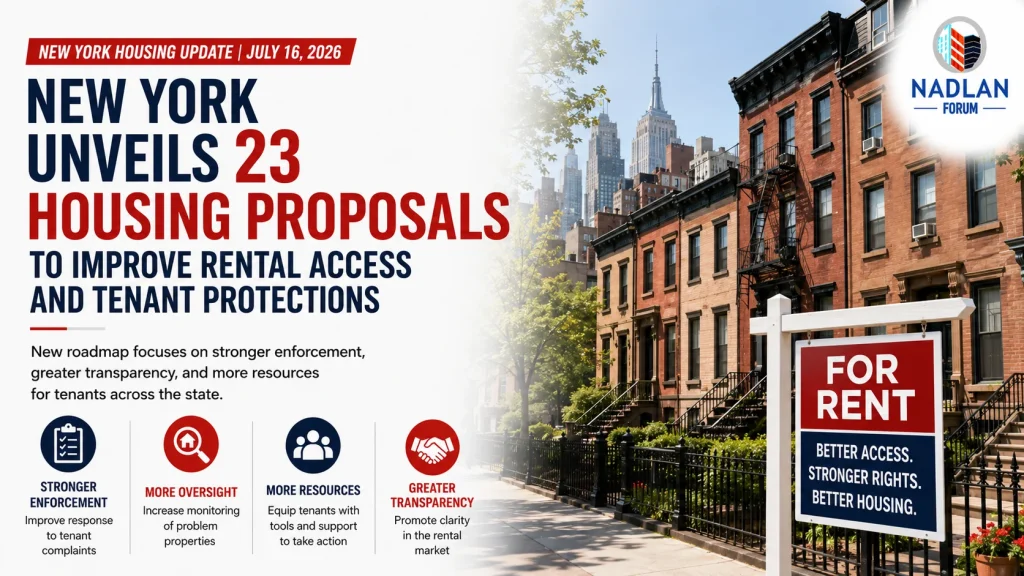
New York City has introduced a broad set of housing reform proposals aimed at improving the rental experience for tenants while increasing accountability across the city’s housing market. The plan includes 23 recommendations that seek to strengthen housing enforcement, improve transparency, simplify apartment searches, and review some of the screening requirements that many renters currently face.
City officials say the recommendations were developed after months of public outreach and are intended to address long-standing concerns about housing quality, affordability, and access. Although several initiatives could be implemented through administrative action, many of the larger proposals would require legislation or additional regulatory approval before taking effect.
Four Major Priorities Drive the Housing Plan
The recommendations are organized around four primary goals:
- Strengthening enforcement of housing complaints.
- Expanding oversight of poorly maintained rental properties.
- Providing tenants with additional tools and support.
- Increasing transparency throughout the rental market.
Officials believe these changes could improve how renters report housing problems, communicate with city agencies, and access information before signing a lease.
The proposals also seek to create a more consistent system for handling complaints involving unsafe living conditions while improving coordination between agencies responsible for housing enforcement.
Faster Responses to Housing Complaints
A significant portion of the roadmap focuses on improving how the city responds to common housing issues.
The proposals aim to streamline inspections involving problems such as:
- Lack of heat or hot water
- Mold
- Pest infestations
- Water leaks
- Elevator outages
- Unsafe building conditions
Under the proposed changes, scheduling inspections could become easier, communication with tenants could improve, and agencies responsible for housing enforcement would work more closely together to resolve complaints more efficiently.
Officials say quicker responses could help reduce prolonged maintenance issues that affect thousands of renters each year.
Recommendations Based on Extensive Public Feedback
The housing roadmap was developed after an extensive public consultation process conducted across New York City’s five boroughs.
According to city officials:
- 2,419 people participated in public hearings.
- 852 individual listening sessions were held.
- 882 written digital testimonies were submitted.
This feedback helped identify the housing problems that renters encounter most frequently.
Among all reported issues:
- Pest infestations accounted for approximately 16% of complaints.
- Mold, kitchen-related problems, and leaks each represented about 13%.
- Additional concerns included heating failures, elevator breakdowns, tenant harassment, and unexpected rental fees.
These findings helped shape many of the recommendations included in the final report.
Credit Checks and Income Requirements Under Review
One of the most closely watched proposals involves reviewing tenant screening practices used throughout New York City’s rental market.
Many landlords currently require applicants to:
- Pass a credit check.
- Demonstrate annual income equal to at least 40 times the monthly rent.
Housing officials argue that these requirements can make it difficult for lower-income households and renters receiving housing assistance to qualify for apartments, even when they have reliable sources of income.
Rather than eliminating these standards entirely, the administration is considering several possible alternatives.
One proposal would require landlords to choose between conducting a credit check or verifying that an applicant meets the income requirement instead of requiring both.
Another option being discussed would require landlords or brokers to cover the cost of credit checks rather than passing that expense to applicants.
At this stage, these ideas remain proposals rather than finalized policy.
Officials Say Fairer Access Could Benefit the Rental Market
Supporters of the recommendations argue that simplifying the rental application process could make housing more accessible without reducing landlord protections.
Housing officials believe that renters with limited credit histories, including younger applicants and households receiving rental assistance, may face unnecessary barriers under current screening practices.
They also argue that creating a fairer application process could improve overall confidence in New York City’s rental market while helping qualified tenants compete for available housing.
Landlords Continue Reviewing the Proposals
City officials say they have begun discussing the recommendations with organizations representing both tenants and property owners.
Although the administration believes the proposals are legally sound, it acknowledges that many recommendations will require additional discussion before implementation.
Some changes could face legal challenges or require approval from the City Council, while others may move forward through administrative action.
The city has not yet announced a timeline for introducing legislation or adopting many of the proposed reforms.
Utility Costs Also Emerging as a Growing Concern
During the public hearings, officials also heard increasing concerns about rising utility costs.
Many tenants reported significant differences in monthly utility bills, creating additional affordability challenges beyond rent itself.
As housing costs continue to rise, city officials say understanding these expenses will become an increasingly important part of future housing policy discussions.
Although no specific utility reforms have been announced, the issue is expected to remain part of the city’s broader housing affordability strategy.
What Happens Next?
Most of the recommendations remain in the proposal stage, and implementation is expected to take several years.
City leaders have not yet determined whether the long-standing 40-times-rent income standard will eventually be modified, which rental properties would be affected, or whether exemptions would apply.
Even so, the roadmap represents one of New York City’s most comprehensive reviews of rental housing policies in recent years. If adopted, the proposals could significantly change how tenants search for apartments, report housing problems, and qualify for rental housing while also reshaping how landlords manage applications and property maintenance. For direct financing consultations or mortgage options for you visit 👉 Nadlan Capital Group.
