


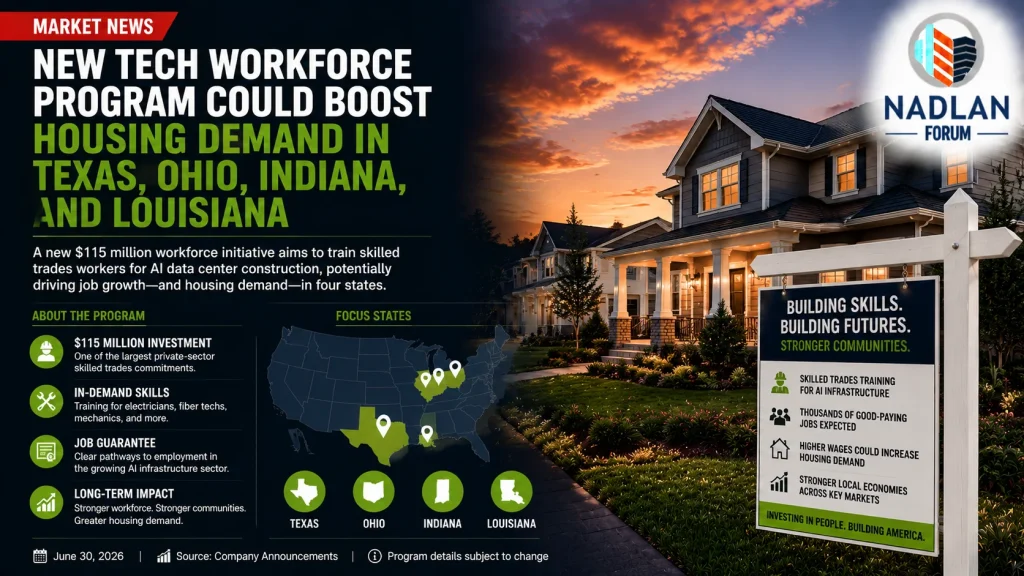
A new $115 million workforce development initiative is set to launch in four U.S. states—Texas, Ohio, Indiana, and Louisiana—potentially reshaping both the labor market and local housing demand.
The program, known as the America’s Workforce Academy (AWA), aims to train skilled trades workers for the rapidly expanding artificial intelligence infrastructure sector, particularly the construction of data centers across the United States.
As major technology companies continue investing heavily in AI infrastructure, demand for electricians, fiber technicians, mechanics, and other skilled labor is expected to rise sharply, raising questions about how this workforce expansion could affect local housing markets.
Massive Investment in Skilled Trades Training
The initiative begins with a $115 million investment, making it one of the largest private-sector commitments to skilled trades training with a job guarantee in U.S. history.
The program is designed to provide free training and fast-track certifications for workers entering industries such as:
- Data center construction
- Electrical systems
- Fiber and telecommunications infrastructure
- Mechanical and maintenance services
- Industrial building operations
Participants will receive recognized certifications intended to allow mobility across employers and projects, supporting both short-term and long-term career development.
Industry leaders say the goal is to fill a growing labor gap as AI infrastructure projects accelerate nationwide.

AI Data Center Boom Driving Labor Demand
The rapid expansion of artificial intelligence has triggered a large wave of construction activity, particularly in data centers and related infrastructure.
These projects require a substantial workforce, including both entry-level and experienced tradespeople.
However, industry reports indicate that the construction sector is already facing a significant labor shortage, with estimates suggesting a shortfall of hundreds of thousands of skilled workers.
This shortage is especially noticeable in regions where large-scale data center projects are concentrated.
As a result, companies are increasingly investing in workforce development programs to ensure sufficient labor supply for ongoing construction needs.
How This Could Impact Housing Demand
Housing demand typically rises when large infrastructure or industrial projects bring new workers into a region.
In states participating in the program, experts expect potential increases in housing demand near:
- Data center construction hubs
- Industrial development zones
- Suburban growth corridors
- Smaller surrounding towns and communities
Even a few hundred new workers in a localized area can create measurable demand for:
- Rental housing
- Entry-level homes
- Short-term housing accommodations
- Local services and retail development
In some markets, this could lead to tighter housing supply, especially in areas already facing limited inventory.
Localized Housing Pressure Expected
While large metropolitan areas may absorb some of the demand, experts believe the most significant housing impact could occur in smaller surrounding communities.
These areas often have:
- Lower housing supply
- Fewer rental units
- Limited new construction activity
- More affordable entry points for workers
As a result, even modest increases in population tied to construction projects can place upward pressure on rents and home prices.
This dynamic has been observed in other regions experiencing rapid industrial expansion, where housing markets tightened quickly due to concentrated labor demand.
Will Workers Stay or Move On?
A key uncertainty in the housing impact is whether skilled workers will remain in these states long-term or move between projects.
Construction and infrastructure workers often:
- Relocate frequently between job sites
- Work on temporary or project-based contracts
- Follow large-scale industrial development cycles
If workers remain mobile, the housing demand increase may be temporary or cyclical.
However, if workers choose to settle locally, housing demand could become more sustained, especially in suburban and mid-sized markets.
Local employment opportunities, wages, and community development will likely influence these decisions.
Competing Demand Between Housing and AI Infrastructure
Another important factor is the competition for skilled labor between residential construction and industrial projects.
In many regions, builders already report difficulty finding enough qualified tradespeople for housing development.
If more workers are absorbed into data center and AI infrastructure projects, it could further reduce labor availability for residential construction.
This could create a situation where:
- Housing demand increases
- But housing supply growth slows
Such a mismatch could place additional pressure on affordability in already tight housing markets.
Potential Economic Ripple Effects
Beyond housing, the workforce initiative could also generate broader local economic activity.
As new workers enter participating states, communities may see increased demand for:
- Retail businesses
- Grocery stores
- Transportation services
- Healthcare providers
- Local infrastructure improvements
These secondary effects often amplify the impact of large workforce or industrial programs.
However, the scale and duration of these effects will depend on how long construction activity remains elevated in each region.
Long-Term vs Short-Term Housing Impact
Experts remain divided on whether the program will produce lasting changes in housing markets.
Short-Term Impact
- Increased rental demand near job sites
- Temporary housing shortages
- Higher occupancy rates in select areas
Long-Term Impact
- Depends on whether workers settle permanently
- Influenced by local job opportunities beyond construction
- Affected by broader economic development in each state
If AI infrastructure continues expanding over the long term, housing demand in these regions could remain elevated beyond the initial construction phase.
Final Thoughts
The $115 million America’s Workforce Academy initiative highlights the growing connection between AI infrastructure development and local housing markets.
As Texas, Ohio, Indiana, and Louisiana prepare for increased skilled labor training and construction activity, the potential impact on housing demand is becoming an important consideration for policymakers, developers, and investors.
While the program is still in its early stages, the combination of labor shortages, large-scale infrastructure investment, and rapid AI expansion suggests that housing markets in these regions could experience noticeable pressure in the coming years.
Whether this leads to sustained population growth or temporary workforce movement will determine the long-term effect on housing supply, demand, and affordability. For direct financing consultations or mortgage options for you visit 👉 Nadlan Capital Group.
