


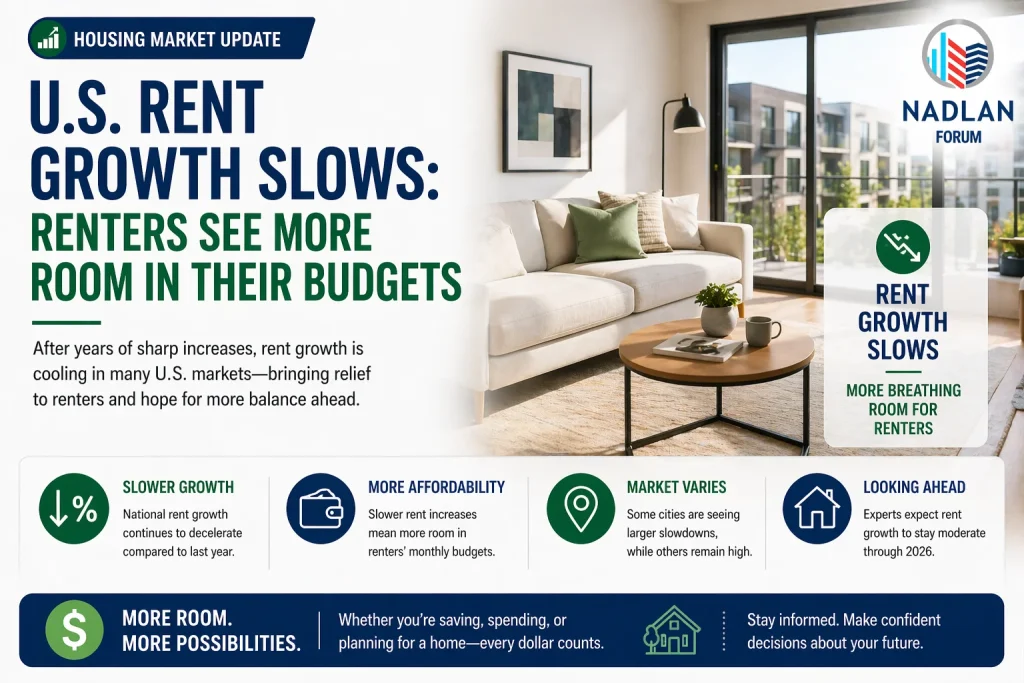
Renters across the United States are starting to feel some relief as rent increases slow down and income growth begins to catch up. According to the latest Zillow Observed Rent Index, this shift is giving households more space in their monthly budgets after years of rising housing costs.
The average renter is now saving about $193 per month compared to last year. That adds up to roughly $2,300 annually, which can help cover everyday expenses like food, fuel, or even be set aside for future homeownership.
Rent Growth Hits Its Slowest Pace in Years
As of March, the typical asking rent in the U.S. stands at $1,910. This reflects a modest annual increase of 1.8%, the slowest growth rate recorded since 2020.
Breaking it down further:
- Multifamily rents rose 1.3% year-over-year to $1,757
- Single-family rents increased 2.5% to $2,225
Even though rents are still rising, they are no longer increasing as fast as wages. This shift is helping reduce the financial pressure many renters have faced since the sharp increases during the pandemic period.
Renters Gaining Savings Across Major Cities
The improvement is being seen across many parts of the country, although the level of savings varies by location.
Some of the biggest gains include:
- Austin renters: about $3,182 more annually
- Tampa renters: around $3,110 more
- Denver renters: close to $3,000 more
Even in higher-cost cities, renters are seeing some benefit. For example:
- Los Angeles renters have about $2,438 in extra yearly savings
- San Francisco renters see smaller gains, around $458, due to higher rent growth in that market
Key Rental Market Trends
Several important trends highlight how the rental market is changing:
- Monthly rent growth in March was 0.6%, slightly below the pre-pandemic average
- Since the start of the pandemic, rents have risen by over 36%
- Rent increases are still happening in most large metro areas, with 37 out of 50 cities reporting yearly gains
Cities with the highest annual rent increases include San Francisco, Virginia Beach, Chicago, Providence, and San Jose.
Rent Affordability Shows Signs of Improvement
Affordability is slowly improving. The typical household now spends about 26.5% of its income on rent. While still above the pre-pandemic level of 25.8%, it is closer to normal than it was last year.
However, the income needed to comfortably afford rent has also increased. A household now needs around $76,400 per year, which is about 35% higher than before the pandemic.
This means that while conditions are improving, renting is still more expensive than it used to be.
Renting vs Buying: A Shift in Decisions
High home prices and mortgage costs are leading some buyers to stay in the rental market longer. Zillow data shows that about 1 in 13 potential homebuyers are also considering renting.
For many of these households, owning a home costs roughly $415 more per month than renting. This difference is making renting the more practical option for now, especially for those trying to manage monthly expenses.
Most and Least Affordable Cities for Renters
Affordability varies widely depending on location.
More affordable cities include:
- Austin (18.1% of income spent on rent)
- Salt Lake City (18.2%)
- Raleigh (18.4%)
- Minneapolis and Denver (both at 19.5%)
Less affordable cities include:
- New York (38.0%)
- Miami (37.4%)
- Los Angeles (33.9%)
- Riverside (31.0%)
- Boston (30.1%)
Single-Family vs Multifamily Rental Trends
Single-family rentals continue to show stronger long-term growth. Since the pandemic, rents in this segment have increased by nearly 45%.
Multifamily rentals, on the other hand, have grown by about 28% over the same period and are seeing slower increases now.
In some cities, single-family rents have even declined slightly on a monthly basis, including Baltimore, Richmond, and Minneapolis.
Rent Concessions Becoming More Common
Another sign of a cooling rental market is the increase in concessions offered by landlords. These may include discounts, free rent periods, or reduced fees.
- About 39.8% of rental listings included concessions in March
- This is slightly higher than the previous month
- Many cities are seeing an increase in these offers, giving renters more negotiating power
Cities like Tampa, Las Vegas, and Boston have seen some of the largest yearly increases in rental concessions.
What This Means for Renters Going Forward
The rental market is entering a more balanced phase. Slower rent growth, rising wages, and more concessions are helping renters regain some financial stability.
At the same time, housing costs remain high compared to pre-pandemic levels. While conditions are improving, affordability is still a challenge for many households.
For renters, this may be a good time to review options, negotiate lease terms, or start saving for future goals like buying a home. For direct financing consultations or mortgage options for you visit 👉 Nadlan Capital Group.
