
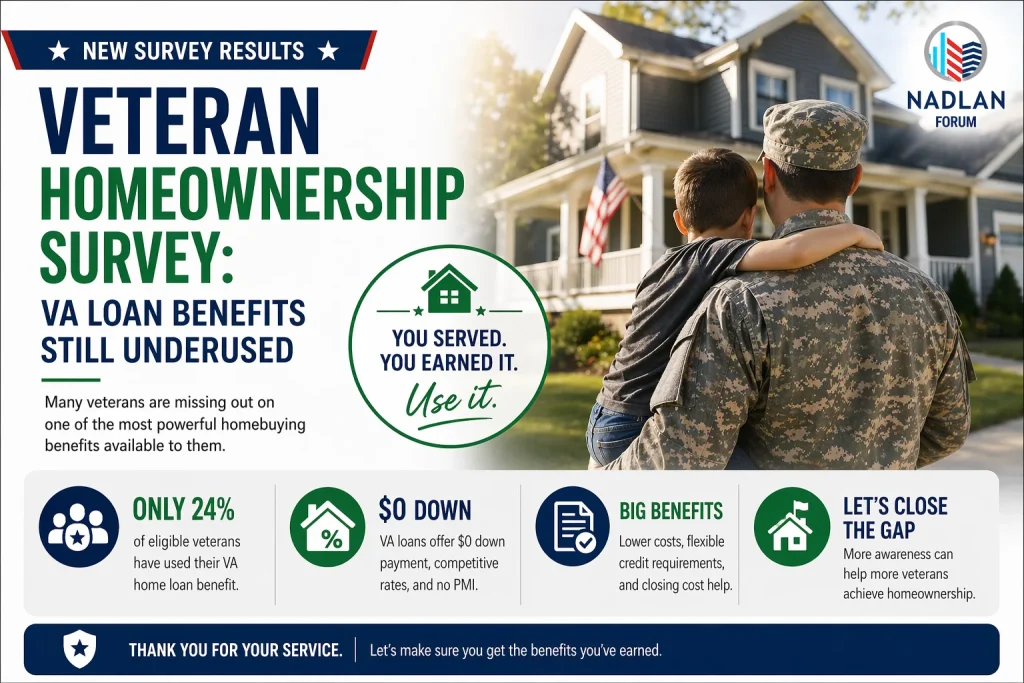
Veteran Homeownership Survey: VA Loan Benefits Still Underused

Strong Interest in Homeownership, But Gaps Remain
Owning a home remains a major goal for many U.S. veterans, but new data shows that confusion and lack of awareness are still holding some back. A recent study by NewDay USA highlights both the opportunities available and the challenges veterans face when trying to enter the housing market.
While many veterans are familiar with the VA home loan program, the survey reveals that a large number are still unsure how it works or whether they qualify at all. This gap in understanding is preventing many from taking full advantage of a benefit designed specifically for them.
Awareness Exists, But Understanding Is Limited
At first glance, awareness of VA home loans appears strong. About 63% of veterans say they know about the benefit. However, a deeper look shows that knowledge is often incomplete:
- 32% have little to no understanding of how the program works
- 30% are unsure if they are eligible
This means that even though the program is widely recognized, many veterans do not feel confident enough to use it.
Confusion Around Key VA Loan Benefits
One of the biggest misunderstandings involves the basic features of VA loans.
Down Payment Misconceptions:
- Only 32% know that no down payment is required
- Around 30% believe a down payment is needed
- About 38% are unsure
This confusion alone can discourage many potential buyers, as saving for a down payment is often seen as the biggest barrier to homeownership.
PMI (Private Mortgage Insurance) Confusion:
- Just 23% understand that VA loans do not require PMI
- 30% think PMI is required
- Nearly 47% don’t know
This misunderstanding can lead veterans to choose more expensive loan options, potentially costing them hundreds of dollars each month.
Income Qualification Misunderstandings
Another area of confusion is how income is calculated, especially the role of Basic Allowance for Housing (BAH).
- 42% know BAH can be used as income
- 39% are unsure
- 19% incorrectly believe it cannot be used
Since BAH can make up a large portion of a service member’s income, not counting it properly can lead veterans to underestimate how much home they can afford.
Common Myths Holding Veterans Back
The survey identified several myths that continue to affect veteran homebuyers:
1. VA Loans Require a Down Payment
This is the most common misunderstanding. In reality, eligible veterans can purchase a home with zero down, making it one of the most accessible loan options available.
2. VA Loans Include PMI
Unlike conventional loans, VA loans do not require monthly mortgage insurance, which helps reduce ongoing costs.
3. VA Loans Take Longer to Close
About 29% of veterans believe VA loans are slower, but in most cases, they close in a similar timeframe as traditional loans.
4. Military Income Doesn’t Count
Many veterans are unsure how their income is evaluated. In practice, lenders familiar with VA guidelines often adjust (or “gross up”) certain income types, making qualification easier.
Real Costs Veterans Should Expect
Although VA loans remove major barriers like down payments and PMI, buyers should still plan for standard closing costs, which may include:
- Appraisal fees
- Credit reports
- Taxes and recording fees
- Title and legal costs
- Agent commissions
There is also a funding fee, which helps support the program, though some veterans may be exempt depending on their situation.
Affordability Concerns Still a Major Barrier
Even with these benefits, many veterans remain hesitant to buy a home. The survey highlights key concerns:
- Rising home prices: 62%
- Income stability: 55%
- Upfront costs: 49%
- Debt levels: 35%
- Credit scores: 32%
- Lack of knowledge: 24%
These concerns show that financial pressure, combined with limited understanding of benefits, is slowing down homeownership among veterans.
Savings Challenges Are Widespread
Saving for upfront costs remains difficult for many:
- 45% say they don’t have enough savings for closing costs
- 35% have less than $5,000 saved
- 18% have no savings at all
Interestingly, when asked about buying in 2026:
- Only 21% said they are likely to buy with current costs
- That number rises to 40% if upfront costs are removed
This suggests that better awareness of VA loan benefits could significantly increase homebuying activity.
Why Homeownership Still Matters to Veterans
Despite these challenges, veterans strongly value homeownership as part of long-term financial security:
- 37% say it is very important for building wealth
- 33% say it is essential
For many, owning a home represents stability, independence, and a way to build equity over time.
Opportunity for Growth in Veteran Housing
The VA loan program remains one of the most powerful tools for helping veterans become homeowners. However, the survey makes it clear that more education and outreach are needed.
Improving awareness could:
- Increase homeownership rates among veterans
- Reduce financial stress
- Help veterans make better long-term decisions
Lenders, real estate professionals, and policymakers all have a role to play in closing this knowledge gap.
The Bottom Line
Veteran homeownership in 2026 is full of opportunity, but many eligible buyers are still held back by confusion and outdated information. The VA loan program offers clear advantages, including no down payment and no PMI, yet these benefits are often misunderstood.
With better education and guidance, more veterans could move closer to owning a home and building financial stability for the future. For direct financing consultations or mortgage options for you visit 👉 Nadlan Capital Group.

















Responses