


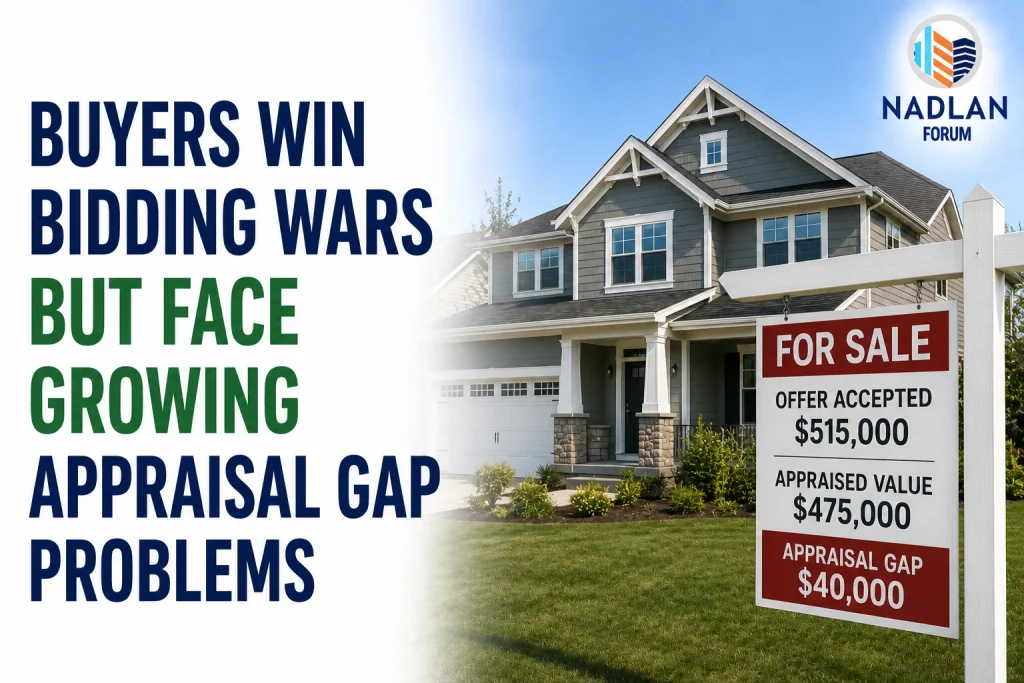
Competition for homes is heating up again in several U.S. housing markets, especially in areas where inventory remains limited and buyer demand continues to increase. While some buyers are successfully winning bidding wars by offering well above asking price, many are discovering that securing a winning offer is only the first hurdle.
A growing number of transactions are running into trouble when appraisals come in below the agreed purchase price, creating financing challenges that can delay or even cancel a sale.
Competition Is Returning to Select Housing Markets
Although the national housing market remains relatively balanced compared to the frenzy of 2021 and 2022, certain local markets are seeing renewed competition.
Communities attracting buyers from larger metropolitan areas are experiencing particularly strong demand. In parts of New Jersey, for example, buyers relocating from New York City continue to compete aggressively for homes in desirable suburban neighborhoods.
As inventory remains limited, many buyers are offering tens of thousands of dollars above the asking price in an effort to secure a property before competing buyers do.
In some cases, buyers are also waiving contingencies that would normally provide protection during the transaction process.
Why Buyers Are Offering More Than Asking Price
Many buyers remain frustrated after losing multiple bidding wars over the past year. As a result, some are becoming increasingly aggressive with their offers.
Several factors are driving this behavior:
Limited Housing Supply
Inventory remains below historical norms in many desirable communities. Fewer available homes mean buyers have fewer options.
Strong Local Demand
Areas with good schools, convenient transportation, and strong job markets continue attracting new residents, creating additional competition.
Fear of Missing Out
Some buyers worry that waiting could mean paying even higher prices later if mortgage rates decline or demand increases further.
These conditions encourage buyers to stretch their budgets in order to secure a home.
The Growing Appraisal Gap Problem
The challenge begins after an offer is accepted.
Most mortgage lenders require an independent appraisal before approving financing. The purpose of the appraisal is to determine the property’s market value and ensure the lender is not financing more than the home is worth.
When a buyer agrees to pay significantly above asking price, there is a risk that the appraisal will come in lower than the contract price.
This difference is known as an appraisal gap.
For example:
- Purchase price: $650,000
- Appraised value: $610,000
- Appraisal gap: $40,000
In this scenario, the lender may only finance based on the lower appraised value, leaving the buyer responsible for covering the difference.
Why Appraisals Often Lag Behind Market Conditions
Real estate professionals argue that appraisals frequently struggle to keep pace with rapidly changing markets.
Appraisers typically rely on comparable sales, often referred to as “comps,” from the previous three to six months.
When home prices are rising quickly, those historical sales may not fully reflect current buyer demand.
As a result, appraisals can come in lower than the price buyers are willing to pay today.
Many agents believe that strong bidding activity demonstrates current market value, while appraisers must follow established valuation guidelines that rely heavily on past sales data.
This difference in methodology often creates friction in competitive markets.
What Happens When an Appraisal Comes in Low?
When an appraisal is lower than the purchase price, buyers generally have several options:
Pay the Difference in Cash
Some buyers choose to cover the appraisal gap themselves by bringing additional cash to closing.
This option is common among buyers with substantial savings.
Renegotiate the Purchase Price
Buyers may ask the seller to reduce the price closer to the appraised value.
However, sellers in competitive markets are often reluctant to make significant concessions.
Challenge the Appraisal
In some cases, buyers and agents submit additional comparable sales in an attempt to support a higher valuation.
Success rates vary depending on market conditions and available data.
Walk Away From the Deal
If financing cannot be secured and the gap cannot be covered, the transaction may fall apart.
Homes that return to the market after a failed appraisal often face additional scrutiny from future buyers.
Appraisal Issues Continue Affecting Transactions
Appraisal-related problems remain one of the most common obstacles in residential real estate transactions.
Recent industry surveys show that low appraisals continue to be a leading reason why contracts are delayed, renegotiated, or canceled.
Real estate professionals frequently cite several concerns:
- Appraisals below contract price
- Limited comparable sales data
- Rapidly changing market conditions
- Buyers unable to cover appraisal gaps
- Disputes over valuation methods
As competition increases in select markets, these issues are becoming more visible.
Buyers Should Understand the Risks
Winning a bidding war can feel like a major accomplishment, but buyers should fully understand the financial risks before submitting aggressive offers.
Offering significantly above market value may increase the chances of securing a property, but it can also create unexpected costs if the appraisal does not support the purchase price.
Before waiving appraisal protections, buyers should carefully review:
- Available cash reserves
- Loan requirements
- Local market conditions
- Potential appraisal risks
- Long-term affordability
Working closely with experienced real estate professionals and lenders can help buyers evaluate these risks before making a commitment.
Outlook for the Housing Market
As housing inventory slowly improves across the country, some markets may experience less intense competition later in 2026. However, highly desirable communities with limited supply are likely to continue seeing bidding wars and aggressive offers.
As long as buyers remain willing to pay above asking price, appraisal gaps will remain a challenge in many transactions.
For buyers, the lesson is clear: winning the offer is only one step in the homebuying process. Ensuring the property appraises at the agreed price may ultimately determine whether the deal reaches the closing table. For direct financing consultations or mortgage options for you visit 👉 Nadlan Capital Group.