


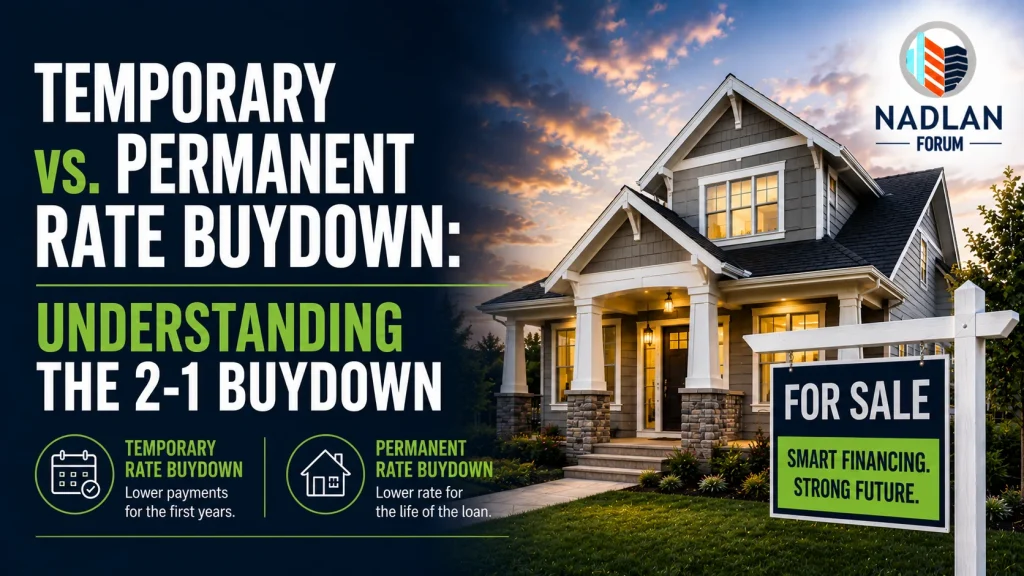
In a buyer’s market, sellers often offer concessions to attract buyers. One common incentive is a 2-1 buydown, which temporarily lowers mortgage payments for the first two years of a loan. This strategy is particularly useful when interest rates are high but expected to decline.
Melissa Cohn, regional vice president at William Raveis Mortgage, notes that a 2-1 buydown “offers a temporary reduction in payments, giving buyers breathing room until rates may fall or they can refinance.”
What Is a 2-1 Buydown?
A 2-1 buydown is an agreement that reduces interest payments on a mortgage during the first two years:
- Year 1: Interest rate is 2% below the note rate.
- Year 2: Interest rate is 1% below the note rate.
- Year 3 and beyond: Rate returns to the full note rate.
The buydown is funded upfront, usually by the seller, builder, or lender, and placed in an escrow account to subsidize the lower interest payments. The borrower still qualifies based on the full, unsubsidized loan payment.
Example: On a $400,000 30-year mortgage with a 6.5% note rate:
| Year | Rate | Monthly Payment (Principal & Interest) |
|---|---|---|
| 1 | 4.5% | $2,024.77 |
| 2 | 5.5% | $2,269.15 |
| 3+ | 6.5% | $2,526.31 |
Other Buydown Structures
- 1-0 Buydown: Rate is 1% lower for the first year, then returns to full rate.
- 3-2-1 Buydown: Rate drops 3% first year, 2% second year, 1% third year, then full rate.
- Permanent Buydown: Borrower pays discount points upfront to lower the interest rate for the entire loan term.
Who Pays for a 2-1 Buydown?
- Seller or Builder: Most common, often offered as a concession to make the home more attractive.
- Lender: Sometimes offered as a promotional incentive.
- Borrower: Rarely self-funded for temporary buydowns, as it usually offers no long-term savings. Permanent buydowns may make more sense for borrowers planning to stay in the home long-term.
Cost of a 2-1 Buydown
The upfront cost typically equals the total interest savings during the first two years. For a $400,000 mortgage at 6.5%, the cost is roughly $9,100. Sellers may cover this instead of lowering the listing price.
When a 2-1 Buydown Makes Sense
A temporary buydown is advantageous if:
- The seller, builder, or lender pays for it.
- The borrower expects interest rates to drop or plans to refinance within a few years.
- The borrower anticipates short-term higher expenses or expects income growth.
It is not advisable if you cannot afford the full mortgage payment once the buydown ends.
2-1 Buydown vs. Permanent Buydown
- Temporary (2-1) Buydown: Provides short-term relief; best when payments are high now or rates are expected to fall.
- Permanent Buydown: Reduces the rate for the life of the loan; ideal for long-term homeowners expecting to stay and not refinance.
Cohn explains: “A permanent buydown only makes sense if you’re confident the rate is near the bottom of the cycle. Otherwise, temporary relief or a larger down payment may be more effective.” For direct financing consultations or mortgage options for you visit 👉 Nadlan Capital Group.
FAQ
Is a 2-1 buydown worth it?
Yes, if someone else covers the cost or if you plan to refinance when rates drop.
Can a seller pay for it?
Yes, most 2-1 buydowns are funded by sellers or builders as a sales incentive.
What happens if I refinance early?
Unused funds in the escrow account typically apply to the loan principal, though some agreements may return funds to the borrower or lender.
A 2-1 buydown can be a strategic tool in a high-rate environment, providing temporary relief while preserving flexibility for future refinancing or rate reductions.