


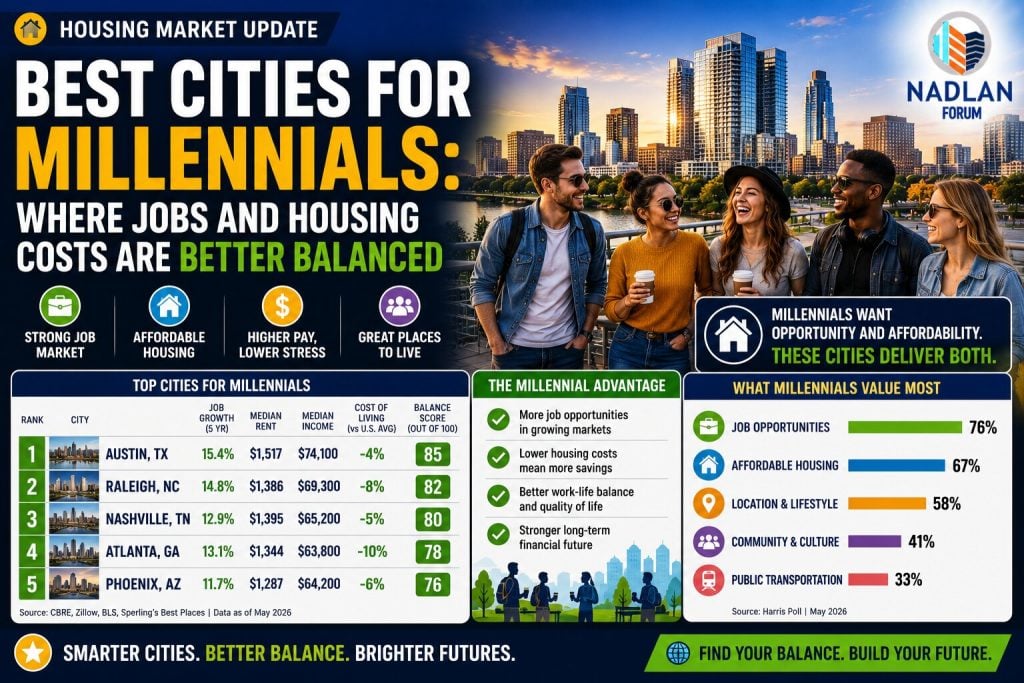
Finding a city with strong job opportunities and affordable housing has become one of the biggest challenges for millennials. While many fast-growing metro areas offer attractive career prospects, rising home prices and rents can quickly offset higher incomes.
A recent analysis suggests that some cities are managing this balance better than others. By combining healthy job growth, rising wages, and steady housing development, several metro areas are giving millennials more financial flexibility than many larger, more expensive markets.
Although no city offers a perfect solution to affordability concerns, these locations stand out for creating better opportunities for younger workers, first-time buyers, and growing families.
Why Millennials Face Financial Pressure
Many millennials continue to deal with several economic challenges at the same time.
Housing costs have increased significantly over the past few years, while inflation has raised the cost of everyday necessities. At the same time, mortgage rates remain elevated compared with the historically low levels seen during the pandemic.
Even in cities with strong job growth, wages often take time to catch up with rising living expenses.
Housing supply creates another challenge. Building enough homes to meet demand can take years because of zoning regulations, construction costs, labor shortages, and land availability.
As a result, many younger households continue searching for markets where career growth and affordability are more closely aligned.


What Makes a City Attractive for Millennials?
The study evaluated several important economic factors.
These include:
- Employment growth.
- Wage growth.
- Housing affordability.
- Homebuilding activity.
- Population trends.
- Economic expansion.
- Opportunities for younger workers.
Cities that performed well across multiple categories tended to offer better long-term financial prospects for millennials.
Top Fast-Growing Job Markets
Several metro areas stood out because of their strong economic momentum and expanding employment opportunities.
Leading Growth Markets
| Metro Area | Key Strength |
|---|---|
| Austin, TX | Strong job growth and steady housing construction |
| Phoenix, AZ | Expanding economy and active homebuilding |
| Boise, ID | Improving affordability with continued income growth |
| Jacksonville, FL | Job growth outpacing housing inflation |
Austin, Texas
Austin continues to attract businesses and workers from across the country.
Strong job creation and ongoing residential construction have helped support wage growth while moderating housing costs compared with previous market peaks.
Phoenix
Phoenix benefits from a diverse economy and entrepreneurial growth.
New housing development has helped accommodate population increases while supporting affordability improvements.
Boise
After experiencing rapid housing appreciation during the pandemic, Boise’s housing market has stabilized.
Improved supply and modest price adjustments have helped affordability while employment and income growth remain healthy.
Jacksonville
Jacksonville offers an attractive combination of economic expansion and housing costs that have grown more slowly than local employment opportunities.
This balance may benefit younger buyers entering the housing market.
Cities With Balanced Growth
Several additional markets show encouraging trends across employment, wages, and housing.
Balanced Opportunity Markets
| Metro Area | Main Advantage |
| Raleigh, NC | Steady wage growth and relatively affordable housing |
| Charlotte, NC | Diverse economy and expanding job opportunities |
| Nashville, TN | Strong employment growth and healthy housing supply |
Raleigh
Raleigh’s technology sector and diversified economy continue supporting stable income growth.
Housing costs remain relatively manageable compared with many other high-growth markets.
Charlotte
Charlotte benefits from a broad employment base and strong economic expansion.
Steady wage growth has helped offset some housing cost increases.
Nashville
Nashville continues adding jobs while maintaining a healthy pace of residential construction.
New housing supply has helped prevent home prices from rising as quickly as incomes.
Affordability Is Improving in Some Markets
Two additional cities have experienced improving affordability conditions.
Denver
Income growth combined with a cooling housing market has improved affordability compared with previous years.
Sacramento
Stronger wage growth and increased housing supply have helped offset some of the area’s higher living costs.


Why Mid-Sized Cities Stand Out
One of the biggest trends identified in the study is the success of mid-sized metropolitan areas.
Unlike some larger cities where housing shortages developed quickly, many mid-sized markets have been better able to accommodate population growth.
Advantages include:
- More available land for development.
- Lower construction costs.
- Expanding employment opportunities.
- Growing infrastructure.
- Balanced population growth.
These factors help reduce some of the housing pressures experienced in larger metropolitan areas.
The Sun Belt Continues to Attract Millennials
Many of the strongest-performing cities are located in the Sun Belt region.
These areas have benefited from:
- Business relocations.
- Population growth.
- Lower taxes in some states.
- New residential development.
- Diverse employment opportunities.
The trend reflects broader economic shifts rather than simple migration patterns.
Housing Construction Plays an Important Role
Housing supply remains one of the most important factors influencing affordability.
Cities that consistently add new housing are often better equipped to absorb population growth without creating severe price pressures.
Communities with active construction pipelines can provide:
- Greater housing choices.
- More stable home prices.
- Improved rental availability.
- Better long-term affordability.
While no market perfectly balances supply and demand, continued homebuilding helps reduce affordability challenges.
What This Means for Millennials
For many millennials, choosing where to live involves balancing career opportunities with housing costs.
Markets where employment growth, wage gains, and housing supply improve together may offer greater financial flexibility.
Potential benefits include:
- More affordable homeownership opportunities.
- Better rental options.
- Stronger career prospects.
- Lower financial stress.
- Greater long-term wealth-building potential.
However, personal financial planning and career development remain important regardless of location.
Top Millennial-Friendly Markets at a Glance
| Category | Cities |
| Fast-Growing Job Hubs | Austin, Phoenix, Boise, Jacksonville |
| Balanced Jobs and Housing | Raleigh, Charlotte, Nashville |
| Improving Affordability | Denver, Sacramento |
Housing Market Outlook
Many of these growing metro areas are expected to remain attractive as businesses continue expanding and population growth supports local economies.
Continued residential construction and infrastructure investment could help maintain affordability while creating additional economic opportunities.
However, rising mortgage rates and broader economic conditions will continue influencing housing markets across the country.
Bottom Line
Millennials continue facing significant financial challenges as housing costs and everyday expenses remain elevated. However, several U.S. metro areas are creating better opportunities by combining job growth, rising wages, and expanding housing supply.
Cities such as Austin, Phoenix, Boise, Jacksonville, Raleigh, Charlotte, Nashville, Denver, and Sacramento demonstrate that economic growth and housing affordability can improve together. While no market eliminates financial trade-offs entirely, these locations may provide younger households with greater flexibility when making decisions about careers, renting, and homeownership.
For millennials looking toward the future, markets where employment, wages, and housing remain balanced could offer some of the best long-term opportunities for building financial stability and achieving homeownership goals. For direct financing consultations or mortgage options for you visit 👉 Nadlan Capital Group.
