


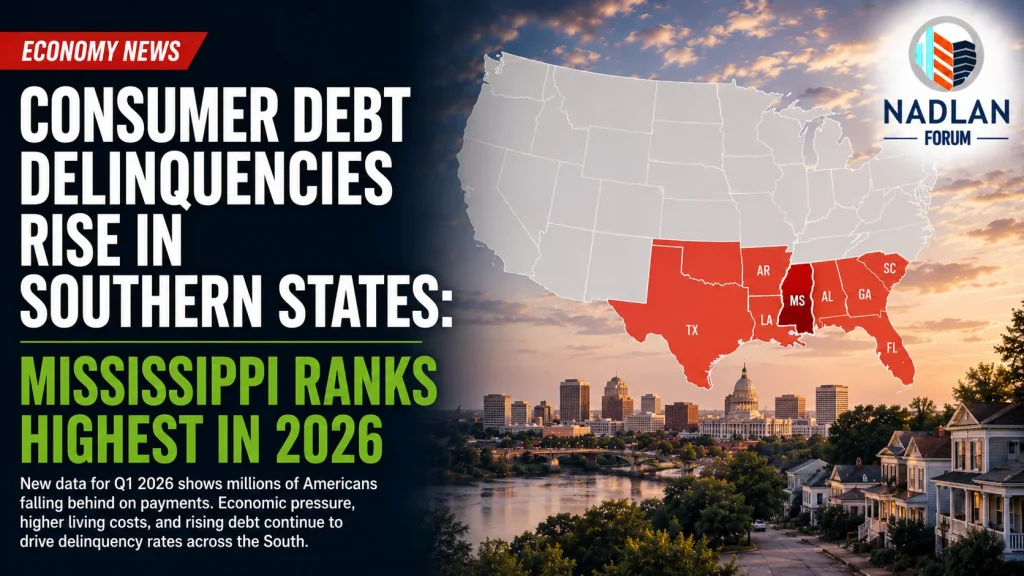
Financial pressure continues to weigh on many American households, and a new report shows that several Southern states are experiencing the highest levels of consumer debt delinquency in the country.
New data for the first quarter of 2026 reveals that millions of consumers are falling behind on payments for loans, credit cards, auto financing, and other forms of debt. While an occasional late payment can happen to anyone, consistently high delinquency rates across an entire state often point to broader economic challenges, including rising living costs, stagnant wages, and increased borrowing.
The latest rankings highlight how financial stress remains uneven across the country, with Southern states accounting for most of the highest delinquency rates.
What Is Debt Delinquency?
Debt delinquency occurs when a borrower fails to make a required payment by its due date.
Depending on the type of loan and the lender’s policies, accounts typically become officially delinquent after missing a scheduled payment. If payments remain unpaid, lenders may report the delinquency to the major credit bureaus.
A delinquent account can lead to several financial consequences, including:
- Late payment fees
- Higher interest rates
- Lower credit scores
- Reduced access to future credit
- Collection activity
- Legal action in severe cases
Negative payment history can remain on a consumer’s credit report for up to seven years, making it more difficult to qualify for mortgages, auto loans, credit cards, and other financing.
Mississippi Records the Highest Delinquency Rate
Mississippi ranked as the most financially stressed state in the report.
During the first quarter of 2026:
- 13.76% of individual loans and credit accounts were delinquent.
- 13.64% of the state’s total outstanding loan balances were past due.
These figures were the highest recorded nationwide, indicating that both the number of overdue accounts and the dollar value of unpaid debt remain significant challenges for many Mississippi households.
The data suggests that financial hardship extends beyond isolated borrowers and reflects broader economic conditions affecting many families across the state.
Louisiana Continues to Face Serious Financial Challenges
Louisiana ranked second in the national delinquency rankings.
Approximately:
- 12.20% of individual loans and credit lines were past due.
- 12.92% of total loan balances had become delinquent.
Although slightly behind Mississippi in the overall rankings, Louisiana reported one of the highest percentages of unpaid debt by dollar amount.
Higher living costs, rising insurance premiums, and ongoing affordability challenges have continued placing financial pressure on many households throughout the state.
Arkansas Completes the Top Three
Arkansas ranked third among all states with the highest consumer debt delinquency rates.
The report found:
- 11.24% of individual credit accounts were overdue.
- 10.49% of total outstanding debt balances were delinquent.
While the numbers remain below those reported in Mississippi and Louisiana, they still indicate that a significant share of Arkansas consumers are struggling to keep pace with monthly debt obligations.
Southern States Dominate the Rankings
Beyond the top three states, several other Southern states also ranked among those with the highest delinquency rates.
The top ten included:
- Mississippi
- Louisiana
- Arkansas
- West Virginia
- Alabama
- South Carolina
- Delaware
- North Carolina
- Tennessee
- Texas
The concentration of Southern states suggests that regional economic factors may be contributing to higher levels of financial stress.
Many of these states have experienced rapid increases in housing costs, insurance premiums, utility expenses, and everyday living costs over the past several years.
Combined with elevated interest rates, these pressures have made it increasingly difficult for some households to remain current on debt payments.
Why More Consumers Are Falling Behind
Several economic factors continue affecting household finances throughout 2026.
Higher borrowing costs have increased monthly payments on variable-rate debt, while inflation has kept everyday expenses elevated despite signs of gradual improvement.
Many consumers are also managing:
- Higher credit card balances
- Increased auto loan payments
- Rising housing expenses
- More expensive insurance premiums
- Higher healthcare costs
- Slower wage growth relative to living expenses
As disposable income becomes tighter, some borrowers prioritize essential expenses such as housing, food, and utilities, causing debt payments to fall behind.
What Late Payments Mean for Borrowers
Missing even one payment can begin affecting a person’s financial profile.
If an account remains unpaid long enough to be reported to the credit bureaus, borrowers may experience:
- Lower credit scores
- Reduced borrowing power
- Higher mortgage interest rates
- Increased insurance costs in some states
- Difficulty qualifying for new credit
- Less favorable loan terms
The longer an account remains delinquent, the more serious the financial consequences can become.
Bringing accounts current as quickly as possible often helps reduce long-term credit damage.
Assistance May Be Available
Many lenders offer assistance programs for borrowers experiencing temporary financial hardship.
Consumers who anticipate difficulty making payments may benefit from contacting their lender before falling significantly behind.
Possible relief options include:
- Temporary payment deferrals
- Modified repayment plans
- Reduced monthly payments
- Loan restructuring
- Hardship assistance programs
Seeking help early often provides more options than waiting until accounts become severely delinquent.
Financial counselors also recommend reviewing household budgets, reducing unnecessary expenses, and prioritizing high-interest debt whenever possible.
What Rising Delinquencies Mean for the Economy
Consumer debt trends are closely watched because they provide insight into household financial health.
When delinquency rates rise across multiple regions, lenders often tighten underwriting standards, making credit more difficult or expensive to obtain.
Higher delinquency rates can also affect:
- Consumer spending
- Banking sector performance
- Auto loan markets
- Credit card lending
- Mortgage qualification standards
- Overall economic growth
Although the national economy continues expanding, elevated delinquency rates suggest that many families remain under financial pressure despite a relatively stable labor market.
Final Thoughts
The latest 2026 debt delinquency report highlights the financial challenges facing many American households, particularly across Southern states.
Mississippi, Louisiana, and Arkansas continue to report the highest percentages of overdue loans and unpaid debt balances, reflecting the ongoing impact of higher living costs, elevated borrowing expenses, and household budget pressures.
For consumers, staying current on debt payments remains one of the most important steps in protecting long-term financial health. Those facing financial difficulties should communicate with lenders as early as possible, since many assistance programs are available before accounts become seriously delinquent.
As inflation, interest rates, and consumer spending continue to evolve, debt delinquency will remain an important indicator of the overall financial condition of U.S. households throughout 2026. For direct financing consultations or mortgage options for you visit 👉 Nadlan Capital Group.