


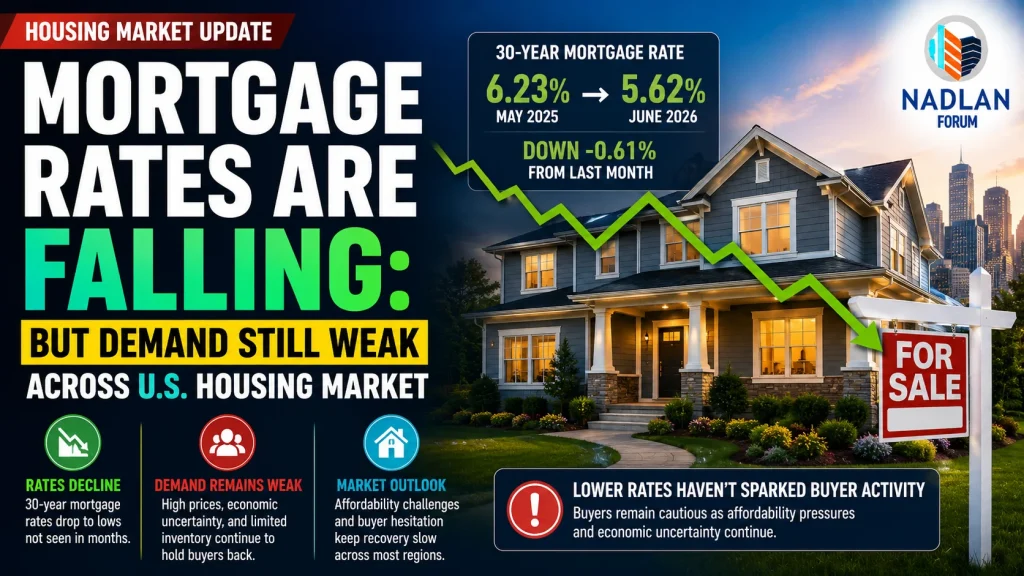
U.S. mortgage rates have shown signs of easing, but borrowing activity continues to weaken. Despite slightly lower rates in some segments, both homebuyers and homeowners are pulling back from the market due to economic uncertainty, high home prices, and limited housing supply.
Recent data from the Mortgage Bankers Association shows that mortgage demand fell again last week, even as interest rates remained relatively stable.
Mortgage Applications Decline
Total mortgage application volume dropped 3.8% compared with the previous week, according to the Mortgage Bankers Association’s seasonally adjusted index.
The decline reflects lower activity in both refinancing and home purchase segments.
- Mortgage applications overall: -3.8% weekly
- Purchase applications: -3% weekly
- Refinance applications: -5% weekly
- Refinance activity year-over-year: +17%
While refinance demand remains higher than last year’s levels, the weekly drop suggests homeowners are becoming more cautious as rate movements remain unpredictable.
Mortgage Rates Hold Near Recent Levels
The average contract interest rate for 30-year fixed mortgages remained unchanged at 6.60%, according to MBA data.
This rate applies to conforming loan balances up to $832,750 with a 20% down payment.
Key rate conditions:
- 30-year fixed rate: 6.60%
- Points: 0.63 (unchanged)
- Short-term movement: stable week-over-week
Although mortgage rates have recently shown some downward pressure in separate market surveys, official lender data suggests that borrowing costs remain elevated compared to historical norms.
Why Demand Is Weak Even as Rates Ease
Even when mortgage rates decline slightly, many potential buyers remain on the sidelines. Several factors continue to weigh on housing demand:
- Home prices remain high in many metro areas
- Housing supply is still limited in key markets
- Economic uncertainty is affecting buyer confidence
- Inflation concerns continue to influence financial decisions
As a result, lower rates alone are not currently enough to bring strong demand back into the housing market.
Market Forces Affecting Mortgage Rates
Recent movement in mortgage rates has been influenced by broader economic and global events.
Inflation data released last week showed continued upward pressure on prices, which initially pushed rates higher. However, later in the week, market sentiment shifted due to easing geopolitical tensions and changes in energy markets.
Lower oil prices helped reduce pressure on bond yields, which in turn supported a slight decline in mortgage rates in some surveys.
Refinance Activity Remains Mixed
Refinancing continues to show uneven performance.
While refinance applications are still 17% higher than the same week a year ago, weekly activity declined by 5%, reflecting hesitation among homeowners to lock in new loans.
Many borrowers who purchased homes in recent years are still holding mortgages at higher rates, but the gap between current and existing rates is not always large enough to justify refinancing.
Housing Market Still Faces Supply Pressure
Homebuyers continue to face multiple challenges beyond interest rates:
- Low inventory in many regions
- Elevated home prices compared to pre-pandemic levels
- Competitive conditions in affordable housing segments
- Uneven regional supply trends
These conditions are limiting the ability of lower mortgage rates to significantly boost housing activity.
Federal Reserve Watch and Rate Outlook
Investors are closely watching upcoming Federal Reserve policy signals as markets try to gauge the future direction of interest rates.
The Fed is not expected to make any immediate rate changes, but comments from policymakers may influence bond markets and mortgage pricing in the coming weeks.
Analysts suggest that while rates may continue to drift lower at times, volatility is likely to remain as inflation and global economic conditions evolve.
Mortgage Market Outlook
Overall, the current mortgage environment shows a clear disconnect: rates are slowly easing, but demand remains subdued.
Until affordability improves through either lower home prices, increased supply, or sustained rate relief, mortgage applications may continue to move sideways or remain under pressure.
For now, the housing finance market remains in a cautious phase, with both buyers and homeowners waiting for clearer economic signals before making major financial moves. For direct financing consultations or mortgage options for you visit 👉 Nadlan Capital Group.
