


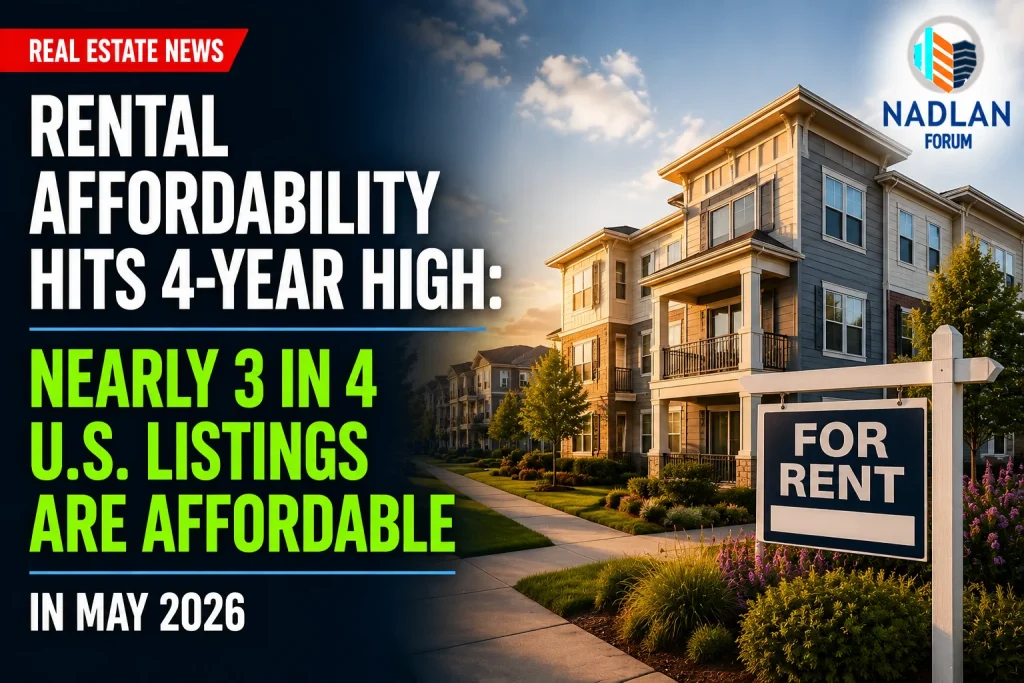
The U.S. rental market showed continued signs of stabilization in May 2026, with affordability reaching its strongest level in several years. A new housing analysis found that nearly three out of four rental listings nationwide are now considered affordable for a typical household.
The improvement reflects a combination of slower rent growth, rising household incomes, and a major increase in apartment construction that has expanded housing supply across many cities.
Rental Affordability Reaches Highest Level Since 2021
In May, about 74% of rental listings were affordable to a median-income household. This marks the highest level for the month in at least four years.
Affordability in this context means a household would spend no more than 30% of its income on rent, a commonly used benchmark for housing cost stability.
The increase suggests that renting conditions have become more manageable compared with the rapid rent spikes seen during and after the pandemic period.
Apartment Construction Is Driving the Shift
One of the biggest reasons for improved affordability is the continued expansion of apartment supply.
Over the past several years, developers responded to strong housing demand by significantly increasing construction activity. This building cycle reached a multi-decade high in recent years, adding a large number of new rental units to the market.
With more apartments available, competition among renters has eased in many regions. This has reduced pressure on prices and helped stabilize rent growth.
As a result, landlords are facing longer listing times in some markets and more competitive pricing environments.
Rent Growth Has Slowed Sharply
National rent growth has cooled significantly compared with the rapid increases seen earlier in the decade.
The typical rent across the United States is now up only about 2% compared with a year ago, adding roughly a few dozen dollars per month on average.
This represents a major slowdown from previous years when rent increases were far more aggressive.
Although rents continue to rise in some cities, the overall national trend points to a more balanced rental market.
More Lower-Cost Rentals Are Appearing
Another key trend is the increase in lower-priced rental listings.
The share of rentals priced under $1,000 per month has risen to its highest level in several years. While still a small portion of the overall market, this increase suggests more entry-level housing options are becoming available in certain areas.
This shift is especially important for lower-income renters who were most affected by earlier rent surges.
Multifamily Rentals Show Strongest Improvement
The multifamily sector, which includes apartment buildings, has seen the biggest gains in affordability.
Nearly 80% of multifamily listings are now considered affordable to a median-income household, an increase from the previous year.
This segment of the market benefited most from the construction boom, which added large numbers of new apartment units in urban and suburban areas.
With more supply entering the market, landlords have had less pricing power, helping improve affordability conditions.
Single-Family Rentals Also Improve
Single-family rental homes, which have often experienced stronger rent increases in recent years, are also showing signs of improved affordability.
Almost half of single-family rental listings now fall within the affordability threshold, up slightly from the previous year.
This trend is notable because single-family rentals have been in high demand as some households were priced out of homeownership and turned to renting instead.
Even with this demand, increased supply and shifting market conditions have helped moderate rent increases.
City-Level Rental Differences Remain Wide
Despite national improvements, affordability varies significantly across cities.
Some of the most affordable large rental markets include:
- Raleigh, North Carolina
- Austin, Texas
- Louisville, Kentucky
- Salt Lake City, Utah
- Portland, Oregon
In these cities, a large majority of listings are considered affordable to median-income households, in some cases exceeding 90%.
Other metro areas continue to show tighter conditions, especially in high-cost coastal markets where demand remains strong and supply growth has been more limited.
Where Renters Are Seeing the Biggest Changes
Some cities have experienced notable year-over-year improvements in affordability.
Markets such as Tampa and Orlando have seen significant increases in the share of affordable listings, reflecting stronger supply growth and changing demand patterns.
In contrast, some cities have seen slight declines in affordability. In these markets, rent growth has outpaced income gains or supply has not kept up with demand.
Even in high-cost cities like San Francisco, affordability has only slightly declined despite continued rent increases, showing that broader supply growth is helping to limit extreme price pressure.
Concessions Are Becoming More Common
Another sign of shifting market conditions is the rise in rental concessions.
Nearly 40% of listings now include incentives such as:
- One month of free rent
- Reduced security deposits
- Waived application fees
- Discounted lease rates
These offers suggest landlords are competing more aggressively for tenants in many areas, especially where new apartment supply is highest.
Rent Trends by Property Type
Different types of rental housing are showing slightly different patterns:
Single-Family Rentals
- Higher average rent levels
- Strong demand from families and remote workers
- Slower but steady price growth
Multifamily Rentals
- Strongest increase in supply
- Higher share of affordable listings
- More concessions offered
Overall Market
- Slower national rent growth
- Gradual improvement in affordability
- Increasing balance between supply and demand
What Is Driving the Rental Market Shift
Several factors are shaping today’s rental conditions:
- Large-scale apartment construction over the past few years
- Slower rent growth compared with income growth
- Stabilizing demand in many metro areas
- Increased housing supply entering the market
- More cautious pricing by landlords
Together, these forces are helping create a more balanced rental environment compared with the rapid rent increases seen earlier in the decade.
Outlook for Renters in 2026
Looking ahead, rental conditions are expected to remain relatively stable.
While rent increases are likely to continue in some cities, especially those with strong job growth, the national trend suggests slower and more predictable price movement.
The impact of recent construction activity is still working through the system, meaning additional supply may continue to support affordability in the months ahead.
Bottom Line
Rental affordability in the United States improved significantly in May 2026, with nearly 74% of listings now considered affordable to median-income households. The increase is largely driven by a surge in apartment construction and slower rent growth across many regions.
While affordability challenges still exist in high-cost cities, the broader rental market is showing signs of stabilization, offering renters more options and less intense competition than in previous years. For direct financing consultations or mortgage options for you visit 👉 Nadlan Capital Group.
