


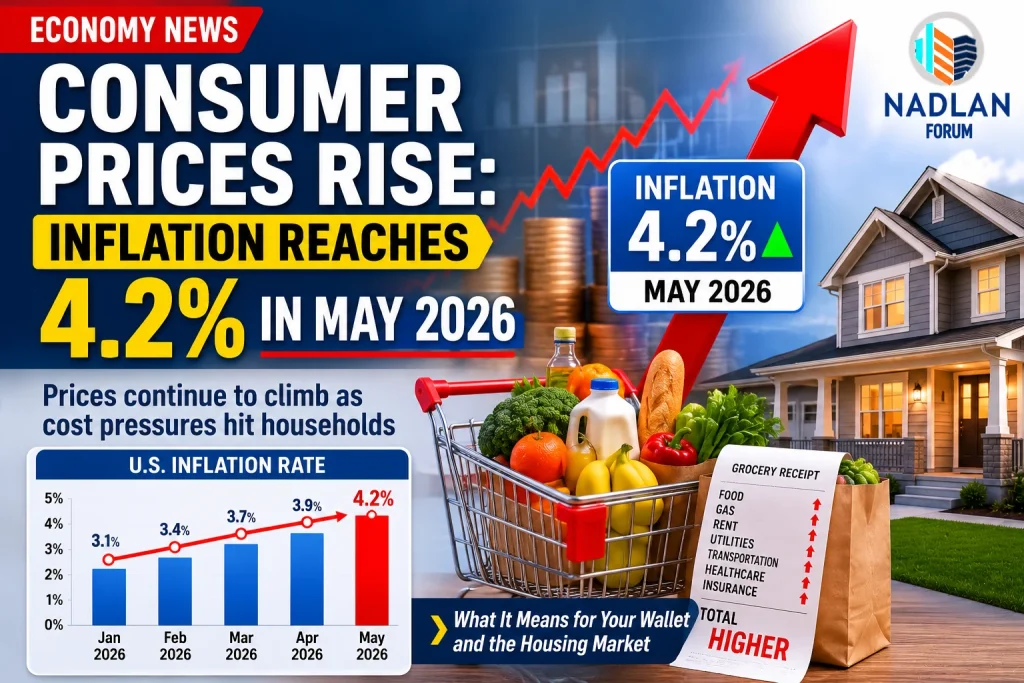
Inflation picked up speed in May as higher energy costs pushed consumer prices to their highest annual level in three years. While many economists expected inflation to move higher, the latest data confirms that American households continue to face pressure from rising everyday expenses.
At the same time, the report contained some encouraging signs. Core inflation, which excludes food and energy, remained relatively moderate and increased less than economists had expected on a monthly basis. This suggests that while energy costs are creating new inflation pressures, broader price increases across the economy remain more contained for now.
The latest Consumer Price Index (CPI) report arrives at an important time for financial markets, homebuyers, businesses, and Federal Reserve policymakers as they evaluate the direction of the U.S. economy.
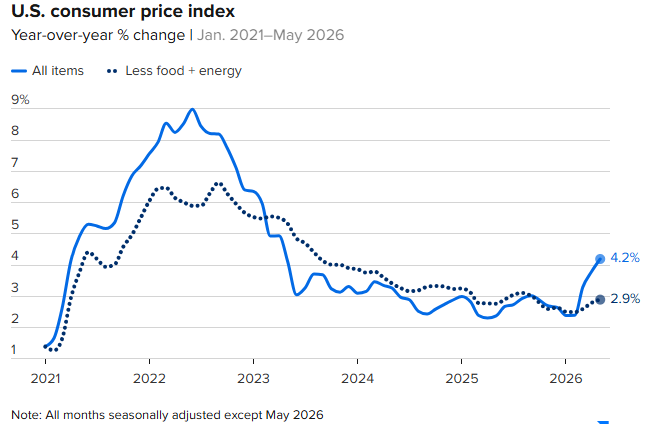
Inflation Climbed to 4.2% in May
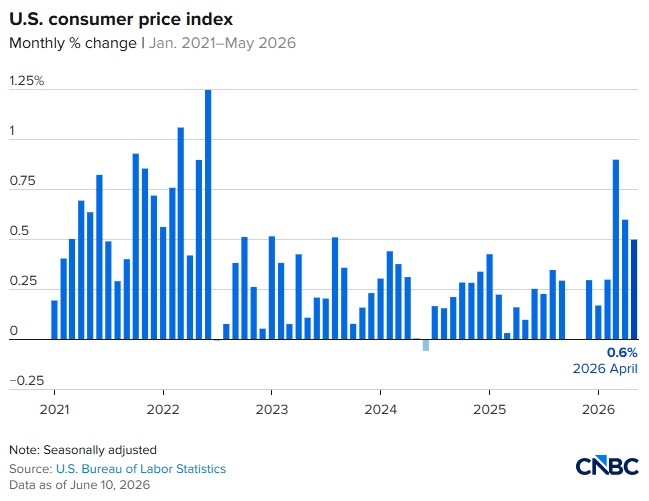
According to the latest government data, the Consumer Price Index increased by 0.5% during May.
On an annual basis, inflation reached:
4.2%
This marks the first time inflation has moved above 4% in three years and represents an increase from April’s 3.8% annual reading.
Although the figure matched market expectations, it highlights that inflation remains well above the Federal Reserve’s long-term target of 2%.
For many households, the increase means that the cost of everyday necessities continues to rise faster than many family budgets would prefer.

Core Inflation Shows Some Stability
Economists often pay close attention to core inflation because it removes the more volatile food and energy categories.
Core CPI increased:
- 0.2% for the month.
- 2.9% over the past year.
The annual reading matched forecasts, while the monthly increase came in below expectations.
This suggests that underlying inflation pressures may not be spreading throughout the economy as quickly as some analysts feared.
Several categories showed relatively modest price changes, helping offset the sharp increase in energy costs.
Energy Prices Led the Inflation Increase
The biggest contributor to May’s inflation report was the energy sector.
Energy prices increased:
- 3.9% during the month.
- 23.5% over the past year.
Higher gasoline and fuel costs continue to affect household budgets and business expenses.
Energy prices influence many areas of the economy because transportation, manufacturing, and distribution costs often increase alongside fuel prices.
Recent geopolitical tensions and uncertainty in global energy markets have added to these pressures.
Food and Housing Costs Continue to Rise
While energy was the largest contributor, other household expenses also increased.
Food Prices
Food costs increased by 0.2% during May.
Although the monthly increase was relatively modest, many consumers continue to feel the impact of higher grocery bills accumulated over the past several years.
Housing Costs
Shelter costs increased by 0.3% during the month.
Housing inflation remains one of the most important components of the CPI because it represents more than one-third of the overall index.
Annual shelter inflation stood at 3.4%.
While still elevated, the pace slowed compared with previous months.
Some Categories Showed Improvement
Not every part of the inflation report pointed toward accelerating price pressures.
Several categories remained stable or even declined.
Core Goods
Core commodity prices declined by 0.1%.
This suggests that tariffs and supply chain concerns have not yet created widespread price increases for consumer goods.
Transportation Services
Transportation services declined by 0.6%.
Vehicle Prices
New vehicle prices fell by 0.3%, while used vehicle prices increased only slightly.
Insurance
Motor vehicle insurance costs declined by 1.7%.
These areas helped balance some of the upward pressure coming from energy markets.
Airline Fares Reflect Higher Fuel Costs
One area that did experience a noticeable increase was airline travel.
Airline fares increased by 2.7% during May.
Higher jet fuel prices are one of the factors contributing to increased travel costs.
Consumers planning summer vacations may notice higher transportation expenses if energy prices remain elevated.

What Inflation Means for American Families
Inflation affects households in different ways depending on spending habits and income levels.
Many families continue to face higher costs for:
- Gasoline.
- Electricity.
- Groceries.
- Medical care.
- Housing.
- Transportation.
Even when wage growth remains healthy, higher living costs can reduce purchasing power and make saving more difficult.
Households with fixed incomes often feel these increases more sharply because they have less flexibility to absorb higher expenses.
What the Report Means for Mortgage Rates
Inflation has a direct impact on interest rates and the housing market.
Higher inflation often leads investors to demand higher bond yields, which can influence mortgage rates.
If inflation remains above the Federal Reserve’s target, borrowing costs could stay elevated for longer than many homebuyers had hoped.
Higher mortgage rates can affect:
- Home affordability.
- Refinancing activity.
- Home sales.
- Construction demand.
- Housing inventory.
Even small changes in interest rates can significantly affect monthly mortgage payments.
What the Federal Reserve May Do Next
The inflation report comes just ahead of the Federal Reserve’s next policy meeting.
Financial markets largely expect policymakers to leave interest rates unchanged in the near term.
However, the latest inflation data may reinforce a cautious approach.
The Federal Reserve faces a difficult balancing act.
Its goals include:
- Keeping inflation under control.
- Supporting employment.
- Maintaining economic stability.
While core inflation remains relatively moderate, higher headline inflation may delay any discussion about reducing interest rates.
Some market participants now believe that the next move by the Federal Reserve could even be a rate increase if inflation pressures remain persistent.
Markets React to the Inflation Report
Financial markets showed a relatively measured reaction to the data.
Investors had largely expected inflation to increase because of higher energy prices.
Treasury yields remained relatively stable, while stock market futures experienced modest volatility following the release.
Markets will continue monitoring future inflation reports for signs that price pressures are either easing or becoming more widespread.
What Consumers Should Watch
Several factors could influence inflation during the second half of 2026.
Important areas to monitor include:
Energy Markets
Fuel prices remain one of the biggest drivers of recent inflation.
Food Costs
Agricultural conditions and transportation expenses may affect grocery prices.
Housing Inflation
Rent and homeownership costs remain important components of household budgets.
Labor Market Conditions
Wage growth and employment trends influence consumer spending.
Federal Reserve Policy
Interest rate decisions will continue affecting borrowing costs throughout the economy.
The Bottom Line
May 2026 inflation increased to 4.2%, reaching its highest annual level in three years as energy prices pushed consumer costs higher. While headline inflation accelerated, core inflation remained relatively stable and increased less than expected on a monthly basis, offering some reassurance that broader price pressures are not rising as quickly.
For consumers, however, higher costs for fuel, housing, food, and other essentials continue to create financial challenges. The latest report also strengthens expectations that the Federal Reserve will remain cautious with interest rate policy, which could keep mortgage rates and other borrowing costs elevated for the foreseeable future. As markets look ahead, future inflation reports and energy price trends will play a major role in shaping the economic outlook for the rest of 2026. For direct financing consultations or mortgage options for you visit 👉 Nadlan Capital Group.
