
Mortgage Rates Near 6.5% Again: 30-Year Fixed Climbs in March 2026

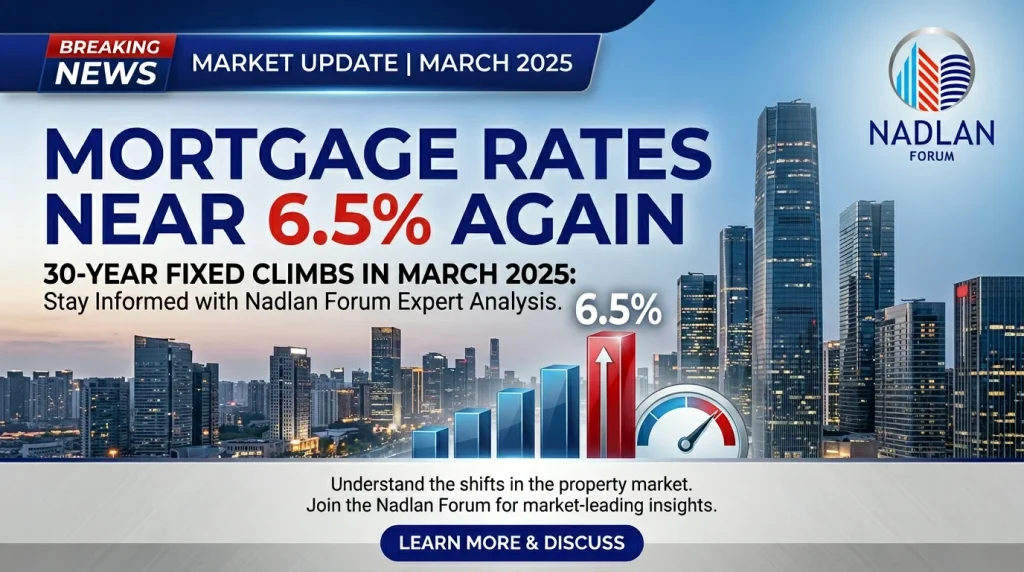
Mortgage rates continue to move higher at the end of March 2026, reversing the brief decline seen earlier in the month. The average 30-year fixed mortgage rate is now 6.47%, rising by more than half a percentage point in just a few weeks. The 15-year fixed rate is currently 5.90%, also reflecting recent upward pressure.
This increase comes after mortgage rates touched multi-year lows earlier in February, showing how quickly market conditions can shift based on economic signals, inflation concerns, and global developments.
Current Mortgage Rates Snapshot
Here are the latest national average mortgage rates:
- 30-year fixed: 6.47%
- 20-year fixed: 6.50%
- 15-year fixed: 5.90%
- 5/1 ARM: 6.71%
- 7/1 ARM: 6.56%
- 30-year VA: 5.99%
- 15-year VA: 5.55%
- 5/1 VA: 5.53%
These rates represent national averages and can vary depending on the borrower’s credit profile, location, and lender.
Refinance Rates Remain Elevated
Refinance rates are also trending higher, often slightly above purchase rates:
- 30-year fixed refinance: 6.60%
- 20-year fixed refinance: 6.57%
- 15-year fixed refinance: 5.97%
- 5/1 ARM refinance: 6.87%
- 7/1 ARM refinance: 6.52%
- 30-year VA refinance: 5.92%
- 15-year VA refinance: 5.71%
- 5/1 VA refinance: 5.29%
With rates at these levels, refinancing may not be attractive for many homeowners unless they are improving loan terms or consolidating debt.
Why Mortgage Rates Are Rising Again
The recent rise in mortgage rates is tied to several broader factors:
- Ongoing inflation concerns
- Volatility in global markets
- Rising energy prices
- Shifts in expectations around Federal Reserve policy
These forces have pushed borrowing costs higher after a short period of relief earlier this year.
30-Year vs 15-Year Mortgage Costs
The difference between 30-year and 15-year loans remains important for buyers deciding how to finance a home.
A 30-year mortgage offers lower monthly payments, making it more manageable for many households. For example, a $300,000 loan at around 6.3% would result in a monthly payment of about $1,890. However, the total interest paid over time would exceed $380,000.
A 15-year mortgage has higher monthly payments but saves money in the long run. The same loan at 5.9% would cost about $2,515 per month, but total interest would drop to around $152,000.
This shows the trade-off between affordability now and long-term savings.
Adjustable-Rate Mortgages Still an Option
Adjustable-rate mortgages (ARMs) continue to be an alternative for some buyers.
With a loan like a 5/1 ARM, the interest rate stays fixed for the first five years and then adjusts annually. These loans can start with lower rates, but recent data shows that ARM rates are sometimes close to or even higher than fixed rates.
This makes it important for borrowers to compare options carefully before choosing a loan type.
How Buyers Can Get Better Rates
Even in a higher-rate environment, borrowers can take steps to secure better mortgage terms:
- Improve credit score
- Reduce debt levels
- Increase down payment
- Compare multiple lenders
Some buyers also choose to lower their interest rate by paying discount points at closing. Temporary rate buydown options can also reduce payments in the first few years.
Is Now a Good Time to Buy?
Deciding whether to buy a home depends on personal financial goals rather than trying to time the market.
While rates have increased recently, they are still below some of the highs seen in previous years. At the same time, home price growth has slowed compared to the pandemic period, which may provide some opportunities for buyers.
For those planning to stay in a home long-term, current conditions may still be reasonable despite higher rates.
What to Expect Next
Looking ahead, forecasts suggest mortgage rates may stabilize around the 6% range through the rest of 2026. Some projections also indicate similar levels into 2027.
However, rates will continue to respond to inflation data, economic growth, and global events. This means short-term fluctuations are likely to continue.
For now, the housing market is adjusting to a new environment where rates near 6.5% are becoming the norm rather than the exception. For direct financing consultations or mortgage options for you visit 👉 Nadlan Capital Group.



























Responses