
Consumer Sentiment Falls to Record Low: Inflation Fears Rise in 2026

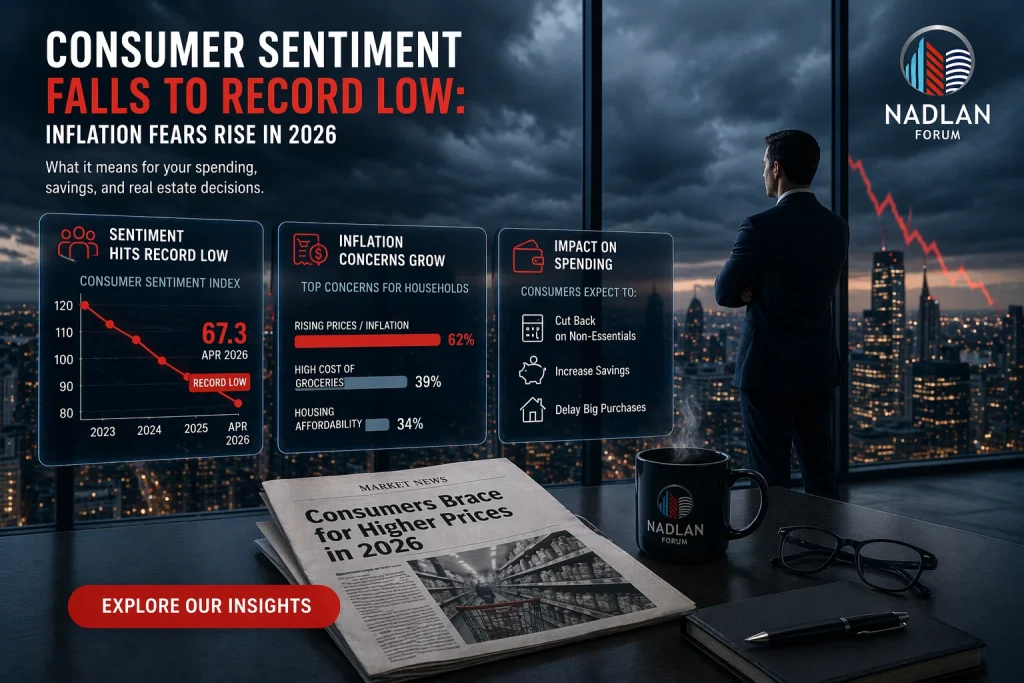
Consumer Confidence Drops Sharply in April
Consumer sentiment in the United States fell to its lowest level on record in April 2026, reflecting growing concern about rising prices and economic uncertainty. Data from the University of Michigan showed the headline consumer sentiment index dropped to 47.6, marking a sharp decline from the previous month.
This represents a double-digit percentage drop and signals a major shift in how households view the economy. Both current conditions and future expectations also declined, showing that consumers are feeling pressure now and remain uncertain about what lies ahead.
Inflation Expectations Move Higher
Alongside falling confidence, inflation expectations jumped noticeably. Survey respondents now expect prices to rise by 4.8% over the next year. That is a full percentage point increase compared to March and the highest level since mid-2025.
Long-term expectations also increased slightly, with the five-year outlook moving up to 3.4%. While still below last year’s levels, the increase suggests that concerns about persistent inflation are building again.
Recent data from the Bureau of Labor Statistics supports these concerns. The Consumer Price Index rose by 0.9% in March, pushing annual inflation to 3.3%. Much of that increase was driven by higher energy costs, while food prices remained relatively stable.
Energy Prices and Global Events Driving Concerns
One of the biggest drivers behind the drop in sentiment is the rise in energy prices. Higher fuel costs tend to affect daily expenses quickly, reducing disposable income and changing spending habits.
Survey feedback suggests that many consumers are linking current economic stress to global tensions, especially the recent conflict involving Iran. Concerns about supply disruptions and rising oil prices have added to uncertainty.
However, it is important to note that most of the survey responses were collected before the recent ceasefire. This means the data reflects conditions during a period of higher uncertainty and may not fully capture any recent improvements in market sentiment.
Why Consumer Sentiment Matters
Consumer sentiment is a key indicator of economic health because it often influences spending behavior. When confidence is low, households may delay major purchases such as homes, cars, or appliances.
Lower spending can slow overall economic growth, especially in a consumer-driven economy. Businesses may also become more cautious, reducing hiring or investment plans.
In this case, the sharp decline in sentiment suggests that many households are becoming more defensive with their finances.
Short-Term Outlook Could Shift
There are signs that sentiment could stabilize in the coming months if certain conditions improve. A decline in energy prices or reduced global tensions may help ease inflation concerns.
If supply chains stabilize and fuel costs fall, consumers may regain some confidence. However, if inflation remains elevated, pressure on household budgets is likely to continue.
Impact on Housing and Borrowing
The drop in consumer sentiment may also affect the housing market and borrowing activity. When people feel uncertain about the economy, they are less likely to take on large financial commitments.
This could lead to:
- Slower homebuying activity
- Reduced demand for mortgages
- More cautious lending behavior
At the same time, rising inflation expectations can influence interest rate decisions, which may impact mortgage rates and loan affordability in the months ahead.
Final Thoughts
Consumer sentiment has taken a significant hit in April 2026, reflecting growing concern about inflation and economic uncertainty. Rising energy costs and global events have played a major role in shaping public perception.
While conditions may improve if inflation eases, the current data highlights how sensitive consumer confidence is to both economic and geopolitical developments. For direct financing consultations or mortgage options for you visit 👉 Nadlan Capital Group.

















Responses