
Housing Market Hits Pause as Listings Grow and Buyers Step Back


The U.S. housing market remained stuck in a slow and steady holding pattern in November 2025. While more homes came up for sale, buyers did not rush back in, leaving overall activity muted and prices under pressure in many areas.
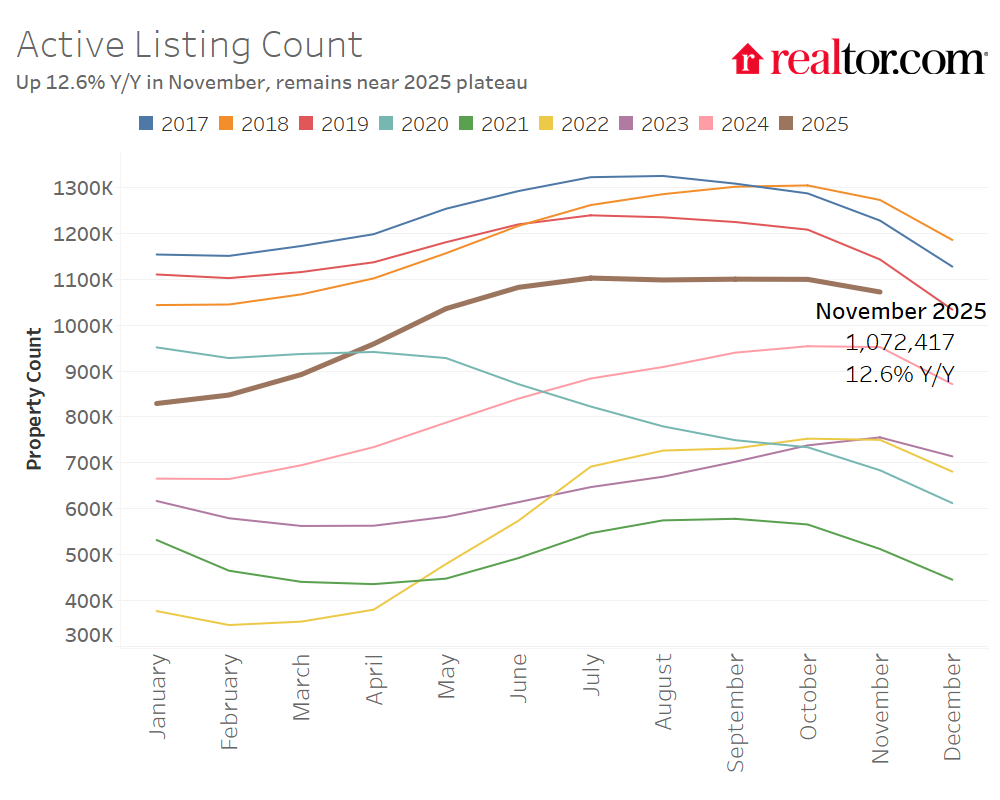
New data from Realtor.com shows that active listings rose 12.6% compared with a year earlier, marking the 25th straight month of annual inventory growth. However, that pace of growth is cooling, which points to a market that is leveling off rather than gaining momentum. Even with mortgage rates ticking slightly lower and economic data resuming after the government shutdown, buyer demand stayed soft.
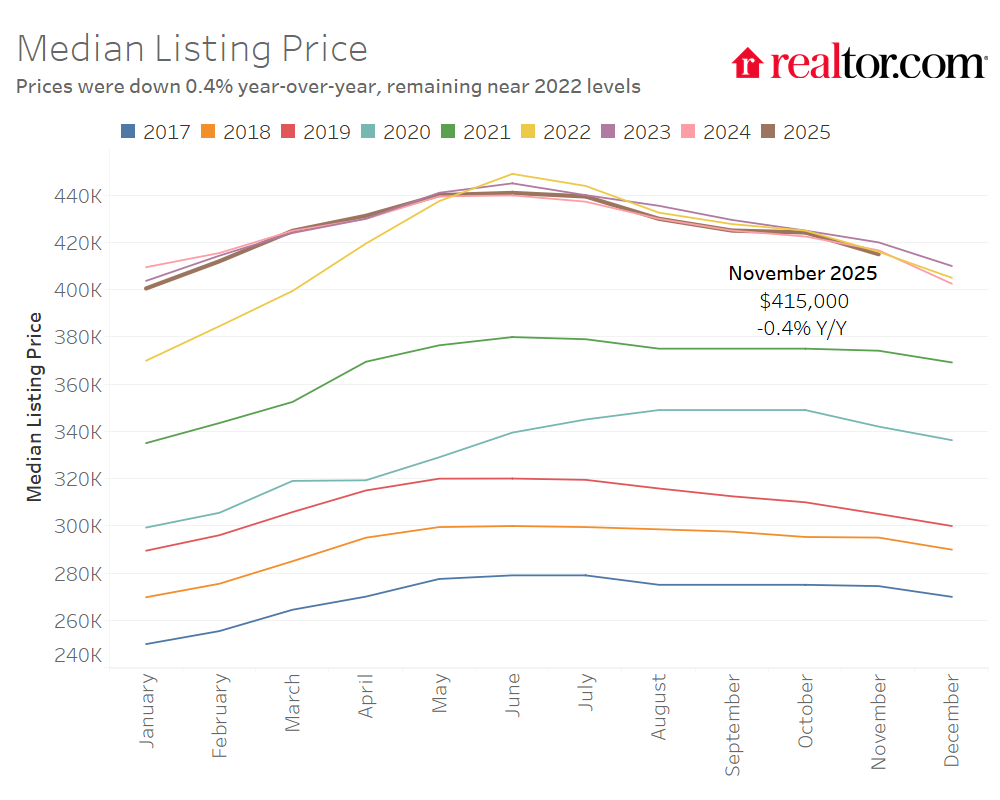
Homes also spent a bit more time on the market than last year, and national list prices slipped 0.4% year over year, reinforcing that affordability remains a major hurdle for many households.
Regional Differences Are Growing
Inventory increased in every region of the country, but the West and South saw the largest gains. That said, growth in those areas has slowed since the summer. In many Western and Southern cities, homes are now sitting on the market far longer than they did before the pandemic, giving buyers more choices and more leverage.
The picture looks very different in the Northeast and Midwest. These regions remain tighter, with fewer homes for sale, quicker closings, and less pressure on prices. The gap between markets is wide. For example, Denver now has about 60% more inventory than before the pandemic, while Hartford has nearly 75% less than it did during that same period.
Delistings Become More Common
One of the more notable trends this fall has been the rise in delistings. Since June, roughly 6% of active listings have been pulled off the market each month, which is unusual outside of the winter season. This suggests many sellers are choosing to wait rather than accept lower offers.
Instead of cutting prices further, some homeowners are stepping back when buyer interest falls short of expectations. This behavior highlights how higher mortgage rates and stretched affordability are changing seller strategies, not just buyer behavior.
Buyers Shift Toward Lower-Cost Markets
At the same time, buyers who are still active are changing where they look. Smaller and more affordable metros often called “refuge markets” are drawing attention from households priced out of major coastal cities and large Sun Belt hubs.
These areas, typically located near job centers or offering lower living costs, posted some of the strongest price gains this year. Their growth shows how buyers are redefining what affordable homeownership looks like in an environment shaped by higher rates and elevated prices.
What to Expect Moving Into 2026
November’s data points to a housing market still adjusting. Inventory is higher, but buyers remain cautious. Regional differences are sharp, and both buyers and sellers are adapting to higher costs and slower conditions.
These trends suggest that the market is unlikely to see a quick rebound. Instead, uneven recovery, selective demand, and affordability challenges are expected to remain key themes well into 2026. For direct financing consultations or mortgage options for you visit 👉 Nadlan Capital Group.























Responses