
Buying Property with an LLC: Investor’s Guide 2026


Real estate investors continually seek strategies to protect their assets while maximizing returns. One increasingly popular approach involves structuring property acquisitions through a limited liability company (LLC). This method offers distinct advantages for those building investment portfolios, particularly regarding liability protection and privacy. Understanding the mechanics, benefits, and potential drawbacks of buying property with an llc helps investors make informed decisions that align with their long-term financial goals.
Understanding LLC Property Ownership Structure
An LLC serves as a legal entity separate from its owners, creating a protective barrier between personal assets and investment properties. When you purchase real estate through this business structure, the LLC holds title to the property rather than you personally.
This separation proves particularly valuable in real estate investing. If a tenant files a lawsuit or creditors pursue claims against the property, they typically can only access assets held within the LLC itself. Your personal residence, bank accounts, and other holdings remain shielded from such actions.
Key Components of LLC Formation
Establishing an LLC for property ownership requires several essential steps:
- Filing articles of organization with your state
- Creating an operating agreement outlining ownership structure
- Obtaining an Employer Identification Number (EIN) from the IRS
- Opening a dedicated business bank account
- Registering with local authorities where properties are located
Each state maintains different requirements and fees for LLC formation. Some jurisdictions charge annual franchise taxes, while others impose minimal ongoing costs. Florida investors, for instance, can reference specialized resources like this comprehensive LLC rental property checklist to navigate state-specific requirements.

Advantages of Buying Property Through an LLC
The decision to structure property purchases through an LLC stems from several compelling benefits that address common investor concerns.
Liability Protection and Risk Management
Limited liability stands as the primary motivation for most investors. When rental properties generate income, they also create potential exposure to lawsuits. Slip-and-fall accidents, property damage claims, or lease disputes can result in significant financial liability.
By buying property with an llc, investors create a legal firewall. If someone wins a judgment against the LLC, they can typically only claim assets owned by that entity. Your personal savings, primary residence, and other investments remain protected.
Consider structuring multiple LLCs for different properties. This strategy prevents one problematic property from jeopardizing your entire portfolio. A lawsuit affecting one LLC cannot reach assets held in separate entities.
Privacy and Anonymity Benefits
Public property records typically display ownership information. When individuals purchase real estate in their own names, anyone can search county records to identify their holdings.
LLC ownership obscures this information. The business entity name appears on public records rather than personal details. This privacy proves valuable for investors who prefer discretion about their portfolio size or locations.
| Benefit Category | Individual Ownership | LLC Ownership |
|---|---|---|
| Personal Liability | Fully exposed | Protected |
| Privacy | Name on public record | Business name only |
| Asset Separation | All assets at risk | Only LLC assets at risk |
| Professional Image | Personal transaction | Business transaction |
Tax Flexibility and Planning Options
LLCs offer significant tax advantages through flexible classification options. By default, single-member LLCs are treated as disregarded entities for tax purposes, meaning income passes through to your personal return. Multi-member LLCs receive partnership treatment.
However, buying investment property through an LLC allows you to elect S-corporation or C-corporation tax treatment if advantageous. This flexibility enables strategic tax planning as your portfolio grows.
Deductible expenses remain accessible regardless of entity structure. Mortgage interest, property taxes, repairs, and depreciation all reduce taxable income. The LLC structure simply provides additional planning opportunities.
Challenges and Considerations
While buying property with an llc offers substantial benefits, investors must understand potential obstacles that accompany this approach.
Financing Difficulties and Higher Costs
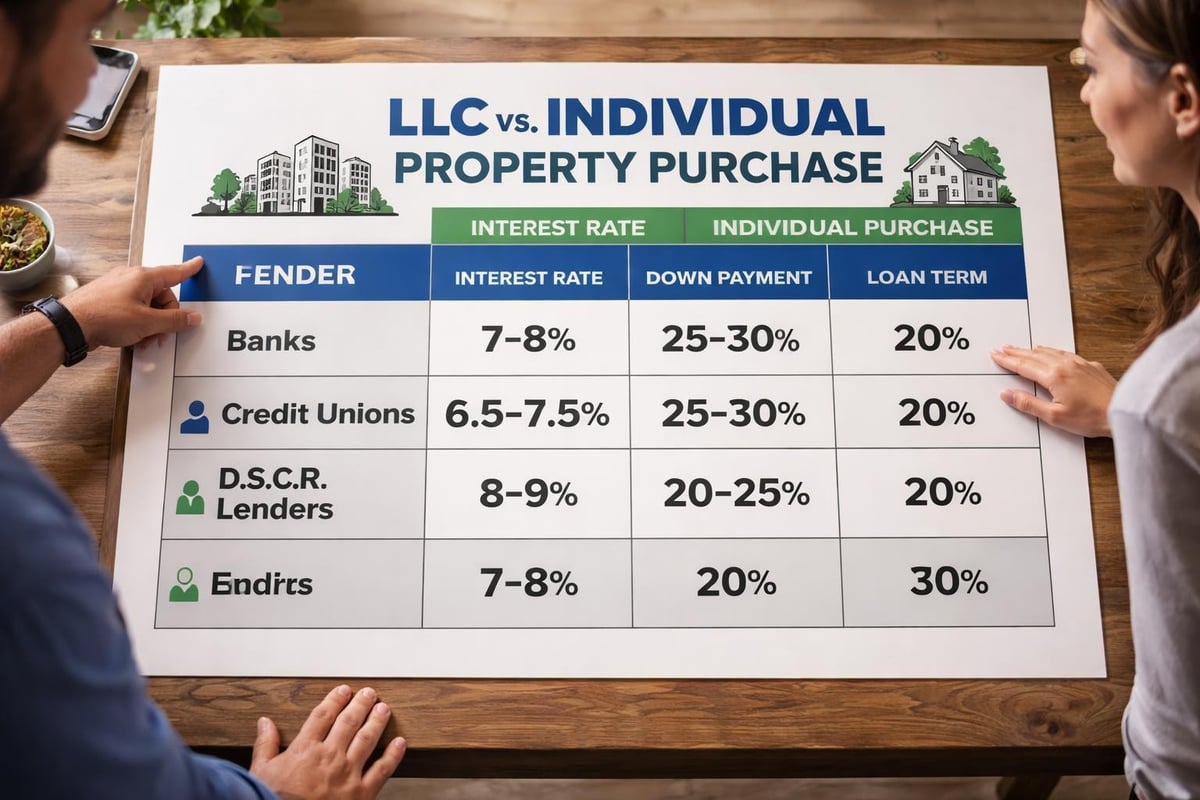
Traditional mortgage lenders often hesitate to provide financing for LLC property purchases. Many residential loan programs require individual borrowers rather than business entities.
Commercial loans typically fill this gap, but they come with less favorable terms:
- Higher interest rates (often 0.5% to 1% above residential rates)
- Larger down payment requirements (25% to 30% versus 15% to 20%)
- Shorter amortization periods
- Additional fees and closing costs
Some investors employ a workaround by purchasing properties individually first, then transferring title to an LLC afterward. However, this strategy may trigger due-on-sale clauses in mortgage agreements, potentially allowing lenders to demand full loan repayment.
Portfolio lenders and local banks sometimes offer more flexibility for LLC purchases. Building relationships with these institutions can provide access to better financing terms. The requirements to buy a house under an LLC vary significantly between lenders, making research essential.
Formation and Maintenance Expenses
Creating and maintaining an LLC involves ongoing costs that impact overall investment returns. Initial formation fees range from $50 to $500 depending on the state. Some jurisdictions charge substantial annual renewal fees or franchise taxes.
California, for example, imposes an $800 minimum annual franchise tax on LLCs. Delaware charges annual taxes based on the number of LLC members. These recurring expenses must factor into your investment calculations.
Additionally, proper LLC management requires:
- Maintaining separate business bank accounts
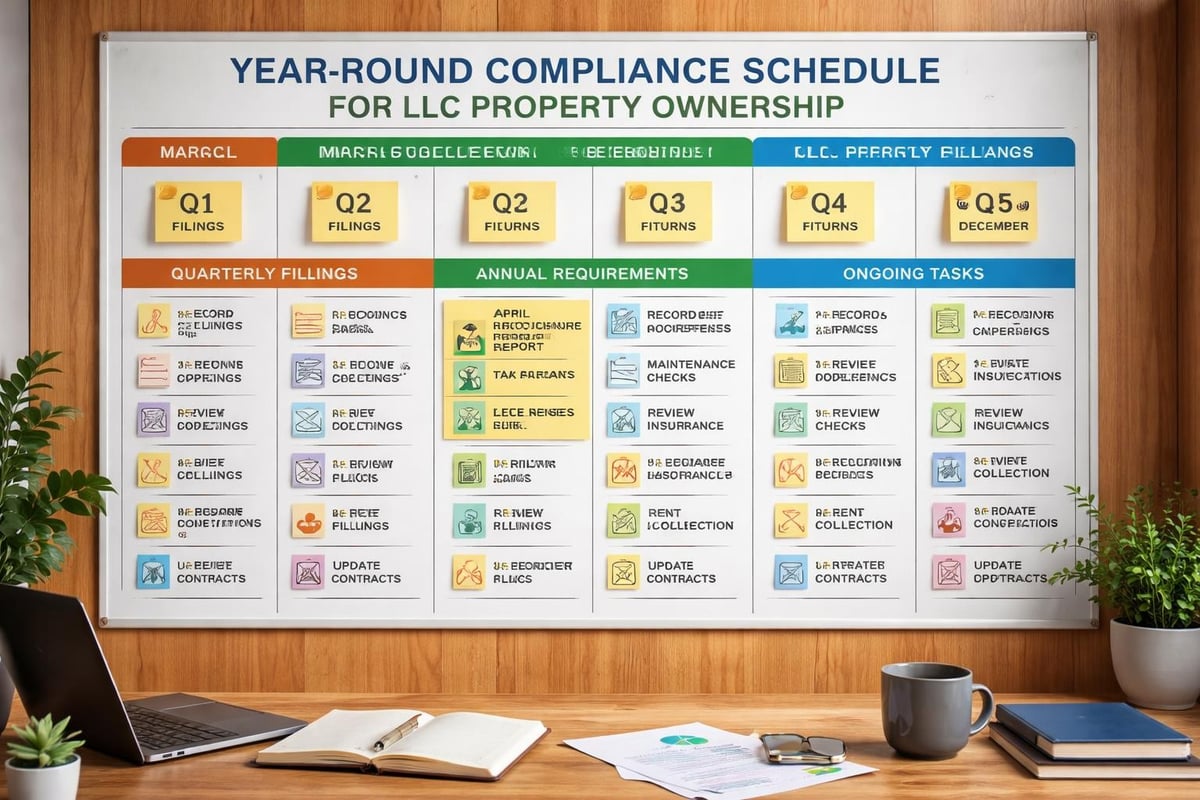
- Filing annual reports and paying required fees
- Keeping detailed financial records
- Holding member meetings and documenting decisions
- Renewing registrations in states where properties are located
Failing to maintain these formalities can result in "piercing the corporate veil," where courts disregard the LLC structure and hold members personally liable.
Strategic Implementation for Real Estate Investors
Successful integration of LLC ownership into your investment strategy requires thoughtful planning and execution.
Determining Optimal LLC Structure
Not every property purchase warrants LLC ownership. Single-family homes occupied by the investor-owner typically function better under individual ownership, preserving access to favorable residential financing.
Investment properties and rental units represent ideal candidates for LLC ownership. These properties generate income while creating liability exposure, making asset protection particularly valuable.
Many experienced investors adopt a tiered approach:
- Single-Property LLCs: Each rental property held in a separate LLC maximizes asset protection
- Portfolio LLCs: Multiple properties grouped under one LLC when they share similar risk profiles
- Holding Company Structure: A master LLC owns subsidiary LLCs that hold individual properties
The right structure depends on portfolio size, property values, and risk tolerance. Consultation with legal and tax professionals helps identify the optimal configuration for your specific situation.
Timing Your LLC Formation
Investors face an important decision about when to establish their LLC relative to property purchase. Three primary approaches exist:
Pre-purchase formation involves creating the LLC before beginning property searches. This approach allows the LLC to make offers and execute purchase agreements directly, though it may complicate financing.
Post-purchase transfer means buying the property individually first, securing favorable financing, then transferring title to an LLC afterward. This strategy maintains access to residential loan products but requires additional legal documentation.
Series LLC formation provides an alternative in states that recognize this structure. A series LLC allows creation of multiple internal divisions, each holding separate properties with independent liability protection under one parent entity.
| Approach | Financing Access | Asset Protection Timing | Complexity Level |
|---|---|---|---|
| Pre-purchase | Limited | Immediate | Moderate |
| Post-purchase | Full residential options | Delayed | Higher |
| Series LLC | Varies | Immediate per series | High |
Operational Best Practices
Maintaining the integrity and effectiveness of your LLC structure requires consistent attention to operational details.
Separating Personal and Business Activities
Commingling funds represents one of the most common mistakes LLC owners make. Mixing personal and business finances undermines the legal separation that provides liability protection.
Implement these practices to maintain proper separation:
- Open dedicated business bank accounts for each LLC
- Pay all property-related expenses from LLC accounts
- Deposit all rental income directly into LLC accounts
- Transfer owner distributions formally rather than casual withdrawals
- Maintain detailed records of all transactions
Even small violations of these principles can provide legal grounds for piercing the corporate veil.
Documentation and Compliance Requirements
Proper record-keeping extends beyond financial transactions. LLCs must maintain organizational documentation demonstrating legitimate business operations.
Essential documents include:
- Operating agreement defining member roles and profit distribution
- Meeting minutes documenting major decisions
- Annual reports filed with state authorities
- Tax returns and supporting financial statements
- Property management agreements if using third-party managers
- Lease agreements with tenants
- Insurance policies covering LLC-owned properties
Many investors struggle with these administrative requirements. However, buying a house with an LLC demands this level of diligence to preserve the legal protections motivating LLC formation.
Insurance Considerations
Buying property with an llc does not eliminate the need for comprehensive insurance coverage. Rather, insurance works alongside LLC protection to create layered security.
Essential Coverage Types
Property insurance covers physical damage to buildings and structures. This remains necessary regardless of ownership structure, protecting against fire, storms, and other covered perils.
Liability insurance addresses claims from injuries or damage occurring on your properties. Even with LLC protection, maintaining robust liability coverage proves prudent. Policies typically provide $1 million to $2 million in coverage.
Umbrella policies extend protection beyond standard liability limits. These policies kick in after underlying coverage exhausts, offering additional millions in protection at relatively low cost.
Some insurers require LLC-owned properties to carry higher coverage limits or specialized commercial policies. This can increase insurance costs compared to personally-owned properties.
Understanding Coverage Gaps
Traditional homeowner policies typically exclude coverage for rental activities. Landlord or commercial policies address these unique risks, covering loss of rental income, tenant damage, and landlord-specific liability exposures.
When multiple LLCs own different properties, each requires separate insurance policies. This creates additional administrative complexity and potentially higher premiums compared to bundling multiple properties under one personal policy.
Working with Professionals
The complexities of LLC property ownership make professional guidance valuable, particularly when establishing your initial structures.
Legal Counsel
Real estate attorneys help navigate state-specific LLC laws and ensure proper formation. They draft operating agreements, review purchase contracts, and advise on compliance requirements.
Attorney fees for basic LLC formation typically range from $500 to $2,000. More complex structures involving multiple entities or interstate operations cost more but provide valuable protection.
Tax Advisors
CPAs and tax professionals optimize your LLC tax treatment and ensure compliance with reporting requirements. They help determine whether default pass-through taxation serves your interests or if electing corporate treatment provides advantages.
Tax preparation costs increase with LLC ownership due to additional returns and schedules. Budget for these ongoing professional expenses when calculating investment returns.
Title Companies and Lenders
Working with professionals experienced in LLC transactions streamlines the purchase process. Some title companies and lenders specialize in investment property transactions, understanding the nuances of LLC ownership.
Building relationships with these specialists provides access to better financing options and smoother closings. They can structure deals that satisfy lender requirements while preserving asset protection benefits.
State-Specific Variations
LLC laws vary significantly between states, affecting everything from formation costs to ongoing compliance requirements and legal protections.
Popular Formation States
Delaware, Nevada, and Wyoming attract LLC formations due to favorable laws and low fees. However, if your properties are located elsewhere, you will likely need to register as a foreign LLC in those states, doubling your compliance obligations.
Home state formation often proves more practical for real estate investors. Since properties remain stationary, establishing LLCs where properties are located simplifies compliance and eliminates foreign registration requirements.
States like Florida, Texas, and Arizona offer strong LLC protections with reasonable formation costs. Understanding requirements specific to your jurisdiction helps ensure proper setup from the start.
Interstate Property Ownership
Investors with properties in multiple states face additional complexity. Each LLC must register in every state where it owns property, multiplying filing fees and annual compliance requirements.
Some investors create separate LLCs in each state where they own property. This approach simplifies compliance but increases overall administrative burden across multiple entities.
Advanced Strategies for Portfolio Growth
As your real estate portfolio expands, sophisticated LLC structures can provide enhanced protection and operational efficiency.
Asset Protection Layering
Experienced investors often combine multiple legal entities to create comprehensive asset protection. A common approach involves:
- Individual property LLCs holding each rental property
- A management LLC handling day-to-day operations
- A holding company LLC owning the property LLCs
- Personal assets maintained separately from all business entities
This layered structure creates multiple barriers between potential liabilities and your personal wealth. However, it also substantially increases complexity and administrative requirements.
Exit Planning and Transfer Strategies
LLC ownership facilitates easier property transfers compared to individual ownership. Rather than executing new deeds, investors can transfer LLC membership interests to buyers, heirs, or partners.
This proves particularly valuable for:
- Estate planning and wealth transfer to heirs
- 1031 exchange transactions requiring careful timing
- Partnership dissolutions and buyout arrangements
- Gradual portfolio transitions without triggering due-on-sale clauses
Proper planning ensures these transfers occur smoothly while maintaining desired tax treatment and legal protections.
Buying property with an llc offers real estate investors powerful tools for asset protection, privacy, and tax planning, though it requires careful consideration of financing challenges and ongoing compliance costs. Successful implementation depends on understanding these tradeoffs and structuring ownership appropriately for your specific investment strategy. Nadlan Forum provides the community support and expert resources you need to navigate these decisions confidently, offering consultation services and investor discussions that help you build and protect your real estate portfolio effectively. Join our community today to connect with experienced investors and access the knowledge that powers smart real estate investment decisions.























Responses