
Essential Guide to Property Development and Investment 2026

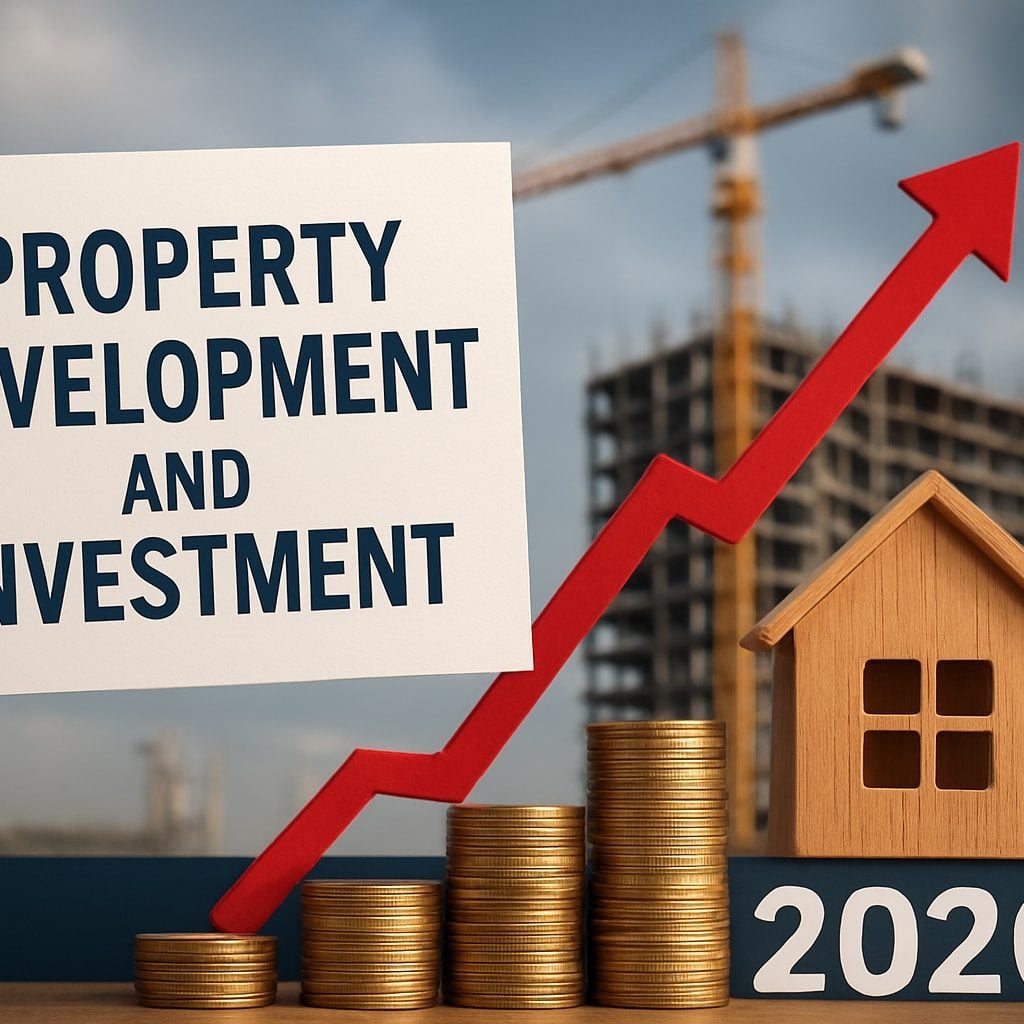
The world of property development and investment in 2026 is more competitive and fast-paced than ever. With global demand rising and new opportunities emerging, success depends on staying ahead of market trends and mastering essential skills.
This guide is designed to equip you with the latest insights, covering the fundamentals, current trends, step-by-step processes, strategic investment approaches, risk management, and what the future holds. Whether you are looking to advance your career or make profitable investments, understanding property development and investment is crucial.
Ready to unlock your potential and navigate the evolving property landscape? Use this guide as your roadmap to success in 2026.
Understanding Property Development and Investment Fundamentals
Property development and investment are the foundation of the real estate industry, each with distinct goals and processes. Property development focuses on creating or improving real estate assets, while investment centers on acquiring assets to generate returns. Key roles include developers, who drive projects from concept to completion, and investors, who supply capital and seek income or appreciation. Other essential professionals are valuers and asset managers, ensuring assets are priced accurately and perform optimally.
For example, residential development involves building homes or apartments, while commercial investment might mean acquiring office buildings for rental income. Interdisciplinary skills are crucial, blending business acumen, legal knowledge, financial analysis, and construction expertise. For a deeper dive into these concepts, explore real estate investment fundamentals for practical insights.

Defining Property Development and Investment
Property development and investment are interconnected yet distinct disciplines in real estate. Development refers to the process of transforming land or existing properties into higher-value assets, such as new residential complexes or commercial spaces. Investment, on the other hand, is the act of purchasing these assets to earn rental income or capital gains.
The field relies on various roles:
- Developers: Oversee the entire project lifecycle.
- Investors: Supply capital and manage risk.
- Valuers: Assess asset worth.
- Asset managers: Optimize performance and returns.
An example is the difference between building a new retail center (development) and purchasing shares in that property for income (investment). Both require a blend of skills from business, law, finance, and construction.
Core Principles and Processes
The property development and investment journey follows a structured path. Key stages in development include site acquisition, feasibility analysis, design, regulatory approvals, construction, marketing, and finally, sale or leasing. The investment cycle typically involves acquiring the asset, holding it for income or appreciation, adding value through improvements, and eventually exiting through sale.
For instance, a developer might identify a promising site, conduct thorough due diligence and market research, secure permits, manage the build, and then sell or lease the property. Each step demands careful financial modeling and risk assessment to ensure project viability and profitability.
Major Property Types and Sectors
Property development and investment span multiple sectors, each with unique characteristics and market trends. Common types include:
- Residential: Apartments, houses, townhomes.
- Commercial: Offices, business parks.
- Industrial: Warehouses, logistics centers.
- Retail: Shopping centers, high street shops.
- Mixed-use: Projects combining several uses.
- Emerging classes: Data centers, co-living spaces.
Recent data highlights strong demand for both commercial and residential sectors in Australia and globally. Mixed-use developments, especially in urban hubs, are gaining traction due to their versatility and ability to meet diverse market needs.
Key Stakeholders and Their Roles
The property development and investment ecosystem involves a wide network of stakeholders. Main participants include:
- Developers: Initiate and manage projects.
- Investors: Provide capital and strategic direction.
- Financiers: Offer loans or funding.
- Government authorities: Grant approvals and oversee compliance.
- Consultants: Advise on planning, design, and engineering.
- Contractors: Execute construction.
- End-users: Occupy or purchase the final product.
Collaboration is key, especially when developers work closely with local councils to secure planning approvals. Building strong industry partnerships and networks is essential for navigating challenges and unlocking new opportunities within property development and investment.
Navigating the 2026 Property Market Landscape
The landscape for property development and investment in 2026 is rapidly evolving, shaped by global economic shifts, regulatory changes, and technological advancements. Understanding these dynamics is crucial for industry professionals seeking to seize emerging opportunities and manage risks effectively.

Market Trends and Economic Drivers
The property development and investment sector in 2026 is being driven by renewed global economic growth, robust urbanization, and shifting demographics. Investors are closely monitoring regions experiencing strong population inflows and infrastructure expansion. According to 2026 housing market trends, the easing of the mortgage lock-in effect is expected to unlock significant transaction volumes, especially in major cities.
Demand remains strong in both residential and commercial sectors, with mixed-use developments gaining traction in urban centers. These trends highlight the importance of staying informed and agile for those involved in property development and investment.
Regulatory Environment and Compliance
Navigating the regulatory landscape is essential for successful property development and investment. In 2026, planning, zoning, and environmental regulations are more complex, requiring careful attention at every project stage. Developers and investors must comply with local and national policies, including recent updates to planning laws that can directly impact project feasibility.
For example, stricter building codes and sustainability mandates may affect timelines and budgets. Engaging with government authorities early and maintaining transparent communication helps streamline approvals and reduce compliance risks in property development and investment projects.
Technology and Innovation in Property
Technology continues to revolutionize property development and investment. The adoption of PropTech, such as digital transaction platforms, AI-powered valuation tools, and construction automation, is becoming standard practice. Building Information Modeling (BIM) enhances design precision and project management efficiency.
Property management is also benefiting from digital solutions that streamline leasing, maintenance, and tenant engagement. As these innovations become widespread, they offer a competitive edge to professionals who leverage them in property development and investment activities.
Sustainability and ESG Considerations
Sustainability and ESG (Environmental, Social, Governance) criteria are now central to property development and investment decisions. Green building standards, energy-efficient designs, and responsible resource management are increasingly demanded by investors and end-users alike.
A notable example is urban regeneration projects that integrate renewable energy sources and prioritize walkability. Meeting ESG benchmarks not only enhances project appeal but also secures long-term value and resilience in the property development and investment market.
Risk Factors and Market Volatility
Despite attractive opportunities, property development and investment in 2026 faces persistent risks. Market cycles, regulatory changes, construction delays, and cost overruns can all impact project outcomes. Historical data shows that markets can experience rapid corrections, but also demonstrate resilience and recovery over time.
To mitigate these risks, industry professionals conduct thorough due diligence, diversify portfolios, and implement robust project management systems. Proactive risk management is the foundation for sustained success in property development and investment.
Step-by-Step Guide to Successful Property Development
Embarking on a property development and investment journey in 2026 requires a clear, methodical approach. Each stage, from site selection to asset management, plays a critical role in the success of your project. Below, you will find a step-by-step process that equips you with the tools and insights needed to thrive in today’s dynamic market.

Step 1: Identifying Opportunities and Site Selection
The foundation of any successful property development and investment project is selecting the right site. Begin by researching locations with strong demand, considering factors such as proximity to transport, amenities, and future growth plans.
Use a checklist for site selection:
- Zoning and land use compatibility
- Accessibility and infrastructure
- Demographic trends and market demand
For example, a mixed-use development in a growing urban precinct can offer diversified revenue streams. Remember, thorough location analysis and understanding the broader property development and investment landscape will maximize your project’s potential.
Step 2: Conducting Feasibility Studies
Once a site is identified, the next step in property development and investment is assessing feasibility. This involves comprehensive financial modeling to estimate costs, revenues, and profit margins.
Key feasibility components include:
- Acquisition and construction costs
- Projected sales or rental income
- Market analysis and competitor benchmarking
Leading institutions use metrics like internal rate of return (IRR) and net present value (NPV) to evaluate viability. A robust feasibility study helps you identify risks early and supports sound decision-making throughout the property development and investment cycle.
Step 3: Securing Financing and Investment
Funding is essential for property development and investment projects. Explore options such as equity, traditional bank loans, joint ventures, or alternative sources like hard money lenders. Understanding your financing structure is critical for cash flow management and project success.
A typical property development and investment loan involves staged drawdowns tied to construction progress. For more on alternative funding, see this guide on hard money lenders for development.
Engage with financial institutions and private investors early to ensure your capital stack aligns with your project’s strategy.
Step 4: Planning, Design, and Approvals
With financing in place, property development and investment move into planning and design. Assemble a team of architects, planners, and consultants to create a vision that meets market needs and regulatory requirements.
Navigate the approval process by:
- Preparing detailed design and planning submissions
- Consulting with local authorities and the community
- Establishing a timeline for obtaining development consent
Delays in approvals can impact project feasibility. Early and proactive engagement with stakeholders streamlines the process and reduces risk.
Step 5: Construction and Project Management
Effective construction management is vital for property development and investment. Select reputable contractors and use project management software to monitor timelines and budgets.
Key construction management practices:
- Regular progress meetings
- Quality assurance protocols
- Cost control measures
For example, digital tools can track milestones and flag issues in real time. Staying agile and maintaining open communication ensures smooth delivery and protects your property development and investment objectives.
Step 6: Marketing, Leasing, and Sales
Marketing is crucial in property development and investment to attract buyers or tenants. Develop a targeted marketing strategy using digital platforms, real estate portals, and social media.
Popular tactics include:
- Pre-sales campaigns for residential units
- Leasing strategies for commercial assets
- Identifying and segmenting target audiences
Successful off-plan sales can boost cash flow and reduce financing risk. Tailor your marketing approach to the unique attributes of your property development and investment project.
Step 7: Handover and Asset Management
The transition from construction to operation marks a new phase in property development and investment. Conduct final inspections, ensure compliance with regulations, and facilitate a smooth handover to owners or tenants.
Ongoing asset management includes:
- Maintenance and repairs
- Tenant relations and lease management
- Value-add opportunities for long-term growth
A seamless handover and proactive management help preserve asset value and support sustainable returns from your property development and investment.
Common Pitfalls and Best Practices
Many property development and investment projects falter due to poor due diligence or overleveraging. Common pitfalls include underestimating costs, failing to manage timelines, and neglecting market research.
Best practices for success:
- Conduct thorough due diligence at every stage
- Maintain transparent communication with all stakeholders
- Diversify risk through partnerships and alternative funding
Industry data shows that projects with strong planning and risk management achieve higher success rates. By learning from past failures and adopting proven strategies, you can position your property development and investment ventures for long-term success.
Strategic Approaches to Property Investment in 2026
Strategic planning is essential for navigating the evolving landscape of property development and investment. In 2026, investors must balance innovation with prudent risk management to achieve optimal returns. Understanding the range of investment vehicles, risk factors, and portfolio strategies is crucial for long-term success.

Understanding Investment Vehicles and Strategies
Selecting the right investment vehicle is the first step in property development and investment. Investors can choose direct ownership, Real Estate Investment Trusts (REITs), syndicates, or crowdfunding platforms. Each option offers unique advantages and challenges.
| Investment Vehicle | Pros | Cons |
|---|---|---|
| Direct Ownership | Full control, potential for high ROI | Requires capital, higher risk |
| REITs | Liquidity, diversification | Less control, market-linked returns |
| Syndicates | Shared risk, access to large assets | Complex structure, shared decisions |
| Crowdfunding | Low entry barrier, innovation | Regulatory uncertainty, lower liquidity |
For an overview of the latest strategies and sector dynamics, see Emerging Trends in Real Estate® 2026. The right choice depends on your goals and risk appetite within property development and investment.
Evaluating and Managing Investment Risk
Risk evaluation is central to property development and investment. Diversification across asset types and locations helps reduce exposure to market volatility. Leverage can amplify returns, but also increases downside risk.
Common tools for risk assessment include scenario analysis and sensitivity testing. Consider the impact of interest rate changes, regulatory shifts, and construction delays. A disciplined approach ensures that property development and investment decisions align with your risk tolerance and financial objectives.
- Diversify assets and geographies
- Use conservative leverage ratios
- Regularly review risk models
Proactive risk management is vital for long-term stability.
Portfolio Construction and Asset Allocation
Building a balanced portfolio is a pillar of success in property development and investment. The most resilient portfolios mix residential, commercial, and emerging sectors across multiple regions.
Institutional investors increasingly favor diversified allocations to manage uncertainty. For example, combining core assets with opportunistic plays can buffer against market cycles. Data shows that portfolios with international exposure and sector diversity outperform single-market, single-type investments.
- Allocate assets by risk profile
- Monitor sector performance regularly
- Adjust allocations as market conditions shift
Effective portfolio construction maximizes returns in property development and investment.
Maximizing Returns: Value-Add and Opportunistic Strategies
Enhancing asset value is a core objective in property development and investment. Value-add strategies include renovations, repositioning, and redevelopment of underperforming properties. Timing market entry and executing well-planned exits are equally important.
Investors may target distressed assets for turnaround or seek to capitalize on emerging neighborhood trends. For example, upgrading an aging commercial building can unlock significant appreciation and rental growth.
- Identify underutilized properties
- Plan capital improvements
- Monitor local market trends
Strategic value-add initiatives can drive superior returns in property development and investment.
Taxation, Legal, and Regulatory Considerations
Understanding the tax and legal framework is essential for property development and investment. Investors must account for obligations like stamp duty, capital gains tax, and ongoing compliance.
Choosing the right legal structure—such as trusts, companies, or partnerships—can enhance tax efficiency. International investors should be aware of local regulations and double taxation agreements.
- Consult with tax professionals
- Stay updated on legislative changes
- Structure investments to minimize tax impact
Navigating the legal landscape is a critical aspect of successful property development and investment.
Leveraging Professional Networks and Industry Resources
Professional networks are invaluable in property development and investment. Mentorship, industry forums, and associations provide access to market intelligence and new opportunities.
Engaging with alumni networks or professional bodies can facilitate deal sourcing and partnership formation. Industry resources, such as research reports and investment conferences, keep investors informed of trends and best practices.
- Join property associations and forums
- Attend industry events regularly
- Build relationships with key stakeholders
Leveraging these connections enhances both knowledge and deal flow in property development and investment.
Education, Accreditation, and Professional Development
Building a successful career in property development and investment requires a robust educational foundation, recognized qualifications, and a commitment to continuous learning. Whether you are just starting or seeking advancement, understanding the right pathways is essential to thrive in this dynamic sector.
Academic Pathways and Qualifications
A career in property development and investment often begins with formal education. Leading universities offer Bachelor and Master degrees in Property, focusing on development, investment, and valuation.
Students gain a blend of financial, legal, and technical knowledge. Core subjects include property finance, construction management, real estate law, and asset management. For example, programs at ICMS and UTS integrate theory and practical projects, preparing graduates for industry demands.
Choosing the right academic pathway ensures you build a strong foundation in property development and investment, setting the stage for lifelong career growth.
Industry Certifications and Accreditation
Professional accreditation is vital for credibility in property development and investment. Recognized certifications include Certified Practising Valuer (CPV), Certified Property Practitioner (CPP), and Certified Development Practitioner (CDP).
Membership with industry bodies such as RICS and the Australian Property Institute (API) is highly regarded. These accreditations verify your expertise and open doors to senior roles. The process often involves a combination of academic qualifications, professional experience, and formal assessments.
By pursuing certification, you demonstrate a commitment to excellence in property development and investment, enhancing your prospects in competitive markets.
Work Integrated Learning and Practical Experience
Practical experience is crucial in property development and investment. Internships, placements, and real-world projects bridge the gap between theory and practice.
Many programs partner with leading firms, offering students opportunities to work on live developments and investment deals. Building industry connections during these experiences significantly boosts employability. Data from competitor institutions consistently shows high graduate employment rates for those with hands-on experience.
Engaging in work integrated learning prepares you for the fast-paced world of property development and investment, equipping you with valuable, transferable skills.
Lifelong Learning and Professional Growth
The property development and investment landscape evolves rapidly, requiring professionals to stay updated. Continuing education through short courses, workshops, and online programs is essential.
Industry bodies offer ongoing professional development to keep skills current with market and regulatory changes. Staying informed about innovations, such as the integration of AI in real estate valuation, is increasingly important. For example, The Architecture of Trust: AI in Real Estate Valuation examines how technology is reshaping valuation practices.
Investing in lifelong learning ensures you remain adaptable and relevant in property development and investment, ready to seize new opportunities.
Future Outlook: Property Development and Investment Beyond 2026
The future of property development and investment is being shaped by a wave of transformative trends. As we look beyond 2026, industry professionals must anticipate shifts in technology, regulation, and consumer demand to remain competitive. This section explores the key forces, emerging sectors, and strategies that will define success in the years ahead.
Emerging Opportunities and Growth Sectors
The landscape of property development and investment is rapidly evolving, with new sectors emerging as front-runners for growth. Logistics hubs, data centers, and affordable housing projects are experiencing significant investor interest. According to the Pacific Real Estate Market Outlook 2026, investment volumes in the Pacific region are expected to rise, especially in logistics and mixed-use assets.
Societal changes, like remote work and digitalization, are also fueling demand for flexible commercial spaces and residential innovation. Forward-thinking investors are targeting these sectors to capitalize on changing market needs. Keeping a close watch on market forecasts allows stakeholders to identify where property development and investment can deliver the strongest returns.
Globalization and Cross-Border Investment
Property development and investment are increasingly global, with capital flowing across borders in search of diversification and higher yields. Investors are targeting key international cities and emerging markets, drawn by stable regulatory environments and strong economic fundamentals.
Cross-border real estate funds are becoming more prominent, providing access to a wider range of asset classes and geographies. This global perspective enables investors to mitigate local market risks and participate in high-growth opportunities worldwide. Understanding market entry requirements, local regulations, and cultural nuances is essential for successful cross-border property development and investment.
Urbanization, Infrastructure, and Smart Cities
Urbanization continues to be a major driver for property development and investment. As populations concentrate in cities, demand for integrated infrastructure, transportation, and smart technologies is rising. Governments and developers are collaborating on smart city projects that blend residential, commercial, and leisure spaces into cohesive, tech-enabled environments.
These initiatives often include features such as renewable energy integration, intelligent traffic management, and digital connectivity. Smart city development not only enhances quality of life but also boosts property values and investment appeal. Adapting to these trends ensures long-term relevance and competitiveness for property development and investment professionals.
Policy, Regulation, and Economic Uncertainty
Navigating policy shifts and regulatory changes is a constant challenge for property development and investment. Economic uncertainty, stemming from inflation, interest rate fluctuations, and geopolitical events, can impact project feasibility and investor confidence.
Recent years have shown that regulatory changes, such as stricter environmental standards or altered planning laws, can reshape market dynamics overnight. Successful professionals monitor policy trends and maintain flexible strategies to adapt quickly. Scenario planning and robust contingency measures are vital for managing risks and capitalizing on new opportunities in property development and investment.
Social, Environmental, and Technological Disruption
Social expectations and technological advancements are reshaping the property development and investment landscape. ESG priorities, climate change, and the rise of proptech are driving sustainable, future-ready projects. The adoption of real estate tokenization, as highlighted in the 2026 Real Estate and Construction Industry Forecast, is transforming how assets are owned and traded.
Developers are integrating renewable energy systems, carbon-neutral designs, and smart building technologies to meet evolving demands. Embracing these disruptions allows industry players to stay relevant and attract both investors and occupants committed to sustainability and innovation in property development and investment.
Building Resilience and Future-Proofing Investments
To secure long-term success in property development and investment, resilience and adaptability are essential. Strategies include diversifying portfolios across locations and asset types, adopting flexible design principles, and leveraging data-driven decision-making.
Learning from past downturns, professionals are prioritizing scenario analysis and robust risk management frameworks. Adapting to market shifts and regulatory changes ensures that investments remain viable even during periods of volatility. Future-proofing initiatives, such as investing in sustainable infrastructure and digital transformation, position stakeholders for enduring value in property development and investment.
As you explore the dynamic world of property development and investment for 2026, you’ve seen how mastering the right strategies and staying informed can open doors to incredible opportunities. Whether you’re planning your next big project or looking to strengthen your investment portfolio, access to reliable financing is essential for turning your vision into reality. If you’re ready to take the next step and secure a foothold in the US property market, I recommend you Get a mortgage in the US today—let’s make your investment journey a success.


















Responses