
Mobile Homes and Ownership: A Different Path to Buying a Home

For many years, mobile or manufactured homes have been seen as a weaker option compared to traditional houses. They are often cheaper, and many people assume they do not gain value over time. But recent data suggests that this view is not always correct.
New research shows that mobile homes can increase in value and help build equity, although they do not perform the same way as standard single-family homes.
Mobile Homes Show Price Growth Over Time
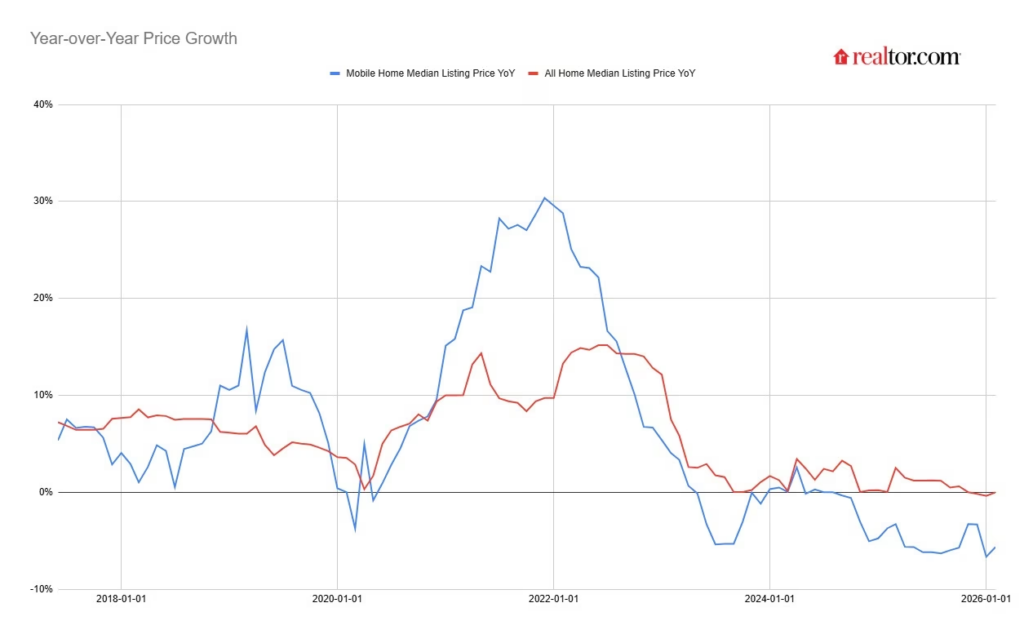
Recent data shows that manufactured homes have seen solid price growth in the past several years. Between 2019 and 2026, mobile homes that included land increased in value by about 70.1%. This is higher than the 58.6% increase seen in traditional single-family homes during the same period.
Mobile homes without land also gained value, rising by 51.6%, although at a slower pace.
These numbers suggest that mobile homes can build value over time, especially when the land is included in the purchase.
However, price trends have not been consistent. Like many housing types, mobile homes saw strong gains during the pandemic housing boom, followed by slower growth and some decline in the years after.
Lower Cost Makes Entry Easier
One of the main advantages of mobile homes is affordability. The median price for a mobile home is about $141,450, much lower than the $410,000 median price for a typical single-family home.
Monthly payments also reflect this difference. A mobile home may cost around $678 per month for principal and interest, compared to about $1,918 for a standard home.
This lower cost makes mobile homes an option for buyers who may not be able to afford traditional housing.
Still, a lower price does not always mean lower risk. The mobile home market can change quickly, with prices moving up or down based on demand and economic conditions.
Land Ownership Makes a Big Difference
One of the most important factors in the value of a mobile home is whether the owner also owns the land.
Homes that include land tend to gain more value over time. The gap is clear, with about a 20 percentage point difference in price growth between homes with land and those without.
This means that much of the long-term value comes from land ownership rather than the structure itself.
Even so, mobile homes on leased land can still serve a purpose. They provide a lower-cost way to enter the housing market, though they may not build as much wealth over time.
Financing Can Be a Challenge
Financing is another key factor that affects the value of mobile homes.
If a manufactured home qualifies for a standard mortgage, buyers may benefit from better terms and stronger long-term value. But many mobile homes do not meet these requirements, especially if they are on leased land.
In such cases, buyers may need to rely on alternative financing options like personal loans or chattel loans. These often come with higher interest rates and different terms, which can impact affordability and resale value.
Slower Sales and Price Adjustments
Mobile homes also tend to take longer to sell compared to traditional houses. The typical mobile home stays on the market for about 89 days, compared to 71 days for other types of homes.
They are also more likely to see price reductions. Recent data shows that 18.3% of mobile home listings had price cuts, compared to 15.5% for non-mobile homes.
This suggests that while mobile homes are more affordable, they may require more patience when selling.
A Real-Life Example of Ownership
For many families, the value of a mobile home goes beyond price trends.
Some homeowners have lived in the same manufactured home for decades, using it as a stable place to raise a family. In these cases, the benefit is not just financial, but also emotional and practical.
Owning a home, even a mobile one, can provide stability and security that renting cannot offer. Monthly payments go toward building ownership rather than being paid to a landlord.
At the same time, challenges still exist. Rising property taxes and limited resale value can make it difficult for some owners to move or upgrade to another home.
Where Mobile Homes Are Most Common
Mobile homes are often located in suburban and rural areas, where housing options are more limited. A large share of listings are found outside major cities, where lower-cost housing is often harder to replace.
In early 2026, more than 80,000 mobile homes were listed for sale across the country, with most located in these less dense areas.
This highlights their role as an important housing option, especially in regions where affordability is a major concern.
What This Means for Buyers
Mobile homes are not the same as traditional houses, but they can still offer a path to homeownership.
They provide lower entry costs and the chance to build some level of equity over time. However, they also come with trade-offs, including slower sales, financing limits, and varying price performance.
For buyers who feel priced out of the traditional housing market, a mobile home especially one that includes land can be a practical option.
In the end, while the financial return may differ from other property types, ownership still offers something important: a place to live and an asset that can grow over time instead of rent that is gone each month. For direct financing consultations or mortgage options for you visit 👉 Nadlan Capital Group.





















Responses