
Stabilization Theater

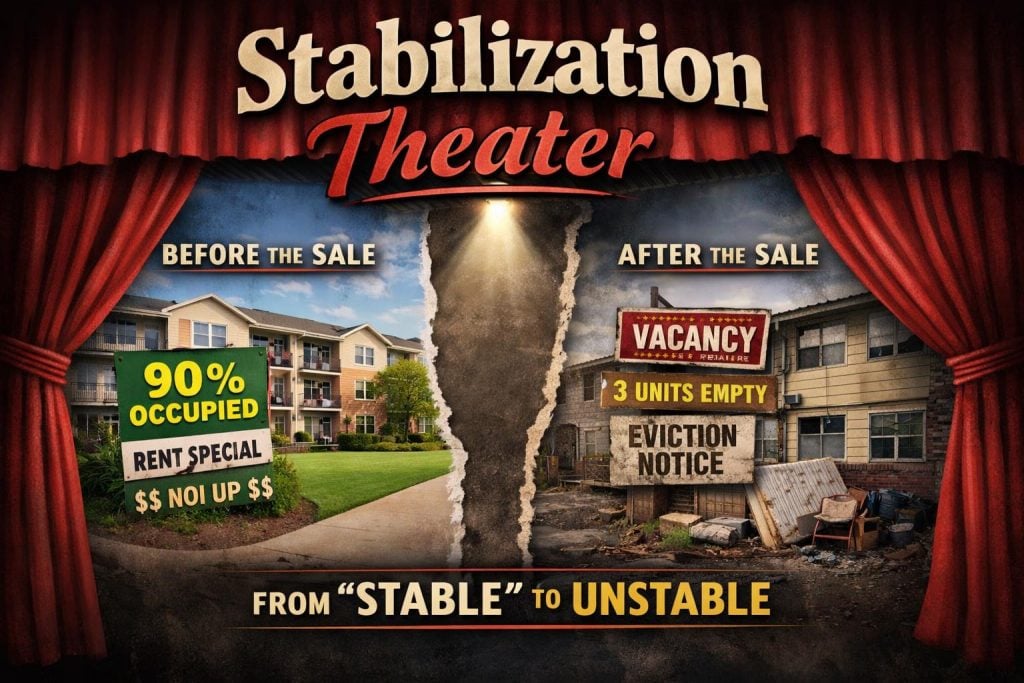
This is one of the most dangerous things in income-producing real estate—precisely because it looks professional.
You’re shown a deal and told:
- “The property is stabilized”
- “90% occupancy”
- “Adjusted NOI”
- “Management runs like clockwork”
On paper—it looks perfect.
In reality—it’s a performance.
What’s happening behind the scenes?
- Tenants are rushed in—sometimes without real screening
- Rents are lowered just to fill units
- One-time concessions inflate occupancy
- Repairs and expenses are delayed to boost NOI
- Aggressive short-term management is used to “hold” numbers for a few months
And then… they sell.
What the buyer sees
A few months of “clean” reports →
Looks like stability.
What they’re actually buying:
A staged moment in time.
What happens after closing
The breakdown begins:
- Weak tenants leave
- Rents normalize to real market levels
- Deferred maintenance shows up
- Hidden expenses hit
- NOI collapses
Real case (from the past year)
A 24-unit property marketed as “stabilized” with 92% occupancy.
But digging deeper:
- All “stabilization” happened in the 60 days before sale
- Tenants were added with concessions
- Some leases were very short-term
- Several units hadn’t undergone real maintenance
Within 90 days after closing:
- 7 units became vacant
- 3 tenants stopped paying
- Maintenance costs spiked
Actual returns dropped by tens of percent compared to what was presented.
This isn’t rare.
It’s a method.
How do you spot this in advance?
- Review 12–24 months of history (not just the last quarter)
- Analyze lease terms, not just occupancy rate
- Verify leases directly and question tenants when possible
- Compare rents to true market data, not spreadsheets
- Check actual expenses vs projections
- Most importantly: understand who the tenants are, not just how many
Bottom line
Real stability is built over time.
A performance can be built in weeks.
If you don’t know how to tell the difference—
you’ll pay for it after closing.
And like many things in real estate,
the cost of “fixing” the problem later
is often many times higher than doing proper due diligence upfront.


























Responses