
Top Rental Markets 2026: Mid-Sized Cities Lead Demand Shift

Rental Demand Moves Away from Expensive Cities
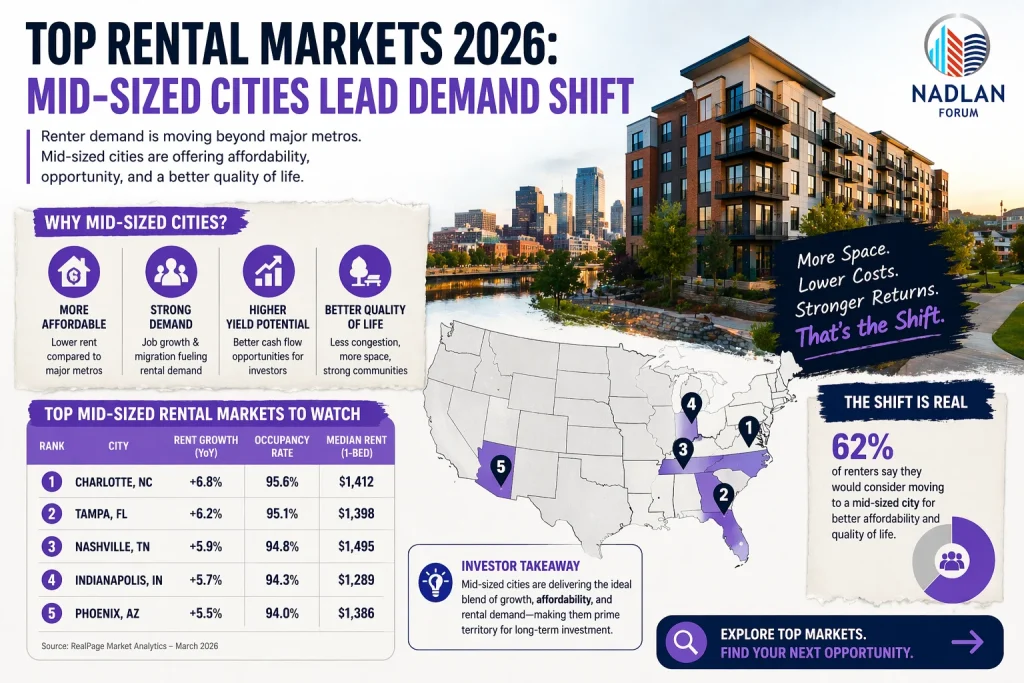
The U.S. rental market is changing direction in 2026. Instead of focusing on high-cost coastal cities, renters are increasingly choosing more affordable and practical locations. According to insights from Norada Real Estate Investments, mid-sized cities in the Midwest and South are now leading rental demand.
This shift reflects a broader change in priorities. Renters are no longer chasing large metropolitan areas for opportunity alone. Instead, they are looking for a balance between cost, job access, and quality of life.
Top 10 Cities with Strong Rental Demand
Here are the cities seeing the highest rental interest in 2026, along with what makes each one stand out:
1. Cincinnati
Cincinnati ranks first, driven by strong affordability and a growing job base. A major rise in rental search activity shows that interest is turning into real demand.
2. Atlanta
Atlanta continues to attract renters relocating from expensive cities. It offers a similar urban experience but at a lower cost of living.
3. Minneapolis
Minneapolis benefits from a strong job market and a highly educated workforce, making it appealing for long-term renters.
4. Washington, D.C.
The capital remains a steady rental market due to government-related employment and consistent housing demand.
5. Baltimore
Baltimore is gaining attention as a more affordable option near Washington, D.C., offering lower rents with access to similar job opportunities.
6. Cleveland
Cleveland stands out for its strong rental yields, making it attractive for both renters and investors.
7. San Jose
San Jose is seeing renewed interest due to new developments and the return of tech workers to urban areas.
8. Philadelphia
Philadelphia offers access to East Coast jobs at a lower cost than nearby cities like New York.
9. Kansas City
Kansas City provides a stable economy and growing population, supporting consistent rental demand.
10. Birmingham
Birmingham benefits from a strong healthcare sector and high occupancy rates in key neighborhoods.
Midwest and South Lead the Trend
A key takeaway from the data is the growing importance of the Midwest. Many of the top-performing rental markets are located in this region, showing a shift toward cities that offer:
- Lower housing costs
- Stable employment
- Growing infrastructure
- Balanced lifestyle options
These cities may not have the same global recognition as major coastal hubs, but they are becoming more attractive for everyday living.
Demand vs. Rent Growth: Not Always the Same
It’s important to separate demand from rent growth. While cities like Cincinnati and Cleveland are seeing strong demand, rent increases are still highest in major markets such as:
- New York City
- San Francisco
- Chicago
This means renters may find better value in high-demand mid-sized cities, even if rent prices are rising faster elsewhere.
Why Renters Are Choosing These Cities
Several factors are driving this shift in rental demand:
1. Affordability
Renters are prioritizing cities where housing costs take up a smaller portion of income.
2. Remote Work Flexibility
With more people working remotely, location is less tied to job opportunities. This allows renters to choose cities that better match their lifestyle.
3. Job Stability in Secondary Markets
Many mid-sized cities now offer strong employment in sectors like healthcare, logistics, and technology.
4. Quality of Life
Less congestion, shorter commutes, and lower living costs are becoming key decision factors.
Investor Interest Is Also Growing
The shift is not limited to renters. Real estate investors are also focusing on these markets.
Instead of relying on price appreciation alone, investors are targeting cities with:
- Higher rental yields
- Stable occupancy rates
- Lower entry costs
Cities like Memphis, Detroit, and Indianapolis are gaining attention for consistent returns rather than speculation.
A Shift in Housing Priorities
The data reflects a larger lifestyle change. Many renters are moving away from the idea that success requires living in a major city. Instead, they are choosing locations where they can:
- Manage housing costs
- Build savings
- Maintain a better work-life balance
This shift is reshaping the housing market and creating new growth areas across the country.
Final Thoughts
The top rental markets in 2026 highlight a clear trend: demand is moving toward affordable, mid-sized cities that offer stability and opportunity.
For renters, this means more choices and potentially better value. For investors, it opens the door to markets with strong long-term potential.
As remote work and economic changes continue to influence where people live, these cities are likely to play an even bigger role in the future of the U.S. housing market. For direct financing consultations or mortgage options for you visit 👉 Nadlan Capital Group.



















Responses