
U.S. Tariff Refund Update: Major Retailers Could Recover Billions

Refund Process Starts After Court Ruling
A major shift in U.S. trade policy is now moving into action. After a Supreme Court ruling earlier this year found certain tariffs unlawful, businesses across the country are preparing to claim back what they paid. Starting Monday, the U.S. Customs and Border Protection has launched a new system that allows companies to file for refunds.
In total, importers are expected to seek more than $160 billion in tariff repayments, making this one of the largest refund processes tied to trade policy in recent history.
New Claims Portal Now Open
The government has introduced a digital filing system called the Consolidated Administration and Processing of Entries (CAPE). This platform is designed to streamline how companies submit claims for tariffs paid under previous policies.
Businesses—from large corporations to smaller importers—must submit documentation showing what they paid. Once verified, they could receive a single combined refund.
However, the process is not expected to be simple. Claims must pass several layers of review, and many experts believe delays are likely.
Retail Giants Could Receive Billions
Some of the biggest names in retail are expected to benefit significantly if refunds are processed successfully.
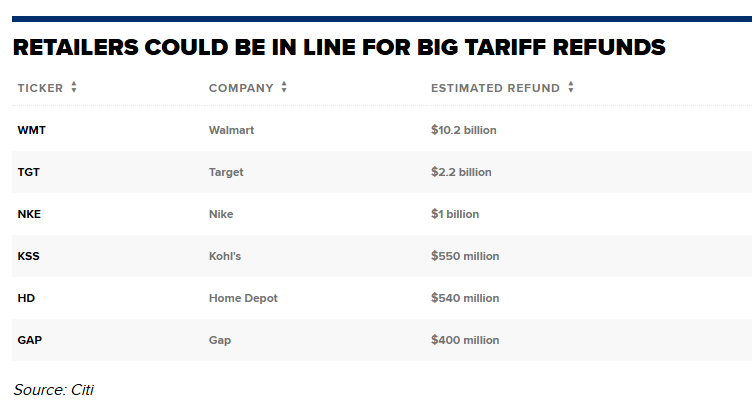
Here are estimated refund amounts for major companies:
- Walmart: $10.2 billion
- Target: $2.2 billion
- Nike: $1 billion
- Kohl’s: $550 million
- Home Depot: $540 million
- Gap: $400 million
- Macy’s: $320 million
These refunds could provide a one-time financial boost, improving cash flow and balance sheets for many companies.
What Companies Might Do With the Money
Retailers are expected to take different approaches depending on their financial needs. Possible uses of refund funds include:
- Paying down existing debt
- Buying back company shares
- Investing in operations or expansion
- Strengthening cash reserves
Financial analysts note that while these refunds are not part of regular earnings, they could still have a noticeable impact on quarterly results when received.
Why There Is Concern About Delays
Despite the launch of the claims system, many companies and legal experts are cautious about how quickly refunds will arrive.
Several challenges could slow the process:
- Complex verification requirements
- Administrative bottlenecks
- Potential legal appeals
- Policy changes from the government
Some trade lawyers believe the process could take months or even longer before companies actually receive payments.
Legal Risks for Retailers
Another issue companies are watching closely is the legal risk tied to refunds. During the period when tariffs were active, many businesses passed those costs on to consumers through higher prices.
Now, if companies receive refunds, questions may arise about whether customers should benefit as well. This could potentially lead to legal disputes or pressure from regulators and consumers.
Possible Return of Tariffs
Even as refunds begin, there is uncertainty about future trade policy. Officials have indicated that new tariffs could be introduced through different legal tools, such as Section 301 investigations.
If new tariffs are implemented later this year, businesses could face another round of added costs, offsetting the benefits of current refunds.
Impact on the Economy and Prices
Tariffs have played a role in raising consumer prices over the past few years. Studies suggest they contributed to inflation by increasing the cost of imported goods.
If refunds are processed and companies retain the funds, it could improve corporate profits—but may not directly lower prices for consumers. On the other hand, if competition increases, some savings could eventually be passed on.
What This Means Going Forward
The start of tariff refunds marks an important moment for U.S. businesses. While the potential financial gains are large, the path to receiving those funds remains uncertain.
For now:
- Companies are preparing claims
- Investors are watching for updates
- Policymakers are considering next steps
The situation highlights how trade decisions can have long-term financial effects across industries.
The Bottom Line
Tariff refunds in 2026 could return billions of dollars to major retailers and importers. While the opportunity is significant, delays, legal questions, and future policy changes could shape how much impact these refunds ultimately have.
For businesses, this is not just about recovering past costs it is also about preparing for what comes next in an evolving trade environment. For direct financing consultations or mortgage options for you visit 👉 Nadlan Capital Group.























Responses