
Q3 2025 Zombie Foreclosures Show a Slight Uptick Amid Stable Vacancy Rates


A new report from ATTOM reveals that while the overall national vacancy rate has remained steady, the number of “zombie” foreclosures properties abandoned by owners during the foreclosure process has inched higher in Q3 2025.
According to ATTOM’s Vacant Property and Zombie Foreclosure Report, roughly 1.39 million residential properties across the United States, or 1.3% of all homes, were vacant during the third quarter. This marks little change from recent years, reflecting the nation’s persistently high-demand housing market.
Zombie Foreclosures on the Rise
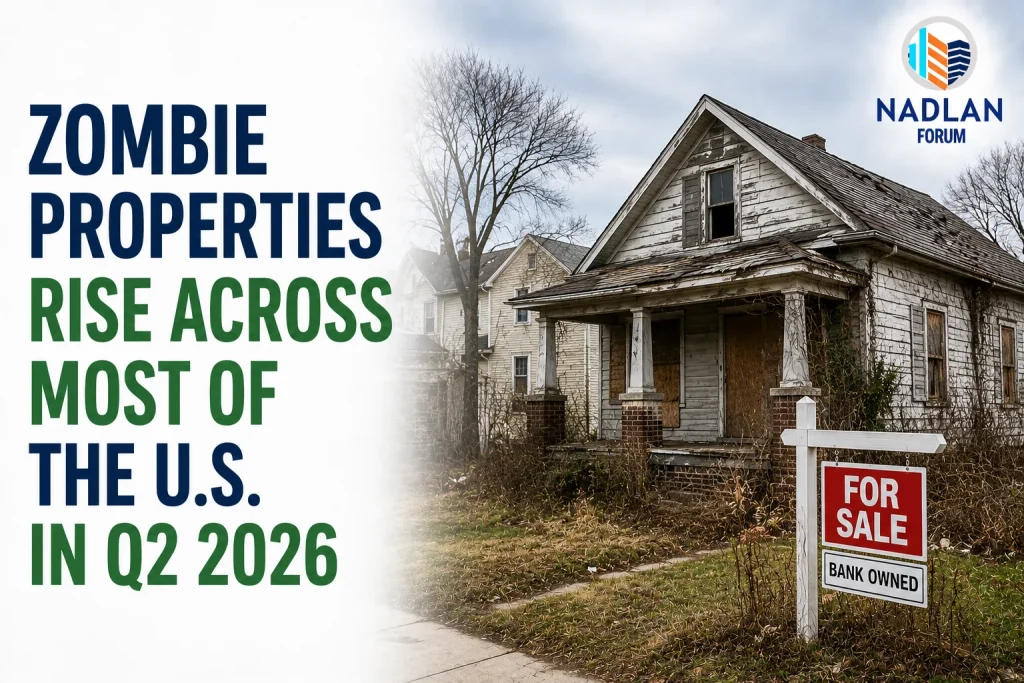
ATTOM identified 222,318 properties in the process of foreclosure during Q3. Of these, approximately 3.38%, or 7,519 homes, were classified as zombie properties slightly above the 3.30% observed in Q2 and up from 3.14% in Q3 of 2024.
Vacant and zombie homes can have a ripple effect on surrounding neighborhoods, often lowering property values and creating challenging market conditions locally, said Rob Barber, CEO of ATTOM. While the increase in zombie homes this quarter is modest, it’s a trend worth monitoring.
Methodology Behind the Numbers
The data reflects a comprehensive analysis of 104.2 million residential properties using county tax assessor records. The study focused on vacancy, foreclosure status, and owner-occupancy across metropolitan areas with at least 100,000 homes, counties with at least 50,000 homes, and zip codes with a minimum of 1,000 residential properties.
Quarter-over-quarter, 23 states reported small increases in zombie properties, while the same number of states, plus the District of Columbia, saw slight decreases. Four states recorded no change.
States with Notable Increases in Zombie Rates
Among states with at least 50 zombie properties, those experiencing the largest year-over-year growth in zombie foreclosures included:
- Colorado: up 115% (27 → 58)
- Washington: up 114% (29 → 62)
- Iowa: up 84% (64 → 118)
- North Carolina: up 80% (50 → 90)
- Oklahoma: up 72% (43 → 74)
Conversely, states showing the largest year-over-year declines were:
- Georgia: down 25% (85 → 64)
- New Jersey: down 21% (230 → 181)
- Illinois: down 17% (780 → 646)
- New York: down 10% (1,630 → 1,461)
Vacancy Rates Across the U.S.
When looking at general vacancies, the highest rates were found in:
- Oklahoma: 2.4%
- Kansas: 2.3%
- Alabama: 2.2%
- Missouri: 2.2%
- West Virginia: 2.1%
The lowest vacancy rates were concentrated in the Northeast:
- New Hampshire: 0.35%
- Vermont: 0.41%
- New Jersey: 0.51%
- Idaho: 0.51%
- Connecticut: 0.54%
Metro Areas with High Zombie Foreclosure Rates
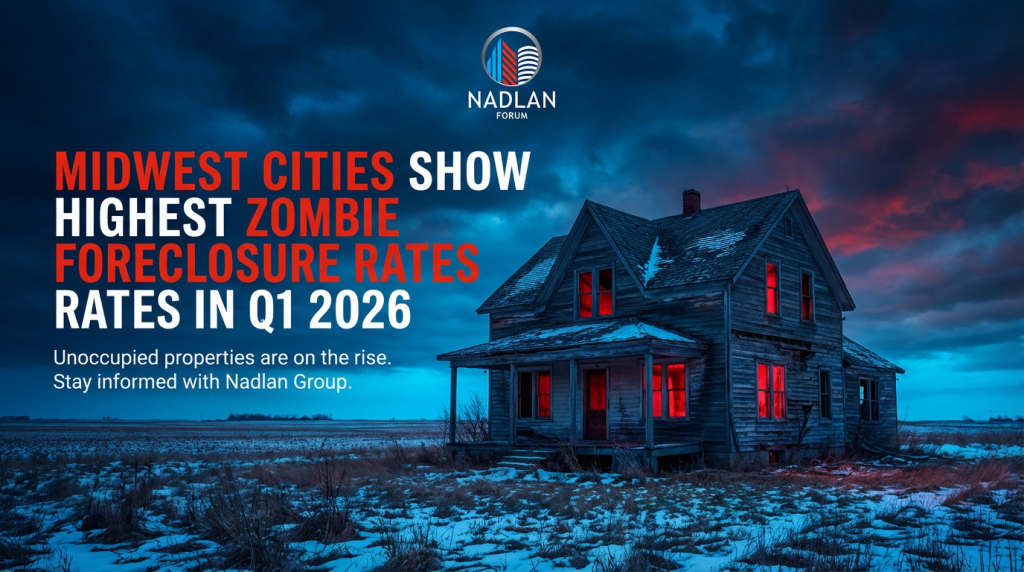
Of the 135 large metropolitan areas included in the analysis, 57% had zombie foreclosure rates below the national average of 3.38%. The highest concentrations of vacant pre-foreclosure homes were predominantly in the Midwest:
- Wichita, Kansas: 12.7%
- Peoria, Illinois: 12.3%
- Youngstown, Ohio: 10.1%
- Cleveland, Ohio: 9.5%
- Toledo, Ohio: 8.8%
On the lower end, cities with the smallest proportion of zombie foreclosures included:
- Nashville, Tennessee: 0%
- Atlantic City, New Jersey: 0.3%
- Provo, Utah: 0.4%
- Trenton, New Jersey: 0.6%
- Raleigh, North Carolina: 0.7%
Investor-Owned Properties Show Higher Vacancy Rates
Investor-owned homes appear more susceptible to vacancy. Out of roughly 24.9 million investor-owned properties nationwide, about 3.6% (882,336) were vacant in Q3. Affordability challenges and higher mortgage rates likely contributed to this trend, as managing multiple properties became increasingly difficult for some owners.
States with the highest investor-owned vacancy rates included:
- Indiana: 7.2%
- Illinois: 6.1%
- Oklahoma: 5.9%
- Alabama: 5.9%
- Ohio: 5.8%
The lowest rates were seen in:
- New Hampshire: 0.9%
- Vermont: 1%
- Idaho: 1.2%
- Utah: 1.5%
- North Dakota: 1.5%
Zip Codes with the Highest Zombie Rates
Nearly two-thirds of analyzed zip codes 1,376 out of 2,164 showed zombie foreclosure rates below the national average. Some zip codes, however, reported exceptionally high levels:
- 91001, Los Angeles, CA: 80.8%
- 61603, Peoria, IL: 40%
- 46201, Indianapolis, IN: 35.5%
- 33708, Tampa, FL: 34.9%
- 44108, Cleveland, OH: 32.2%
What This Means for the Market
Although zombie properties remain a small portion of the housing market, they can influence neighborhood stability and property values. Overall, the U.S. housing market continues to absorb available homes quickly, indicating that buyers are still actively seeking inventory even in areas experiencing vacancy challenges.
While certain markets show higher-than-average vacancy rates, the national trend suggests resilience in buyer demand, Barber noted. Keeping an eye on these metrics helps investors, policymakers, and communities anticipate and mitigate potential neighborhood impacts. For direct financing consultations or mortgage options for you visit 👉 Nadlan Capital Group.




















Responses