
Treasury Yield Curve Steepens as Long-Term Rates Climb After Fed Cuts

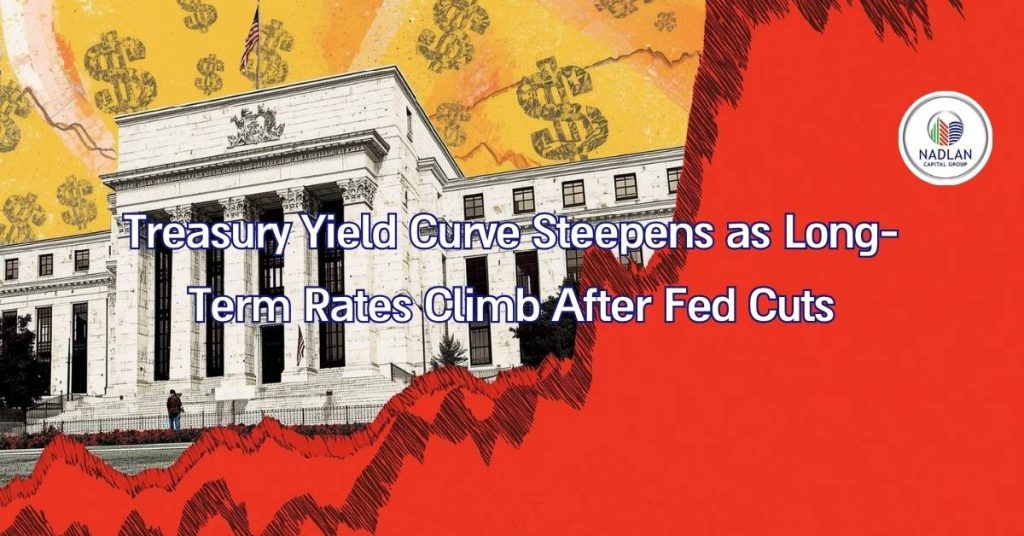
The U.S. Treasury yield curve continued to change shape in late 2025, with long-term yields moving higher even as short-term rates followed the Federal Reserve’s rate cuts. This shift has caused the yield curve to steepen and move closer to normal after a long period of inversion.
Since September 16, the 30-year Treasury yield has risen by about 19 basis points. During the same period, the Federal Reserve cut interest rates by a total of 75 basis points in 2025. The Effective Federal Funds Rate, which reflects the Fed’s policy target, had fallen by the same amount by mid-December.
Long-Term Yields Move Higher
According to analysis from Wolf Street, the gap between the 30-year Treasury yield and the Effective Federal Funds Rate has widened to roughly 120 basis points. Since October 2023, the 30-year yield has crossed above the 5% level several times, showing growing pressure on long-term borrowing costs.
Unlike short-term yields, long-term Treasury rates are driven less by current Fed policy and more by broader bond market forces. These include expectations for future inflation and concerns about the large supply of new Treasury bonds that must be absorbed by investors.
Short-Term Rates Follow the Fed
Short-term Treasury yields, on the other hand, tend to track the Fed’s actions more closely. As the central bank cut rates, yields on shorter maturities declined as well. In mid-December, Treasury yields from one month to six months hovered near 3.60%, with the one-month yield around 3.66% and the six-month yield near 3.59%.
With short-term rates falling and long-term rates rising, the yield curve steepened sharply after mid-September, just before the Fed’s first rate cut of the cycle.
Yield Curve Still Not Fully Normal
Even with this change, the yield curve remains slightly inverted across the three-month to three-year range. Yields in that part of the curve are still below the one-month rate, creating a shallow dip in the middle. That dip is much smaller than it was earlier, suggesting the bond market has reduced expectations for aggressive rate cuts in 2026.
This flattening of expectations reflects growing uncertainty about inflation and economic conditions.
Inflation Concerns Linger
Wolf Street notes that bond investors face a difficult mix of rising inflation and ongoing rate cuts. Inflation, as last measured, was running near 3%, and some analysts believe the figure may have been held down by unusual movements in housing-related data during the government shutdown.
Cutting rates while inflation remains elevated can unsettle bond markets. Investors are already uneasy about the large volume of new Treasury debt needed to fund growing federal deficits. Persistent inflation also reduces the real value of long-term bonds, forcing yields higher to compensate investors for lost purchasing power.
What It Means Going Forward
The recent steepening of the yield curve signals changing expectations in the bond market. While short-term rates reflect the Fed’s recent easing, long-term yields show concern about inflation, debt supply, and long-run economic risks.
As 2026 begins, the direction of yields will likely depend on incoming inflation data, Treasury borrowing needs, and whether the Fed signals a slower or faster pace of future rate changes. For direct financing consultations or mortgage options for you visit 👉 Nadlan Capital Group.

















Responses