
Mortgage Rates Hold at 3-Year Lows After Supreme Court Tariff Ruling


Mortgage rates 3-year lows remained intact this week, even after financial markets reacted to a major Supreme Court decision on tariffs.
Despite a shortened trading week due to Monday’s holiday and a headline event that could have triggered larger swings, bond markets stayed relatively steady. As a result, mortgage rates finished the week at their best levels since September 2022.
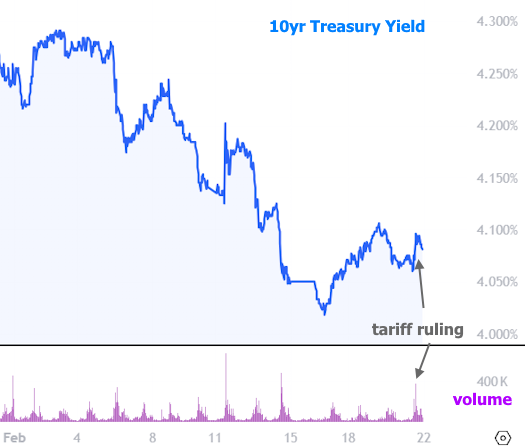
Bond Market Reaction Was Measured
The bond market drives longer-term interest rates, including mortgages. This week’s key event was the Supreme Court ruling that struck down certain tariffs imposed under the Trump administration.
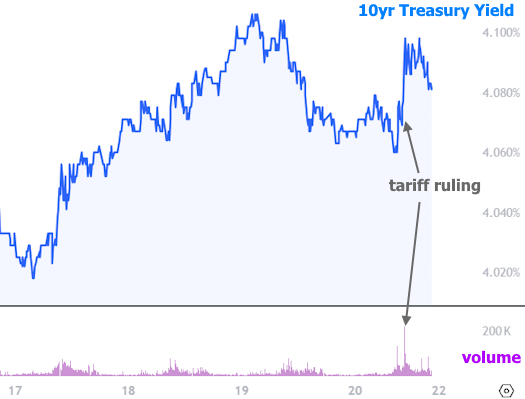
While the news generated the highest trading volume of the week and a noticeable move in yields, the overall reaction was modest when viewed in a broader monthly context.
The 10-year Treasury yield, which serves as a benchmark for mortgage rates, showed only limited movement compared to the swings seen earlier this month.
Investors did not rush to reprice bonds aggressively. Instead, markets appeared to wait for more clarity about potential policy responses and future trade actions.
Mortgage Rates Held Near Multi-Year Best
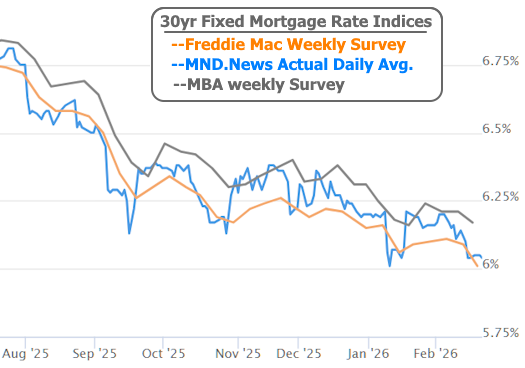
Because bond yields remained stable, mortgage rates were able to hold near their recent lows.
According to daily rate tracking, only one day earlier this year — January 9 — recorded slightly lower daily mortgage rates than those seen this week.
When measured using weekly averages, the performance was even clearer. Weekly data showed the best overall mortgage rate environment since September 2022.
Reports from Freddie Mac confirmed that average 30-year fixed mortgage rates are at their lowest weekly level in more than three years.
Why Volatility Didn’t Push Rates Higher
Typically, major policy decisions can trigger larger bond market swings. However, several factors may have helped keep yields contained:
- The ruling was widely anticipated.
- Investors are waiting for details on replacement trade measures.
- Inflation trends remain stable.
- Economic data this week was limited and did not surprise markets.
When markets expect an outcome, the reaction is often smaller than headlines suggest.
What Could Change the Trend
While rates stayed calm this week, volatility could increase if:
- The administration announces new tariff measures.
- Inflation data shifts unexpectedly.
- Federal Reserve policy expectations change.
For now, the bond market is not making strong assumptions about future trade actions. That restraint has helped mortgage rates glide lower rather than spike higher.
Outlook for Borrowers
For homebuyers and homeowners considering refinancing, the current rate environment is favorable compared to recent years.
Mortgage rates 3-year lows provide improved purchasing power and refinancing opportunities that were not widely available in 2023 and early 2024.
While markets remain sensitive to policy developments, this week demonstrated that even significant political news does not automatically translate into higher borrowing costs.
As long as bond yields remain stable and inflation stays contained, mortgage rates may continue to hover near multi-year lows.
Borrowers considering locking a rate may benefit from the current window, especially if economic data remains steady in the coming weeks. For direct financing consultations or mortgage options for you visit 👉 Nadlan Capital Group.





















Responses