
Real Estate Investment Class: Your Guide to Success


Investing in real estate offers tremendous potential for wealth building, but success requires knowledge, strategy, and continuous learning. Whether you're a complete beginner or an experienced investor looking to refine your skills, enrolling in a real estate investment class can provide the structured education and practical insights needed to navigate today's complex property markets. These educational programs cover everything from fundamental concepts to advanced investment strategies, helping you make informed decisions and avoid costly mistakes in your real estate journey.
Understanding the Value of Structured Real Estate Education
A real estate investment class serves as a comprehensive foundation for anyone serious about building wealth through property. Unlike informal learning through blogs or podcasts, structured courses offer systematic knowledge transfer with proven frameworks and methodologies.
The real estate market has evolved significantly in 2026, with new financing options, technological tools, and regulatory considerations that affect investment decisions. Formal education helps investors stay current with these changes while building a solid understanding of timeless principles.
Why Investors Choose Formal Training
Professional instruction provides several distinct advantages over self-directed learning:
- Structured curriculum that builds knowledge progressively from basics to advanced concepts
- Expert instructors with real-world experience and track records in property investing
- Networking opportunities to connect with fellow investors and potential partners
- Accountability systems that keep you focused on your educational goals
- Updated content reflecting current market conditions and legal requirements
Many successful real estate investors credit their initial training with helping them avoid common pitfalls. The investment in education typically pays for itself many times over through better decision-making and increased returns.
Core Topics Covered in Real Estate Investment Education
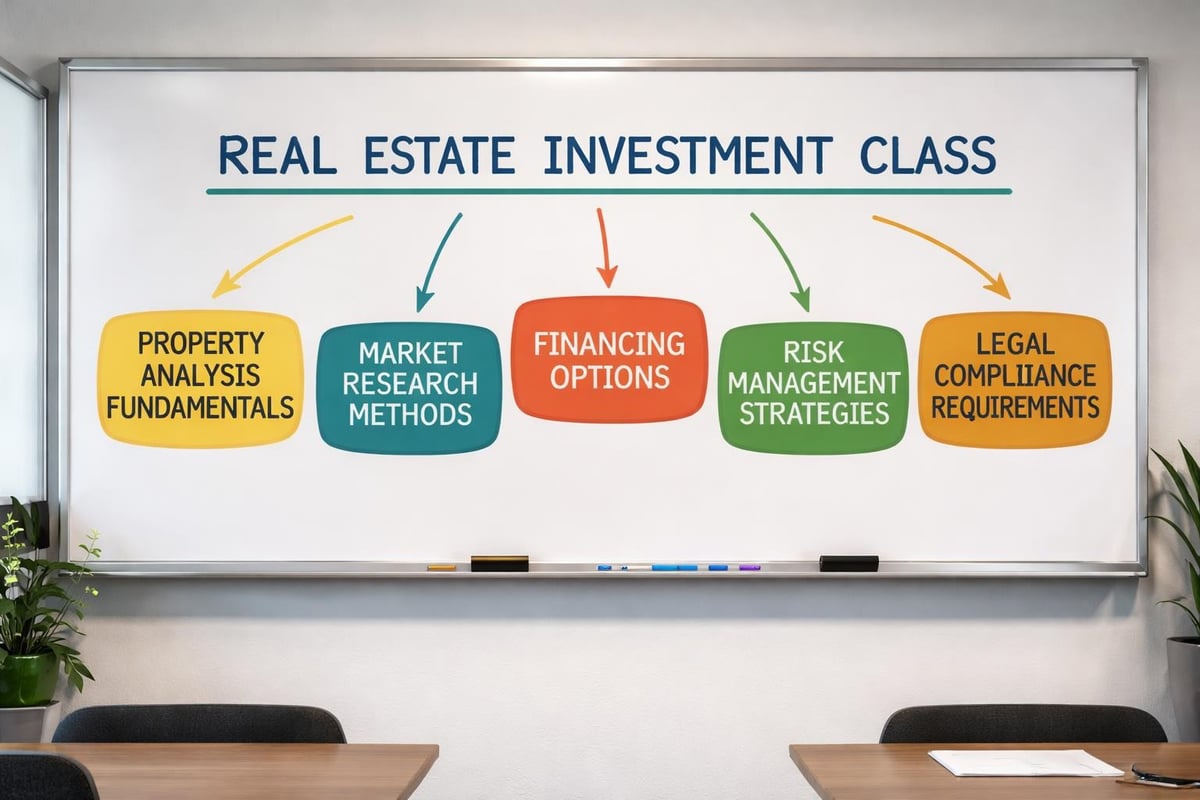
The curriculum of a comprehensive real estate investment class typically spans multiple critical areas that every investor needs to master. Understanding what topics should be included helps you evaluate different educational programs.
Property Analysis and Valuation
Every successful investment begins with accurate property evaluation. Quality courses teach multiple valuation methods including:
- Comparative Market Analysis (CMA) for determining fair market value
- Income approach using capitalization rates and cash flow projections
- Cost approach considering replacement value and depreciation
- After Repair Value (ARV) for fix-and-flip strategies
- Advanced metrics like cash-on-cash return and internal rate of return
These analytical skills enable investors to identify truly profitable opportunities while avoiding overpriced properties that erode returns. The valuation methods taught by professional organizations provide frameworks used by institutional investors worldwide.
Market Research and Due Diligence
Understanding local market dynamics separates successful investors from those who struggle. A thorough real estate investment class dedicates substantial time to research methodologies.
| Research Component | Key Metrics | Application |
|---|---|---|
| Demographics | Population growth, income levels, employment | Rental demand forecasting |
| Economic Indicators | Job growth, major employers, industry diversity | Market stability assessment |
| Supply Analysis | Construction permits, vacancy rates, absorption | Competition evaluation |
| Infrastructure | Schools, transportation, amenities | Property appreciation potential |
Professional courses teach students how to access and interpret data from multiple sources, including government databases, MLS systems, and private research firms. Resources from established real estate research centers provide invaluable market intelligence.
Financing Strategies and Capital Structure
How you finance investments dramatically impacts your returns and risk profile. Comprehensive education covers numerous financing options:
- Conventional mortgages with standard qualification requirements
- Portfolio loans from local banks for experienced investors
- Hard money lending for short-term projects and quick closings
- Private money from individual investors and self-directed IRAs
- Partnerships and syndications for larger commercial properties
- Creative financing including seller financing and subject-to strategies
Understanding leverage, loan terms, and capital stacking helps investors structure deals that maximize returns while managing risk appropriately. The Harvard Business School real estate research guide offers additional insights into real estate finance and capital markets.
Different Types of Real Estate Investment Classes
Educational programs vary significantly in format, duration, and focus area. Selecting the right type depends on your experience level, available time, and specific investment goals.
Online Courses and Virtual Training
Digital education has exploded in popularity, offering flexibility for busy professionals. Online real estate investment class options range from self-paced video courses to live virtual workshops with interactive elements.
Advantages of online learning:
- Study on your own schedule from anywhere
- Often more affordable than in-person alternatives
- Access to recorded sessions for review
- Digital resources and tools included
Potential drawbacks:
- Less networking opportunity with peers
- Requires self-discipline and motivation
- Limited hands-on practice components
In-Person Workshops and Seminars
Traditional classroom settings still offer unique benefits, particularly for investors who value face-to-face interaction and immediate feedback.
These intensive programs typically run from single-day seminars to multi-week boot camps. The immersive environment accelerates learning and builds lasting professional relationships.
University and College Programs
Many accredited institutions now offer real estate investment courses as part of business or finance programs. Some schools provide specialized certificates or continuing education units.
Academic programs emphasize theoretical foundations and research-based approaches. While potentially more rigorous, they provide credentials recognized by lending institutions and potential partners. The University of Wisconsin’s professional real estate sources demonstrate the academic rigor available in formal programs.
Mentorship and Coaching Programs
Some investors prefer personalized instruction through one-on-one mentorship or small group coaching. A real estate investment class structured this way provides customized guidance tailored to your specific market and goals.
| Program Type | Duration | Cost Range | Best For |
|---|---|---|---|
| Online Self-Paced | 4-12 weeks | $200-$2,000 | Beginners with limited budgets |
| Live Virtual Workshop | 2-5 days | $500-$3,000 | Intermediate investors wanting interaction |
| In-Person Bootcamp | 3-7 days | $1,500-$10,000 | Serious investors ready for immersion |
| University Certificate | 6-12 months | $3,000-$15,000 | Those seeking credentials |
| Personal Mentorship | 6-24 months | $5,000-$50,000+ | Experienced investors scaling up |
Evaluating Real Estate Investment Class Quality
Not all educational programs deliver equal value. Critical evaluation prevents wasting time and money on subpar courses that promise more than they deliver.
Instructor Credentials and Track Record
The instructor's real-world experience matters more than teaching credentials alone. Look for educators who actively invest in real estate and can demonstrate successful deals.
Red flags include instructors who:
- Make unrealistic income promises
- Focus more on selling additional programs than teaching
- Cannot provide verifiable investment experience
- Use high-pressure sales tactics
Quality instructors openly share both successes and failures, providing balanced perspectives on real estate investing realities.
Curriculum Comprehensiveness
A worthwhile real estate investment class addresses the full investment lifecycle, not just acquisition strategies. Comprehensive programs include:
- Property sourcing and deal analysis
- Financing and capital raising
- Acquisition and closing processes
- Property management and operations
- Tax strategies and entity structuring
- Exit strategies and portfolio optimization
Programs focusing exclusively on finding deals while ignoring management and disposition provide incomplete education.
Student Support and Resources
Quality education extends beyond classroom hours. Evaluate what ongoing support the program provides:
- Access to alumni communities or forums
- Updated materials reflecting market changes
- Templates, calculators, and practical tools
- Follow-up coaching or office hours
- Deal review assistance
Platforms like Nadlan Forum demonstrate how ongoing community support enhances formal education by providing continuous learning opportunities and peer interaction.
Specialized Real Estate Investment Niches
As the real estate market has diversified, specialized education has emerged for different investment strategies and property types. Advanced investors often pursue niche-specific training after completing foundational courses.
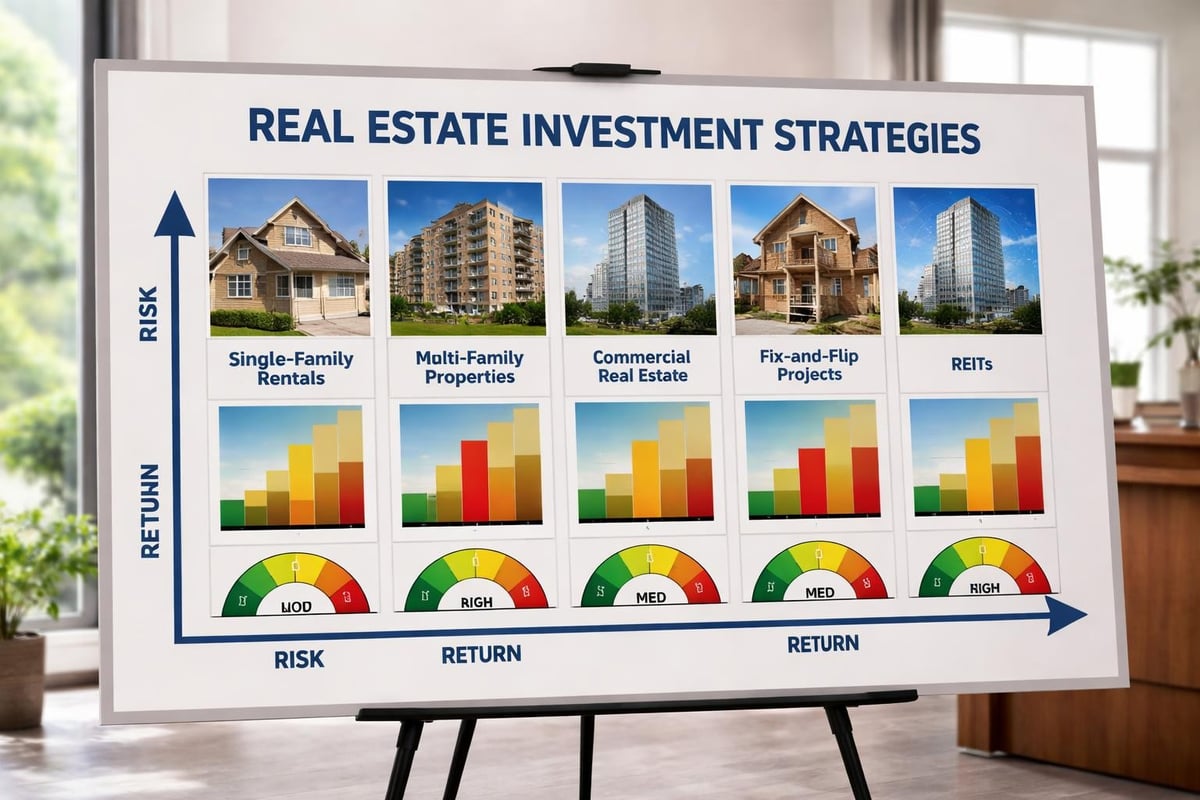
Residential Investment Strategies
Single-family and small multi-family properties remain popular starting points. Specialized courses cover:
- Buy and hold rental strategies for passive income generation
- House hacking to reduce personal housing costs while building equity
- Short-term rentals and vacation property management
- Section 8 and affordable housing investment approaches
The Library of Congress residential real estate resources provide additional context on residential market trends and regulations.
Commercial Real Estate Education
Commercial property investing requires different skills and knowledge than residential. Dedicated commercial real estate investment class programs explore:
- Office, retail, industrial, and mixed-use properties
- Tenant analysis and lease structure evaluation
- Triple-net leases and build-to-suit arrangements
- 1031 exchanges for tax-deferred portfolio growth
- Syndication structures for raising investor capital
Commercial investments typically involve larger capital requirements but can offer superior returns and more predictable cash flows.
Alternative Investment Strategies
Beyond traditional property ownership, modern real estate investors explore various alternatives:
- Real Estate Investment Trusts (REITs) for passive stock-like investing
- Tax lien and deed investing in distressed properties
- Land development and entitlement strategies
- Mobile home parks and self-storage facilities
- Crowdfunding platforms for fractional ownership
Each strategy requires specialized knowledge best acquired through focused education.

Implementing Knowledge From Your Real Estate Education
Completing a real estate investment class represents just the beginning of your educational journey. The true value emerges through practical application of learned concepts.
Creating Your Investment Action Plan
Successful students translate coursework into concrete action steps. Your post-class plan should include:
- Market selection based on research methodologies learned
- Investment criteria defining your ideal property profile
- Financing preparation including credit improvement and capital accumulation
- Team building to assemble contractors, agents, and advisors
- Deal flow systems for consistent property sourcing
Write specific, measurable goals with realistic timelines. Many investors fail not from lack of knowledge but from failure to implement what they've learned.
Continuous Learning and Skill Development
The real estate market constantly evolves with new regulations, technologies, and economic conditions. Successful investors commit to ongoing education through:
- Industry publications and research reports
- Professional associations and local investor groups
- Advanced courses on specialized topics
- Conferences and networking events
- Mentorship relationships with experienced investors
Resources from Nova Southeastern University’s real estate guide and Dallas College’s real estate research guide support continuous professional development.
Measuring Educational ROI
Track how your real estate investment class impacts your investment performance. Calculate your educational return on investment by measuring:
| Metric | Before Education | After Education | Improvement |
|---|---|---|---|
| Deals Analyzed Monthly | Example: 2 | Example: 15 | 650% increase |
| Average Property ROI | Example: 6% | Example: 12% | 100% increase |
| Time to Find Deals | Example: 6 months | Example: 45 days | 75% reduction |
| Negotiation Success Rate | Example: 20% | Example: 45% | 125% increase |
Documenting improvements justifies your educational investment and identifies areas requiring additional focus.
Common Mistakes to Avoid in Real Estate Investment Education
Many aspiring investors make predictable errors when pursuing real estate education. Awareness helps you avoid these pitfalls.
Analysis Paralysis and Information Overload
Some students become perpetual learners, consuming endless content without taking action. While thorough preparation matters, waiting for perfect knowledge prevents deal execution.
Set clear milestones: Complete one comprehensive real estate investment class, then commit to analyzing actual properties within 30 days. Additional education can occur simultaneously with initial deal-making.
Choosing Price Over Value
The cheapest courses rarely deliver the best education. Conversely, expensive programs don't guarantee quality. Evaluate programs based on instructor credentials, curriculum depth, and student outcomes rather than price alone.
Free resources from University of Florida’s Business Library can supplement paid courses, providing comprehensive reference materials.
Ignoring Legal and Tax Education
Many investors focus exclusively on deal-finding while neglecting legal structures and tax strategies. This oversight leads to:
- Inadequate asset protection from lawsuits
- Missed tax deduction opportunities
- Improper entity selection for property ownership
- Compliance violations triggering penalties
Quality programs integrate legal and tax education throughout the curriculum rather than treating them as afterthoughts.
Failing to Verify Information Currency
Real estate regulations, financing requirements, and tax laws change frequently. A real estate investment class using outdated information can lead you astray.
Verify that courses reflect current conditions in 2026, including:
- Latest mortgage qualification standards
- Current tax depreciation schedules
- Recent fair housing law updates
- Modern property management technologies
- Updated environmental regulations
Building Your Real Estate Investment Network
Education provides knowledge, but your network provides opportunities. Strategic relationship-building accelerates your investment success.
Leveraging Classmate Connections
Fellow students in your real estate investment class represent potential partners, deal sources, and resource providers. Many successful partnerships begin in educational settings.
Exchange contact information and schedule follow-up meetings. Some classmates may have complementary skills-perhaps one excels at property management while another understands construction.
Engaging With Instructor Networks
Quality instructors often facilitate introductions to industry professionals including:
- Private lenders and capital sources
- Experienced contractors and property managers
- Real estate attorneys and accountants
- Wholesalers and deal sourcers
- Commercial brokers and agents
Maintain these relationships beyond the course duration through periodic check-ins and updates on your progress.
Joining Professional Organizations
Formal associations provide ongoing education, networking events, and advocacy for investor interests. Active participation in local chapters builds your reputation and deal flow.
National organizations offer resources, conferences, and continuing education. Regional groups provide market-specific insights and partnership opportunities.
Investing in a quality real estate investment class provides the foundation for successful property investing, equipping you with analytical frameworks, financing strategies, and market research skills essential for identifying profitable opportunities. The knowledge gained helps you avoid costly mistakes while accelerating your path to financial independence through real estate.
Whether you're taking your first steps into property investing or scaling an existing portfolio, Nadlan Forum offers the community support, market insights, and ongoing education that complement formal training. Join our platform to connect with experienced investors, access current market analysis, and receive consultation on your investment strategies as you build wealth through smart real estate decisions.
























Responses