
Fed Rate Cuts 2026: New York Fed Signals Flexibility

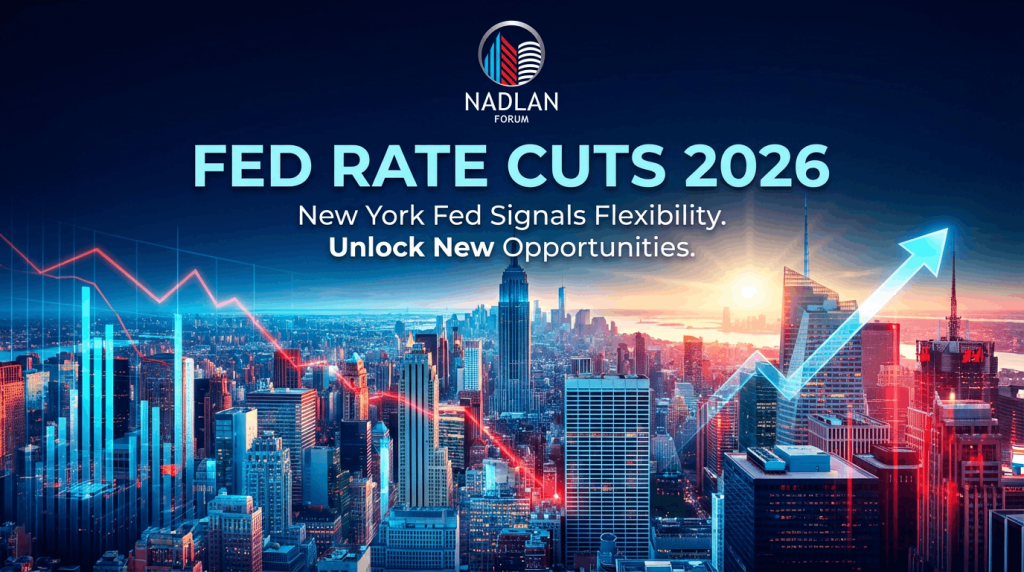
The outlook for Fed rate cuts 2026 remains open, even as financial markets react to global tension and rising energy prices.
In remarks delivered at a conference hosted by America’s Credit Unions in Washington, John Williams, President of the Federal Reserve Bank of New York, said monetary policy is positioned to support both labor market stability and progress toward the Federal Reserve’s 2% inflation target.
Williams indicated that if inflation continues to moderate as expected, additional reductions in the federal funds rate could be appropriate later this year.
Policy Path Depends on Inflation
Williams noted that if inflation follows the trajectory he anticipates, further rate cuts would help prevent policy from becoming overly restrictive.
The Federal Reserve lowered its benchmark rate by 0.75 percentage points last year, bringing it into a range of 3.50% to 3.75%. Those reductions were intended to support employment while keeping inflation pressures contained.
Officials had expected inflation to continue easing in 2026. However, renewed geopolitical conflict has complicated that forecast.
Market Volatility and Energy Prices
Global markets have experienced increased volatility following military developments involving Iran. Oil prices have risen, raising concerns that higher energy costs could slow progress on inflation.
When fuel and transportation expenses increase, they often filter through supply chains and consumer prices. That risk has led some investors to scale back expectations for near-term rate cuts.
Williams did not directly address the conflict in his speech but acknowledged that inflation risks remain part of the policy equation.
Economic Growth Still Expected
Despite market swings, Williams described the U.S. economy as stable.
He projected economic growth of around 2.5% this year, supported by fiscal stimulus measures, stable financial conditions, and investment in artificial intelligence technologies.
Labor market conditions, he said, are currently characterized by low hiring and low layoffs. He expects the unemployment rate to edge slightly lower in 2026 and 2027.
Tariffs and Inflation
Williams also discussed the role of tariffs in recent inflation data. He said import duties have been a noticeable contributor to price pressures this year.
According to research conducted by the New York Fed, most of the cost impact from tariffs is absorbed by U.S. businesses and consumers rather than foreign producers.
That analysis has generated debate, particularly as policymakers assess the long-term inflation outlook.
Williams suggested that tariff-related inflation pressures should ease as the year progresses, allowing overall inflation to move closer to the Fed’s 2% goal.
What It Means for Fed Rate Cuts 2026
The path for Fed rate cuts 2026 will depend largely on three factors:
- Core inflation trends
- Energy price stability
- Labor market performance
If inflation declines steadily and unemployment remains stable, policymakers may resume gradual easing.
However, if inflation proves more persistent especially due to energy or trade pressures the Fed may hold rates steady longer than markets expect.
Investor Expectations
Market pricing has shifted in recent weeks. Earlier forecasts anticipated multiple rate reductions in 2026. Recent volatility has led investors to temper those expectations.
Still, Williams’ comments suggest that the Federal Reserve has not ruled out additional easing. Instead, officials appear to be taking a data-dependent approach.
Upcoming inflation reports and employment data will likely play a key role in shaping policy discussions.
The Bottom Line
The outlook for Fed rate cuts 2026 remains fluid. While market volatility and rising oil prices have introduced new uncertainty, Federal Reserve leadership continues to signal openness to easing if inflation moderates.
For businesses, borrowers, and investors, the message is clear: future rate decisions will depend on economic data rather than short-term headlines.
As inflation trends unfold in the coming months, the direction of monetary policy will become clearer. For direct financing consultations or mortgage options for you visit 👉 Nadlan Capital Group.














Responses