
GDP and Inflation Report 2026: US Growth Slows While Core PCE Reaches 3.1%

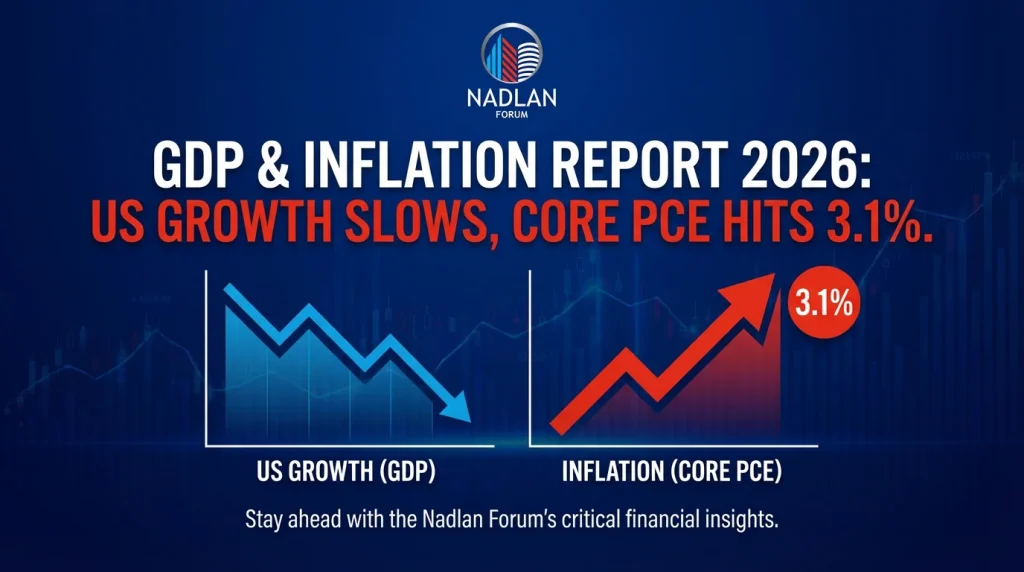
The latest economic data shows that U.S. economic growth slowed significantly in the final months of 2025, while inflation remained higher than policymakers would prefer at the start of 2026.
According to a revised report from the U.S. Commerce Department, gross domestic product (GDP) grew at an annual rate of just 0.7% in the fourth quarter of 2025. This figure represents a sharp downward revision from the earlier estimate of 1.4% growth.
At the same time, a key measure of inflation tracked by the Federal Reserve indicated that core price pressures remained elevated in January, complicating the outlook for interest rates and economic policy.
GDP Growth Slows More Than Expected
Gross domestic product measures the total value of goods and services produced in the U.S. economy and is widely used to gauge overall economic performance.
The revised fourth-quarter reading of 0.7% growth came in well below economists’ expectations, which had projected growth closer to 1.5%.
The slowdown marked a major decline compared with the 4.4% growth rate recorded in the third quarter.
Several factors contributed to the weaker growth, including changes in consumer spending, government spending, and trade data.
One of the largest influences on the revision was a significant decline in government spending during the quarter.
Government Shutdown Weighed on Economic Activity
A major factor affecting the GDP slowdown was a long government shutdown, which reduced federal spending during the period.
Government spending dropped 16.7% during the fourth quarter, significantly reducing overall economic output.
Because government expenditures are included in GDP calculations, large declines in public spending can have a measurable impact on the final growth figure.
The shutdown disrupted several federal programs and reduced economic activity across multiple sectors.
Full-Year Economic Growth
For the entire year, the U.S. economy expanded by 2.1% in 2025, slightly lower than earlier estimates.
This compares with 2.8% economic growth recorded in 2024, showing that the economy slowed somewhat compared with the previous year.
While growth remained positive overall, the slower pace suggests that economic momentum weakened as the year ended.
Consumer Spending Remains a Key Driver
Consumer spending continued to support economic activity during the fourth quarter, although it also slowed compared with earlier periods.
Spending by households increased 2% during the quarter, but that figure was revised lower from earlier estimates.
In the third quarter, consumer spending had grown by 3.5%, highlighting the slower pace of consumption toward the end of the year.
The largest revisions in spending came from the services sector, particularly healthcare expenditures.
Since consumer spending accounts for roughly two-thirds of the U.S. economy, changes in household demand play a major role in shaping overall growth trends.
Inflation Remains Above the Federal Reserve’s Target
While economic growth slowed, inflation remained higher than the Federal Reserve’s long-term goal.
The Personal Consumption Expenditures (PCE) price index, which is the Fed’s preferred measure of inflation, increased 0.3% in January.
On an annual basis, the overall PCE inflation rate reached 2.8%, slightly below expectations but still above the Fed’s 2% target.
More importantly, the core PCE index, which excludes food and energy prices, showed stronger inflation pressures.
Core Inflation Reaches 3.1%
Core PCE inflation rose 0.4% in January and reached 3.1% compared with the previous year.
Federal Reserve policymakers monitor this measure closely because it provides a clearer view of long-term inflation trends by removing volatile categories such as food and energy.
The annual core inflation rate increased slightly from December, indicating that underlying price pressures remain persistent.
Higher inflation makes it more difficult for the Federal Reserve to lower interest rates, since rate cuts could risk accelerating price increases.
Durable Goods Orders Show Weak Momentum
Another report released alongside the GDP data showed limited growth in durable goods orders.
Durable goods include products designed to last several years, such as:
- Vehicles and transportation equipment
- Appliances and electronics
- Machinery and industrial equipment
Orders for durable goods were unchanged in January, falling short of expectations for growth.
Excluding the transportation sector, orders increased 0.4%, suggesting moderate demand in some manufacturing industries.
Economic Risks Increase
Some analysts say the combination of slower economic growth and persistent inflation raises concerns about the possibility of stagflation.
Stagflation occurs when economic growth slows while inflation remains elevated.
This scenario can present a difficult challenge for policymakers because actions that reduce inflation may slow economic growth even further.
Recent economic developments, including rising energy prices and geopolitical tensions, may increase uncertainty about future economic conditions.
Energy Prices and Global Events
Energy markets have also been influencing the economic outlook.
Recent geopolitical tensions in the Middle East have pushed oil prices higher, with Brent crude oil approaching $100 per barrel.
Higher energy costs can contribute to inflation by increasing transportation and production expenses across many industries.
If oil prices remain elevated, they could place additional pressure on consumer prices in the coming months.
Federal Reserve Policy Outlook
The Federal Reserve will soon hold its next policy meeting to determine whether changes to interest rates are necessary.
Based on current market expectations, the central bank is widely expected to keep interest rates unchanged in the near term.
Persistent inflation above the 2% target suggests policymakers may remain cautious about lowering borrowing costs too quickly.
At the same time, slower economic growth may increase pressure on the Fed to eventually provide support to the economy if conditions weaken further.
What the Data Means for the Economy
The latest economic reports provide a snapshot of the U.S. economy entering 2026.
Key takeaways include:
- Economic growth slowed significantly at the end of 2025
- Inflation remains above the Federal Reserve’s target
- Consumer spending continues to support economic activity
- Government spending disruptions contributed to weaker GDP growth
The combination of slower growth and ongoing inflation pressures means policymakers and investors will continue closely monitoring economic indicators in the months ahead.
For now, the revised US GDP growth 2026 data suggests the economy entered the year with weaker momentum than previously expected, while inflation remains a central challenge for economic policy. For direct financing consultations or mortgage options for you visit 👉 Nadlan Capital Group.





















Responses